BREAKING: The new Food Pyramid for 2026 is here, and it changes the way America will eat. Officials call it a flip of the story. The focus moves from counting nutrients to choosing real foods. This is not a small tweak. It is a reset for homes, schools, and federal programs, with health at the center.
What changed in the 2026 Food Pyramid
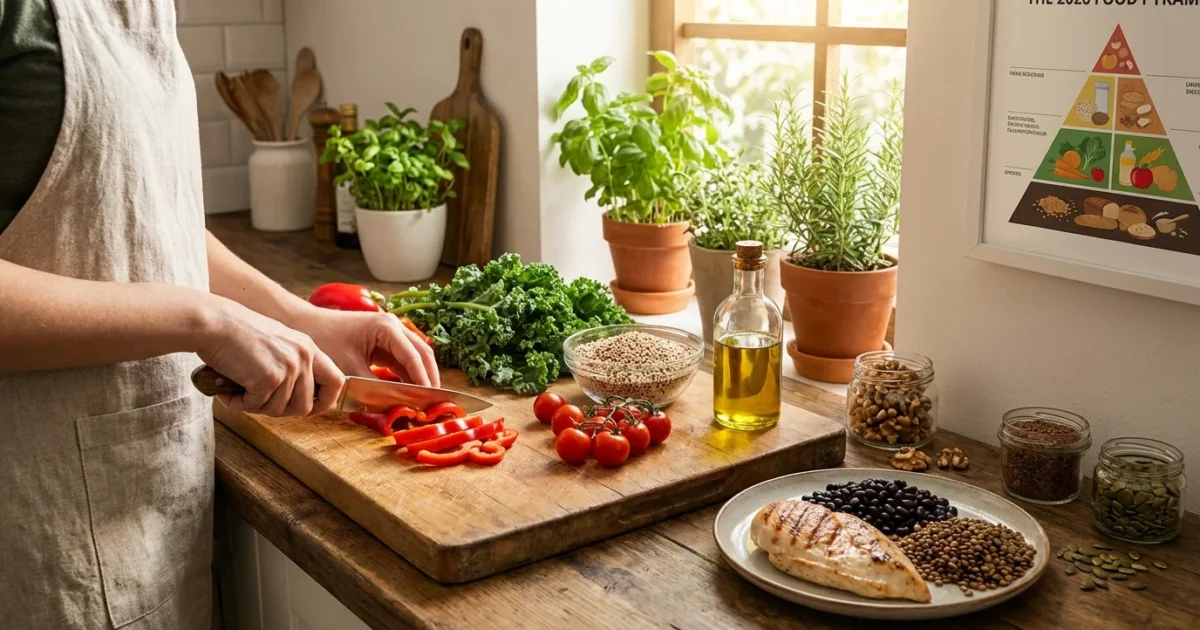
The government is bringing back a pyramid, after years of the MyPlate image. The new graphic is simple and bold. It organizes foods by how often we should eat them, not just by portion size. At the base are whole, minimally processed foods. Think vegetables, fruits, beans, lentils, nuts, seeds, whole grains, and water. Higher up are lean proteins and healthy fats. The smallest tip holds sweets, refined grains, and ultra-processed snacks, which should be limited.
This shift puts food quality first. The message is clear. Build most meals from plants, add quality protein, use olive oil and other healthy fats, and keep added sugars and refined starch low. It also reflects strong evidence on fiber, protein balance, and the risks linked to ultra-processed foods.
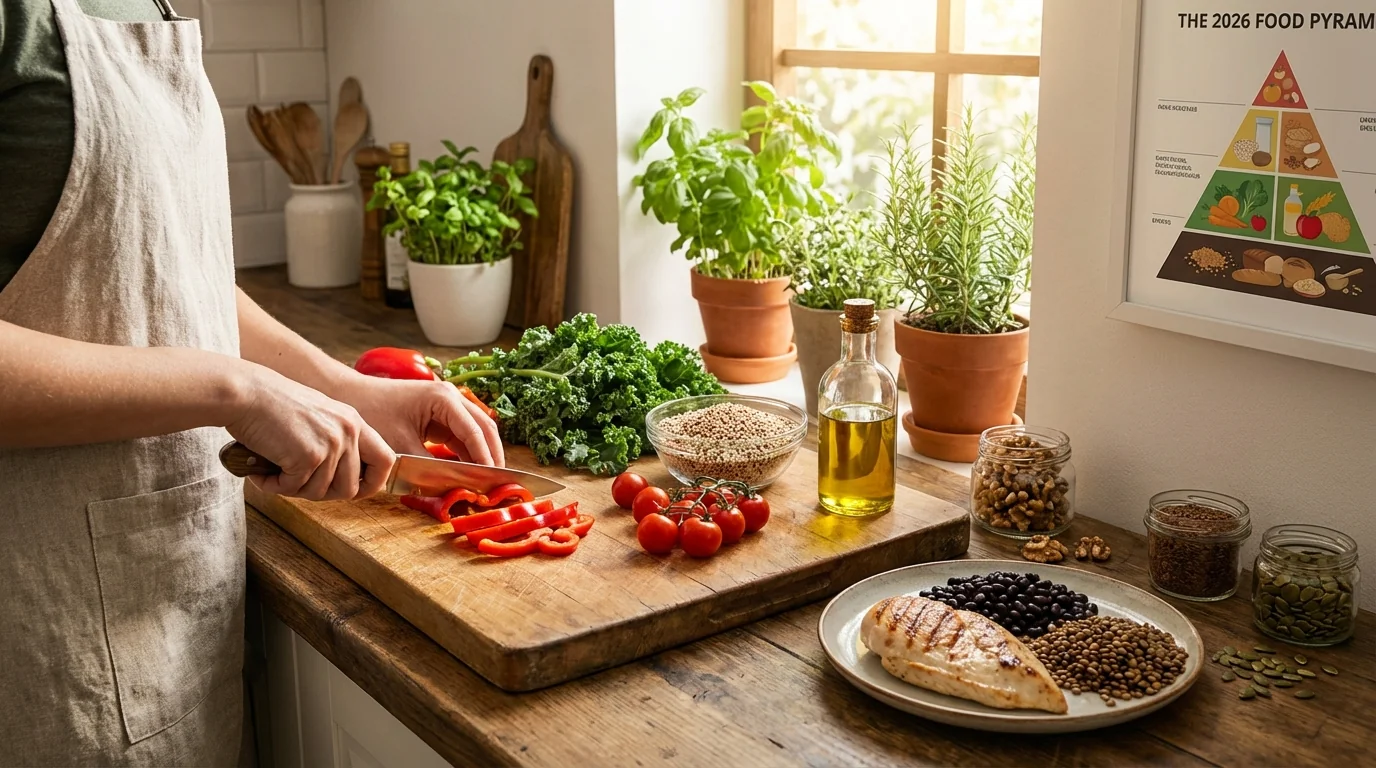
Start with plants, add protein, choose water. If your cart and plate reflect that, you are on target.
Why officials call it a narrative flip
For years, advice leaned on single nutrients. Low fat one decade. Low carb the next. The new pyramid steps back from that tug of war. It centers patterns that support a healthy weight, better blood sugar, and heart health. It favors foods you can recognize. It teaches people how to eat across a day, not how to chase grams.
Three themes stand out. First, fiber up. More vegetables, fruit, beans, and whole grains support gut health and steady energy. Second, protein at every meal. Mix sources, like fish, poultry, tofu, yogurt, eggs, beans, and nuts. Third, fewer ultra-processed foods. These often pack salt, sugar, and additives, which can drive overeating.
This is a practical approach. It meets people where they live. You can use it at a grocery store, on a school tray, and in a busy kitchen. 🍽️
What it means for families, schools, and benefits
The Dietary Guidelines steer major federal food programs. This pyramid will shape school meals, WIC packages, SNAP-Ed education, and government food buying. Expect menus to push more whole grains, legumes, and produce. Expect shifts toward yogurt and milk with less sugar, and more fish and bean options. Expect tighter limits on high sugar cereals, refined breads, and processed snacks.
Households that rely on WIC or school meals will notice changes on the plate. More color. More fiber. Better protein variety. Grocery procurement rules are likely to favor fewer ultra-processed items. That can nudge manufacturers to improve products, which helps everyone.
How to use the pyramid today
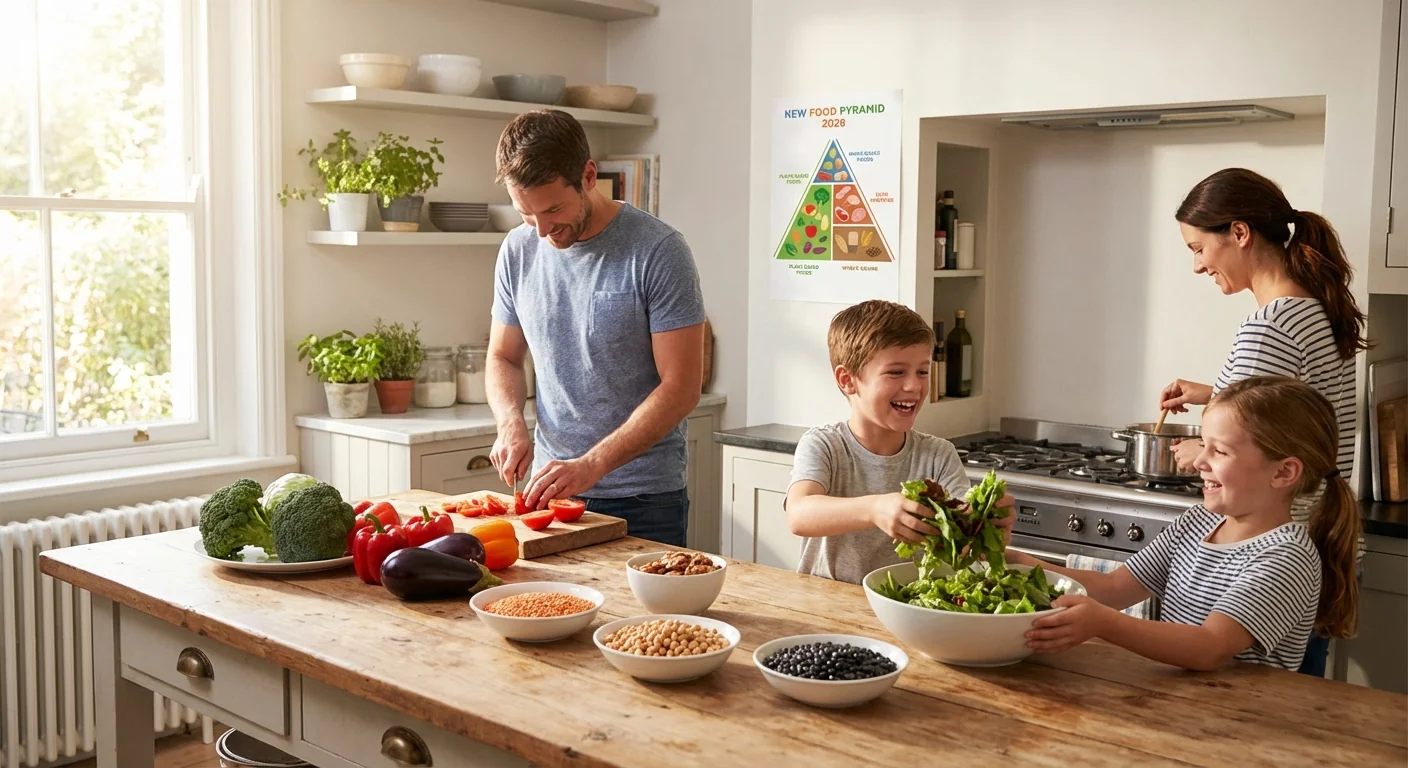
You do not need to wait for a policy memo. You can move with the new pyramid now. Here is a simple way to start at your next meal:
- Make half your plate vegetables or fruit, mostly nonstarchy.
- Add a palm sized portion of protein.
- Include a whole grain or beans for fiber and steady fuel.
- Cook with olive oil, not butter or shortening.
- Drink water, unsweetened tea, or coffee, skip sugary drinks.
The medical bottom line
This guidance lines up with strong science. Diets rich in whole foods support heart health and healthy blood pressure. They help control blood sugar. They support weight management, since fiber and protein help you feel full. Cutting back on added sugar and sodium lowers risk for diabetes and heart disease. Limiting ultra-processed foods also reduces calorie density, which can curb overeating.
This is not about perfection. It is about pattern. Small daily choices add up. Swap white bread for whole grain. Choose beans or fish twice a week. Keep candy and chips as treats, not staples. Plan easy wins, like a big pot of chili with beans and vegetables on Sunday, for quick meals all week.
If you have kidney disease, celiac disease, food allergies, or you are pregnant, talk with your clinician or dietitian. You may need tailored targets for protein, fiber, or iron.
What to watch next
Agencies will translate this pyramid into rules for schools and benefits. You will see menu updates, revised food packages, and new nutrition education materials. Health providers will update patient handouts. We will monitor how these changes roll out in communities, and how they affect costs and access.
The big picture is hopeful. A simple, clear pyramid can cut confusion. It can help families shop faster, cook smarter, and feel better. The message is consistent. Eat food that looks like food, mostly plants, enough protein, and fewer ultra-processed extras. That is a flip worth making. 🌱