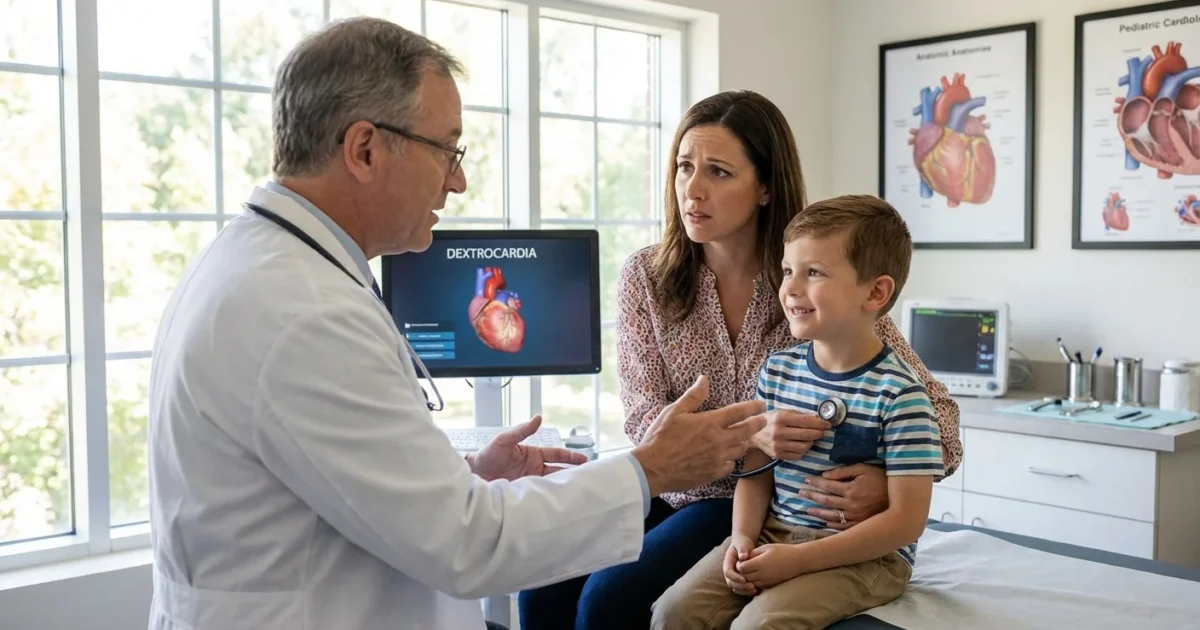
Breaking: What “dextrocardia with situs inversus” really means, and why Hollywood is paying attention right now
The rare anatomy at the center of today’s headlines
Today, the phrase dextrocardia with situs inversus stepped into the spotlight. It sounds intense. It is actually a simple idea. In this condition, the heart sits on the right side, not the left. Most internal organs are flipped like a mirror.
Here is the key part. Many people with this anatomy feel fine for their whole lives. Some never even know. Doctors estimate it appears in roughly 1 in 10,000 births. Most live just as long as anyone else.
We are reporting this now to cut through noise and fear. A high profile medical story has people asking hard questions. Our goal is clarity, not drama.

Dextrocardia with situs inversus, by itself, does not cause sudden medical events. It is a normal variant for many people.
Why the industry is talking, and what we can confirm
Any time a beloved star faces a health crisis, fans look for answers. Today is no different. The words sound medical and rare, so they carry weight. That is why this moment matters. We can confirm what this condition is, and what it is not.
It is not a headline by itself. It is not a red flag for doom. The real story is practical. If a person’s organs are flipped, doctors need to know. That knowledge guides tests, scans, and surgery plans. It helps teams act fast, and act right.
Do not link a person’s unique anatomy to their cause of illness without confirmed medical details. Speculation hurts real people.
On set, in the ER, and on tour, here is what changes
Hollywood runs on planning. So does medicine. Dextrocardia with situs inversus is mostly a logistics note. It changes where teams look, and how they read data.
- ECG stickers often go on the opposite side for a clean read
- Ultrasound, X‑ray, and CT scans confirm the map before any procedure
- Pain may show up on the other side, like left sided pain with appendicitis
- Surgeons plan incisions with the mirror image in mind
The bottom line is simple. When everyone knows the blueprint, care is smooth. That is true on a set, on a stage, or in an ambulance bay.
The real medical curveball is a separate syndrome
There is a smaller group that deserves a clear mention. A subset of people with situs inversus also have primary ciliary dyskinesia, often called Kartagener syndrome. That is a different issue. It can bring chronic sinus and lung problems. It can also affect fertility.
Most people with dextrocardia and situs inversus do not have this syndrome. For those who do, long term care can help a lot. Breathing therapy, careful follow up, and specialist support all matter.
Fans, tributes, and the culture shift happening now
Fans are doing what fans do. They are sharing stories, love, and curiosity. Some are posting mirror selfies with flipped heart emojis. Others are learning a new word today, then calling a parent to share it. That is the human side of pop culture. It teaches while it consoles.
Inside the industry, we are hearing from crew who quietly carry medical ID cards. A few actors and musicians have told us they flagged their anatomy in call sheets, just in case. It is practical, and it is protective. It also breaks stigma. Being a little different can be power, not a problem.

If you have this anatomy, consider a wallet card, bracelet, or phone lock screen note that says situs inversus. It speeds care.
How it is diagnosed, and what to do next
Doctors confirm it with imaging. A chest X‑ray or ultrasound is often enough. CT or MRI can map the full picture. If you or a loved one has it, tell your care team early. That one sentence can save minutes when minutes matter.
If you are learning about this for the first time, keep this in mind. Knowledge is good, panic is not. Ask questions. Write them down. Bring them to your next checkup. Most people with this anatomy live normal, busy, beautiful lives.
The takeaway, for Hollywood and for home
Today’s story is not about fear. It is about understanding. Dextrocardia with situs inversus flips the map, not the ending. In the rush of headlines and heartbreak, let’s keep our facts straight and our empathy loud. Celebrate the one of one. Support the person first. The rest is just anatomy.