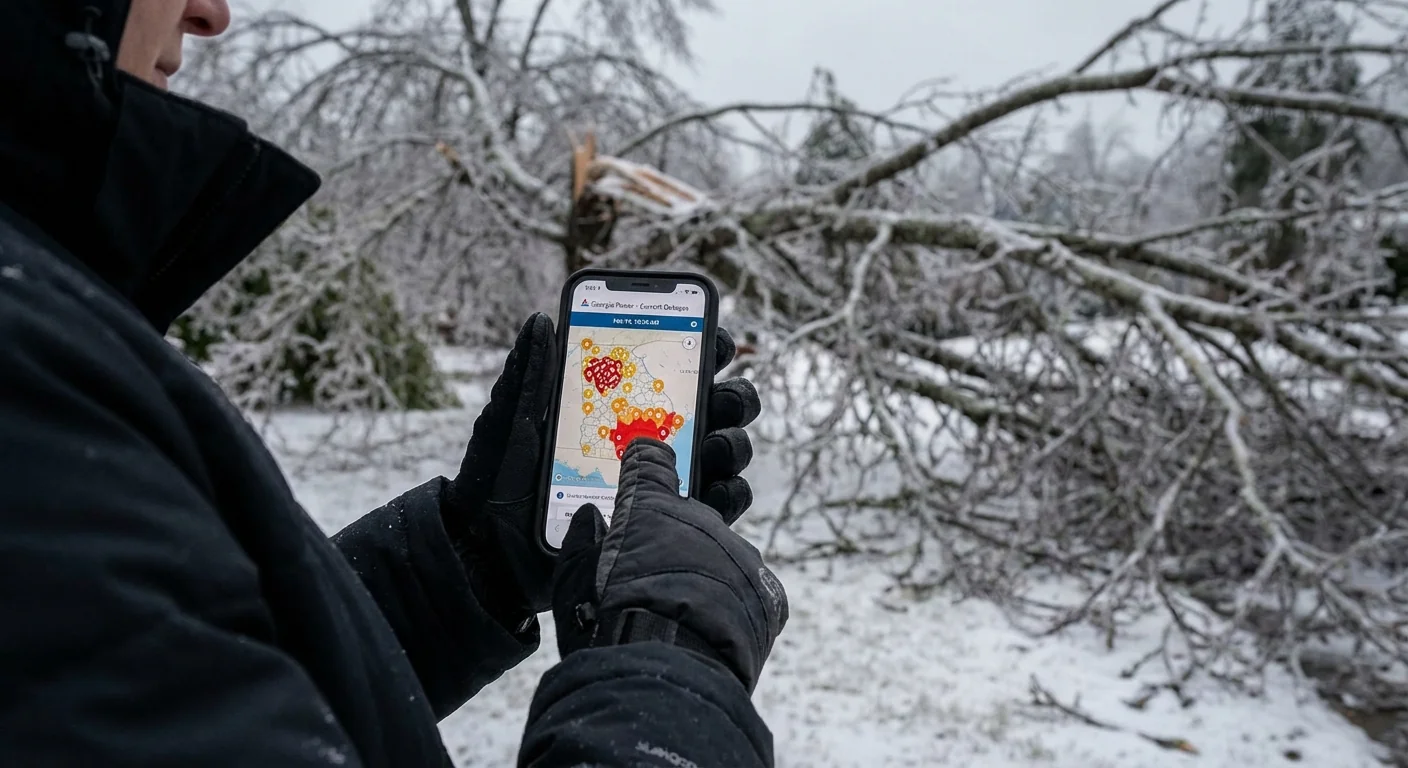
Freezing rain is snapping branches across metro Atlanta right now. I am tracking fresh outages as ice grips trees and power lines. The Georgia Power outage map is lighting up, and it matters. It shows where the grid is stressed in real time, and how fast crews can rebuild it in this cold, slick storm. ❄️
What the Georgia Power outage map tells us
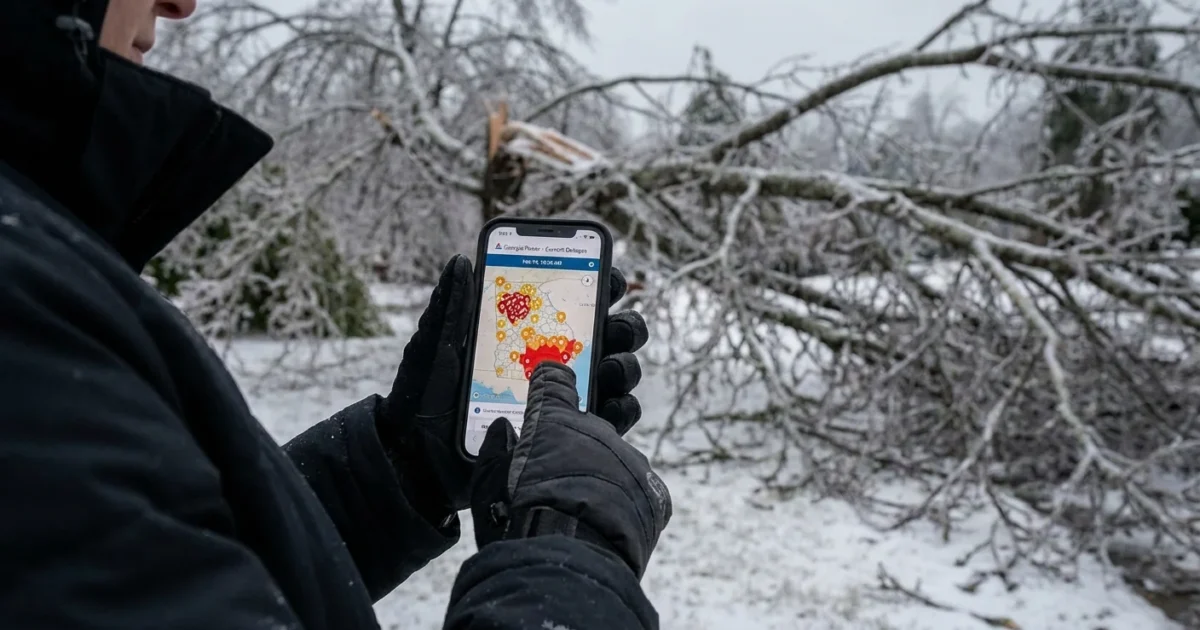
The map displays outage clusters as colored circles. Larger circles mean more customers are out. Tap or click a cluster to see neighborhoods, the number of customers affected, and an estimated restoration time. Those estimates change as crews arrive, assess damage, and reroute power. Expect frequent updates as lines ice, then thaw, then refreeze.
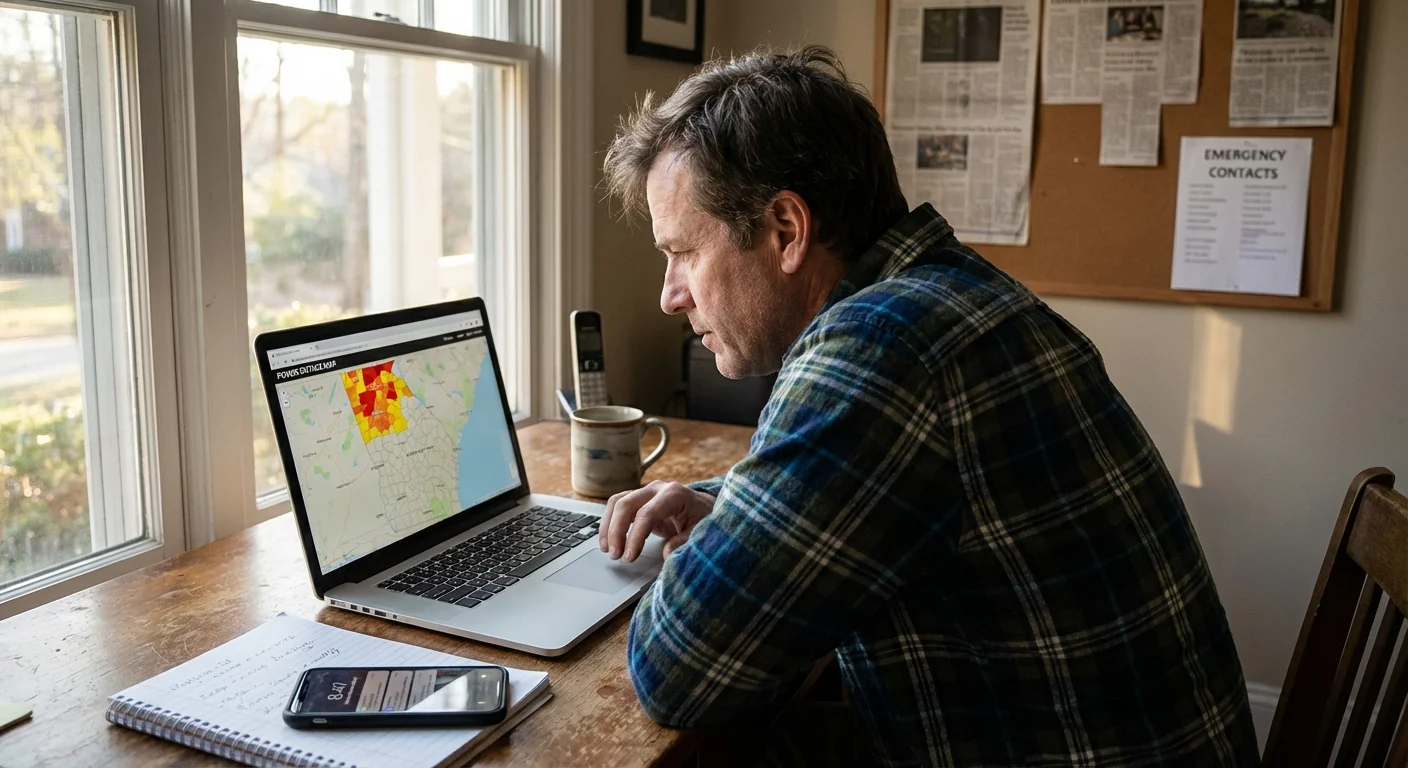
Not everyone in Georgia is a Georgia Power customer. Many households use an EMC or a city utility. Each utility runs its own map and reporting line. If you check the wrong map, you will not see your home’s status. Check your bill or your meter to confirm your provider before you report.
Not sure who serves your home. Look at your last bill, your meter logo, or your bank autopay record. Then open the correct outage map for that utility.
Ice storms are dynamic. Branches shed ice as temperatures rise, then glaze over again at night. That means restoration times can move. The map reflects that tug of war, so refresh often, but plan for delays.
How to check your power status fast
Here is the fastest way to use the Georgia Power outage map while the ice event unfolds.
- Open the outage map on your phone or laptop.
- Enter your address, or zoom to your street.
- Click the nearest outage icon to see cause and restoration estimate.
- Report your outage if your home is dark and not shown.
- Log in to your account or app for text or email updates.
You can also report by phone if your battery is low. Keep devices plugged in when you can. Charge a power bank between outages, then conserve it.
Cut screen brightness, close background apps, and switch to text updates to save battery during extended outages.
If you are served by an EMC or a municipal utility, open that provider’s outage map instead. Most offer address search, crew status, and alerts. The layout looks different, but the essentials are the same.
Safety first while ice lingers
Ice brings hidden risks. Stay cautious on roads and around trees. The safest choice tonight is to stay home and keep a close watch on heat and air quality.
Stay far from any downed line. Assume it is live. Call your utility or 911. Do not try to move lines or branches.
- Run generators outside, at least 20 feet from doors and windows.
- Treat dark intersections as four way stops.
- Keep phones charged for weather and utility alerts.
- Heat safely. Use space heaters with tip sensors on stable floors.
- Check on older neighbors and anyone who relies on medical devices.
Why ice storms hit the grid so hard
This setup began with a shallow layer of cold air at the surface. Warmer air slid in above it, so rain fell into subfreezing air near the ground. Drops froze on contact, coating branches and lines with clear ice. A half inch of glaze can add hundreds of pounds to a span of wire. Pine boughs bend, then snap. Lines gallop in the wind, then trip protective switches.
Climate science tells us the Southeast is warming overall. Yet winter still brings sharp cold snaps. When mild, moist air rides over surface cold, we get more mixed precipitation. That means fewer classic snow events in some years, and more freezing rain risk in the transition zones. The grid did not grow up for that kind of stress. It was built for summer heat and thunderstorms, not heavy ice.
Hardening the grid is possible. More tree trimming in high risk corridors helps. Stronger poles and spacers reduce line slap. Selective undergrounding protects the most outage prone feeders. Local microgrids and battery storage keep key sites powered, like clinics and fire stations. Home upgrades matter too. Better insulation and heat pumps keep homes warm with less load, which eases restoration.
What to expect next
Road conditions will guide restoration speed. Ice crews work in steps. They clear hazards, assess damage, then repair or reroute. Estimates on the map may shift as the cold holds or as a midday thaw arrives. Watch for rapid melt on south facing streets, then a refreeze after sunset. Black ice will return.
If you have water pipes on exterior walls, keep a slow drip. Open cabinet doors to let warm air reach plumbing. Keep a blanket over outdoor spigots. Small steps now prevent burst pipes later.
I will continue to monitor grid stress, line icing, and restoration progress county by county. Use the correct outage map for your utility, report your status, and give crews room to work. Stay warm, stay patient, and stay safe. We will keep you ahead of the next wave of ice and the lights coming back on. ⚡