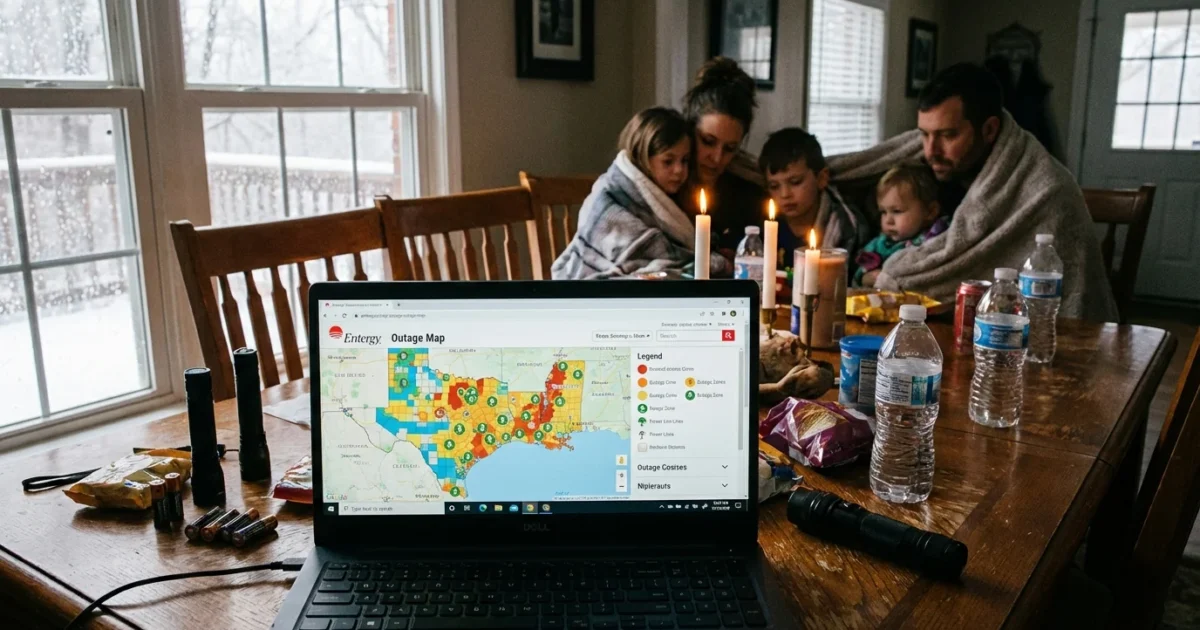
Freezing rain is glazing power lines across Texas and Mississippi right now. I am tracking a fast build in power interruptions as a deep winter storm lays down ice, sleet, and snow. Entergy’s outage map is the clearest window into what is failing, where crews are moving, and when lights may return. Here is what I am seeing, and how to use the map to stay safe and prepared. ❄️
What I am seeing on Entergy’s outage map
Clusters are growing across North Mississippi and parts of East Texas. The first wave is tied to icing on tree limbs and secondary lines. Traffic is already slowed on I-269 and I-22 where snow and ice are stacking up. Near Jackson, rain is changing to ice as shallow cold air deepens. That timing matters. A one to two degree slide below freezing can flip rain to glaze, then to outages.
Entergy serves Texas, Mississippi, Louisiana, and Arkansas. Tonight, the bulls-eye is Texas and Mississippi. Expect scattered to widespread outages to expand as ice thickens on lines and branches. Restoration will lag while roads are slick and crews perform damage patrols.
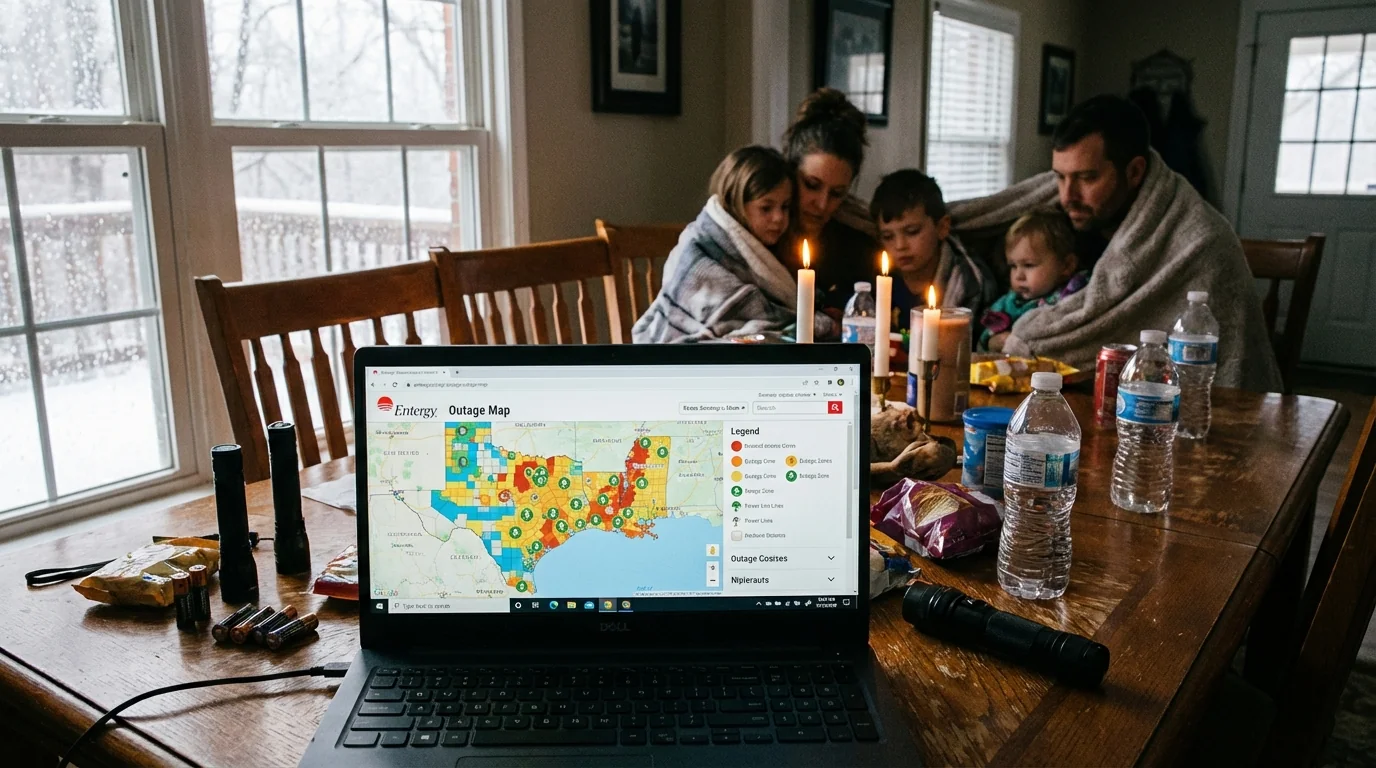
How to use the Entergy outage map during this storm
The map updates in near real time. It shows outage counts, locations, and estimated restoration times, also called ETRs. Those estimates change as crews complete assessments.
- Zoom to your street or community. Tap clusters to see local outage numbers.
- Open the outage detail panel. Look for ETR windows, cause notes, and crew status.
- Check the legend. Colors often reflect the size of the outage, not the severity of damage.
- Refresh often. ETRs are placeholders until a field crew inspects the line.
Bookmark the map, enable location, and screenshot key info. If your phone dies, a photo helps you share details with neighbors.
What the ETR really tells you
An ETR is a best estimate, not a promise. During ice, it may say “assessing” for hours. That means crews are navigating blocked roads, ice, or live hazards. Once assessed, ETRs narrow. They may shift again if new ice brings more damage.
How restoration is prioritized, and why ice slows everything
Entergy, like most utilities, restores in tiers. Crews start with threats to life, then critical services, then the biggest outage clusters. Hospitals, fire stations, and water plants come before small taps and backyard lines. That approach brings the most people back the fastest.
Ice is the toughest winter hazard for a grid. A quarter inch of glaze can snap limbs. A half inch can load primary lines and poles. Crews must cut and clear trees, test lines, and sometimes rebuild hardware. Every mile takes time. If roads refreeze, the clock resets.
Expect a two step process
First, assessment and hazard clearing. Second, targeted repairs. You may see trucks roll through with no instant fix. That is normal during triage. Power returns in waves, not all at once.
Safety first around downed lines and generators
Stay well back from any downed wire. Assume it is live. Keep children and pets inside during icing. Carbon monoxide is a silent killer, so place generators outside, well away from doors and windows. Never run them in garages, even with the door open.
- Charge phones, battery packs, and medical devices now.
- If you rely on electric heat, identify a warming option before nightfall.
- Unplug sensitive electronics. Leave one light on so you know when power returns.
- Store flashlights where you can reach them in the dark.
Stay at least 35 feet from downed lines, and 100 feet if lines are in standing water. Call 911, then your utility.
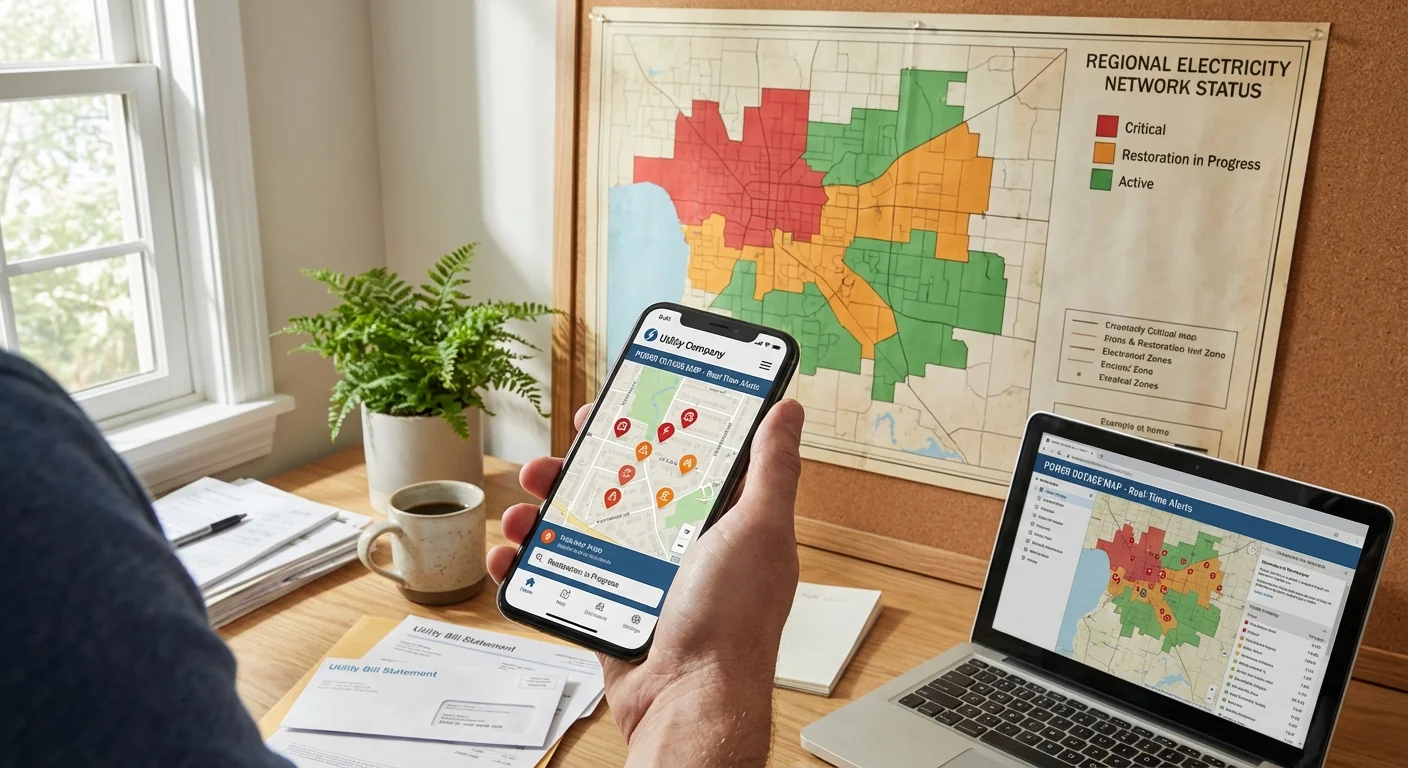
Why this ice fits a warming world
Cold still happens in a warming climate. What changes is moisture. A warmer Gulf loads storms with more water vapor. When surface temperatures hover near freezing, that extra moisture falls as freezing rain. The result is heavier ice on trees and lines. Research also shows bigger swings between warm and cold in some winters, which raises the odds of mixed precipitation events. The combination, more moisture and marginal temperatures, is a recipe for glaze.
Preparing for the next 24 hours, and the next storm
If you are in Texas or Mississippi, treat tonight as a resilience drill. Top off fuel for generators if you use them. Set thermostats a few degrees warmer now, your home will coast longer if power drops. Close curtains to hold heat. If you have a heat pump, use backup heat only when needed, then return to efficient settings.
Sustainability helps in storms. Weatherize doors and windows. Trim trees away from service lines during fair weather. Consider a home battery or community solar program to add backup without fumes. Neighborhood microgrids keep critical loads on, like medical devices, fridges, and communications.
The bottom line
Ice is winning the first hours of this storm, but information is power. Use Entergy’s outage map to plan, not to panic. Expect shifting ETRs while roads remain slick. Protect your family, then your home. I am watching the map as conditions evolve, and I will update as crews make headway. Stay warm, stay patient, and stay safe. 🔌