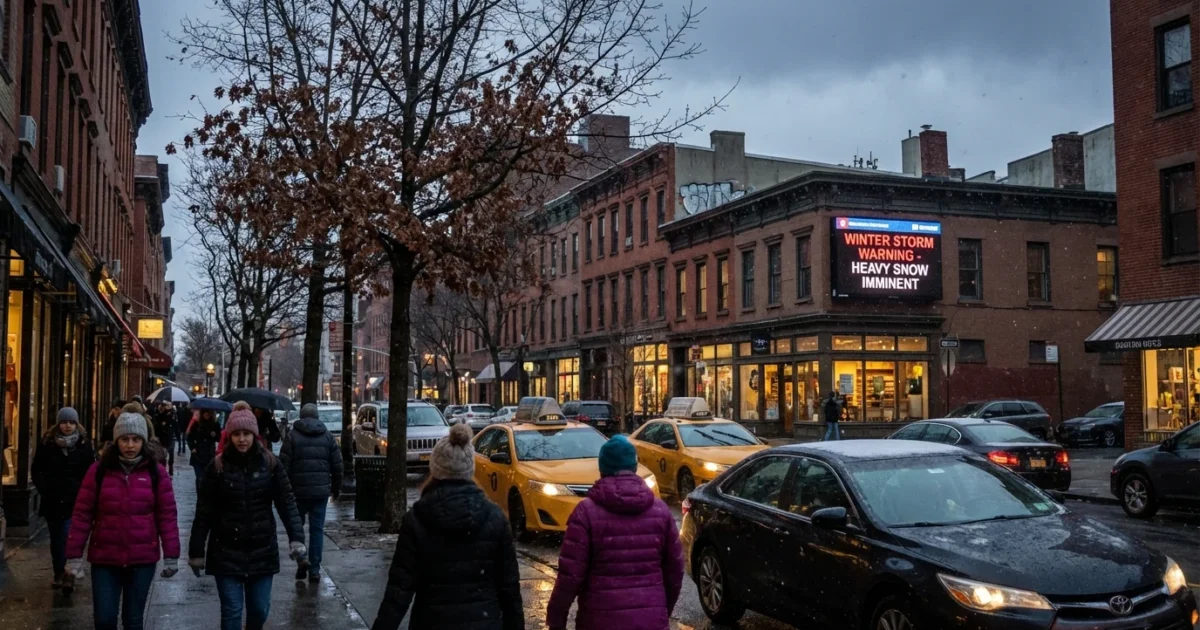
Breaking: Snow start times now locked in across Massachusetts. The first flakes will roll west to east today, with the biggest punch this afternoon and evening. If you need a clock, here it is. This storm looks like the most significant in roughly four years. Travel will turn tough fast. Campus and city operations are already shifting, including Boston University closing its Charles River and Medical campuses from Sunday at noon through Monday.
Why the timing is staggered
The storm is tracking up the coast while a pocket of cold air sits over land. That sets up a classic west to east march. Air over the ocean is mild, but the storm is pulling huge moisture into the state. That means heavy, wet snow where the cold hangs on, and a later change to snow near the water. Bands will set up and pivot this afternoon. Where a band sits, snow will dump fast.

When the snow starts, region by region
Berkshires and far western Massachusetts
Snow begins between 5 a.m. and 8 a.m. Roads will go from damp to slick before midmorning. Snow rates pick up by late morning.
Pioneer Valley, Springfield to Greenfield
Expect a start between 7 a.m. and 10 a.m. It will stack up faster by noon. Visibility will drop in bursts.
Worcester County and the high terrain
Flakes fly between 9 a.m. and 11 a.m. The hills cool first. Expect the quickest road impacts there.
MetroWest to Route 128
Snow fills in from 10 a.m. to noon. After noon, expect heavier bursts. Plows will struggle to keep up during the afternoon peak.
Greater Boston, including downtown and the harbor
Arrival is likely between 11 a.m. and 2 p.m. It may start as flakes mixing with drizzle near the shoreline, then turn steady. The heaviest snow hits mid to late afternoon.
North Shore and Merrimack Valley
Snow starts 11 a.m. to 2 p.m. Look for rapid intensification after 2 p.m. Evening travel will be slow and messy.
South Shore and South Coast
Snow arrives noon to 2 p.m. Some coastal neighborhoods could mix early, then flip to heavy, wet snow as the afternoon cools.
Cape Cod and the Islands
Expect rain to start early afternoon, then a change to heavy, wet snow late afternoon into evening, roughly 3 p.m. to 6 p.m. Gusty winds will add to the stress on trees and lines.
Peak impacts and what to expect
The core of the storm hits Sunday afternoon and evening. Snowfall rates will reach 1 to 2 inches per hour in many inland communities. That is when roads turn hazardous, even on treated surfaces. Coastal gusts will add a bite, and wet, pasty snow will cling to branches and wires. Scattered power outages are likely, especially south of Boston and along the coast. Light snow and slick spots linger into early Monday, then taper.
Parking bans are possible as crews work to clear major routes. Plan for limited transit schedules and delays. If you can stay off the roads late today, do it.
Travel will deteriorate fast Sunday afternoon. Expect bursts of heavy, wet snow, gusty coastal winds, and scattered power outages.
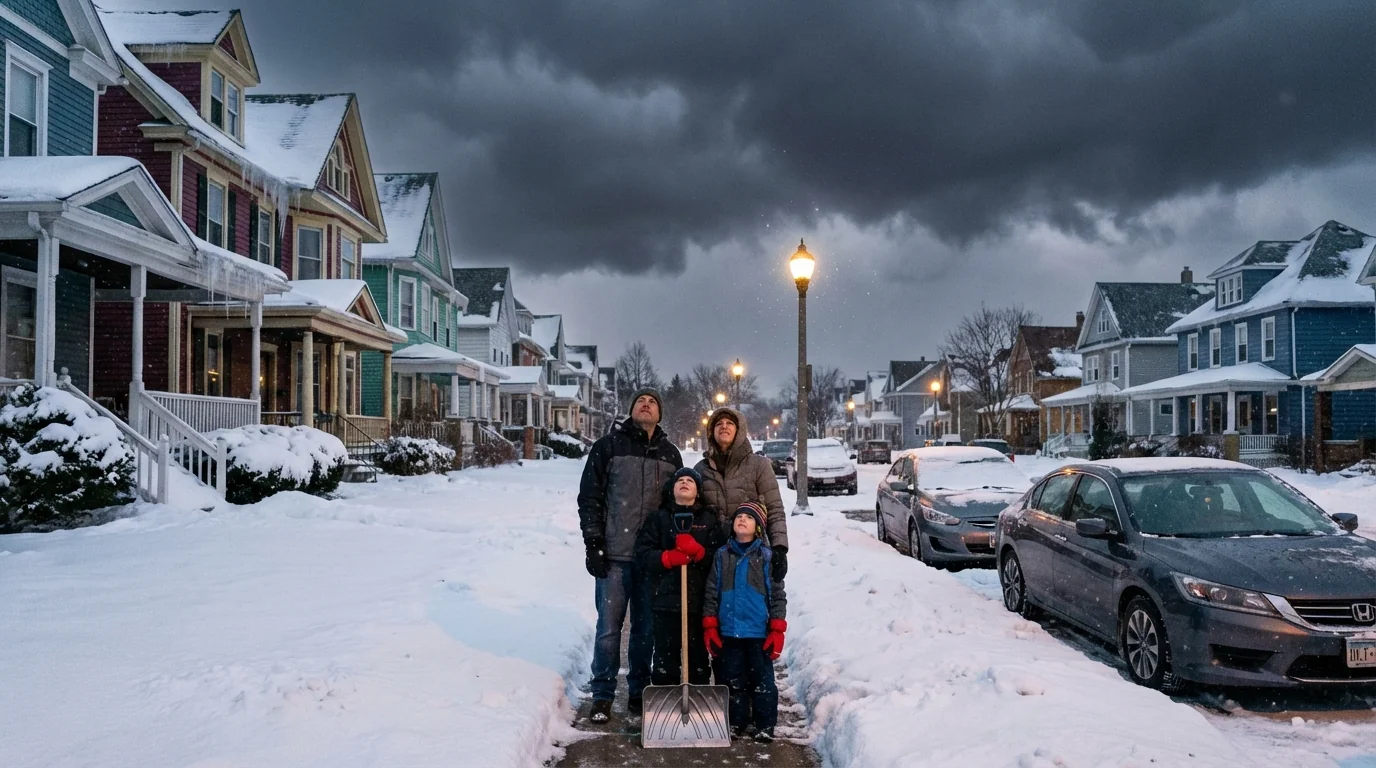
The climate signal in today’s storm
A warmer Atlantic is loading this system with moisture. That moisture boosts snowfall rates when it meets cold air over land. This is why we can see very heavy snow totals near the coast, even when air there starts marginal. Our winters now feature wider swings, with fewer consistently cold days and more high impact events. Heavy, wet snow is a hallmark of that pattern. It weighs more, snaps branches faster, and strains the grid. Planning for thicker tree canopies near wires, resilient microgrids, and smarter salt use will matter more each year.
How to track the exact minute in your town
Edges of snow bands are sharp today. That means a 30 minute difference can matter a lot. Use these quick steps as the storm closes in:
- Watch the live radar for the leading edge, then note the wind arrows. A shift inland means heavier bands.
- Check municipal alerts for parking rules and plow passes within the hour before arrival.
- Use National Weather Service Boston updates to see mesoscale band placement and any quick changes.
If your thermometer reads 31 to 33 degrees, expect a quick flip from drizzle to heavy snow once rates increase. That happens fast under strong bands.
The bottom line
Western and central Massachusetts start this morning. Greater Boston follows late morning into early afternoon. The ceiling drops hard by midafternoon, with the worst from mid to late day. Early Monday brings lighter leftovers and cleanup. Charge devices, move cars off narrow streets, and clear storm drains to prevent slush flooding. Check on neighbors who rely on electric heat. I will update timing and band placement through the day as the first flakes hit your street.