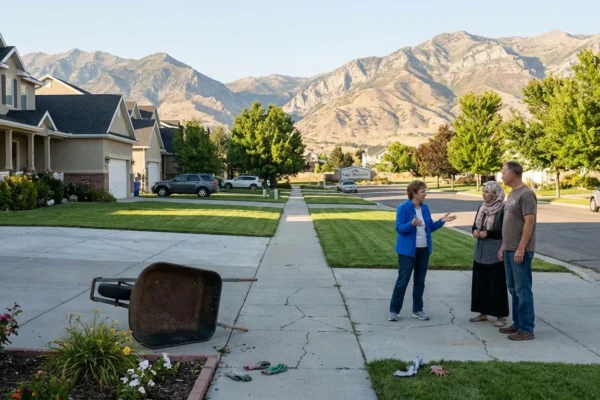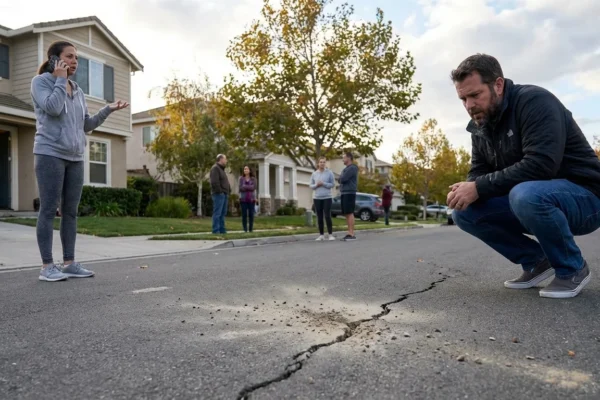
Power outage maps are lighting up across Texas tonight. A fast moving winter storm has slammed Central and North Texas with ice and bitter wind. Thousands of customers are in the dark. I am tracking utility dashboards in real time, and the picture is clear. Ice is snapping limbs, wind is rocking lines, and crews are moving as roads allow. If you need power updates, the outage map is your lifeline. ⚡
Where the lights are out
Austin and the Hill Country took a heavy hit. Ice built up on trees, then gravity did the rest. Branches fell on lines. Lights flickered, then failed in whole blocks. In the Dallas–Fort Worth area, gusts pushed already stressed lines to the edge. Oncor’s territory is seeing scattered but widespread cuts, from older neighborhoods with big trees to fast growing suburbs.
This is classic winter storm damage for Texas. A shallow layer of arctic air hugged the ground, cold enough to freeze rain on contact. A warmer layer above fed steady moisture. That is the recipe for glaze ice, the most dangerous kind for power systems. One quarter inch of ice can add hundreds of pounds along a span. Poles lean, lines sag, and a single limb can trip a circuit.

How to use the outage map right now
If your power is out, do not wait. Confirm it on your utility’s map and report it if needed. Austin Energy and Oncor both provide live maps with status and estimates.
- Open your utility’s outage map. Use your address or zoom to your block.
- Check your outage status. Look for the cause, crew status, and estimated restoration time.
- Report your outage if it is not shown. Add a note if you heard a pop or saw a flash.
- Sign up for text alerts. You will get updates as crews assess damage.
Bookmark your utility’s map. Turn on the layers for crew locations and number of customers affected. Refresh every 10 to 15 minutes.
Reading restoration times like a pro
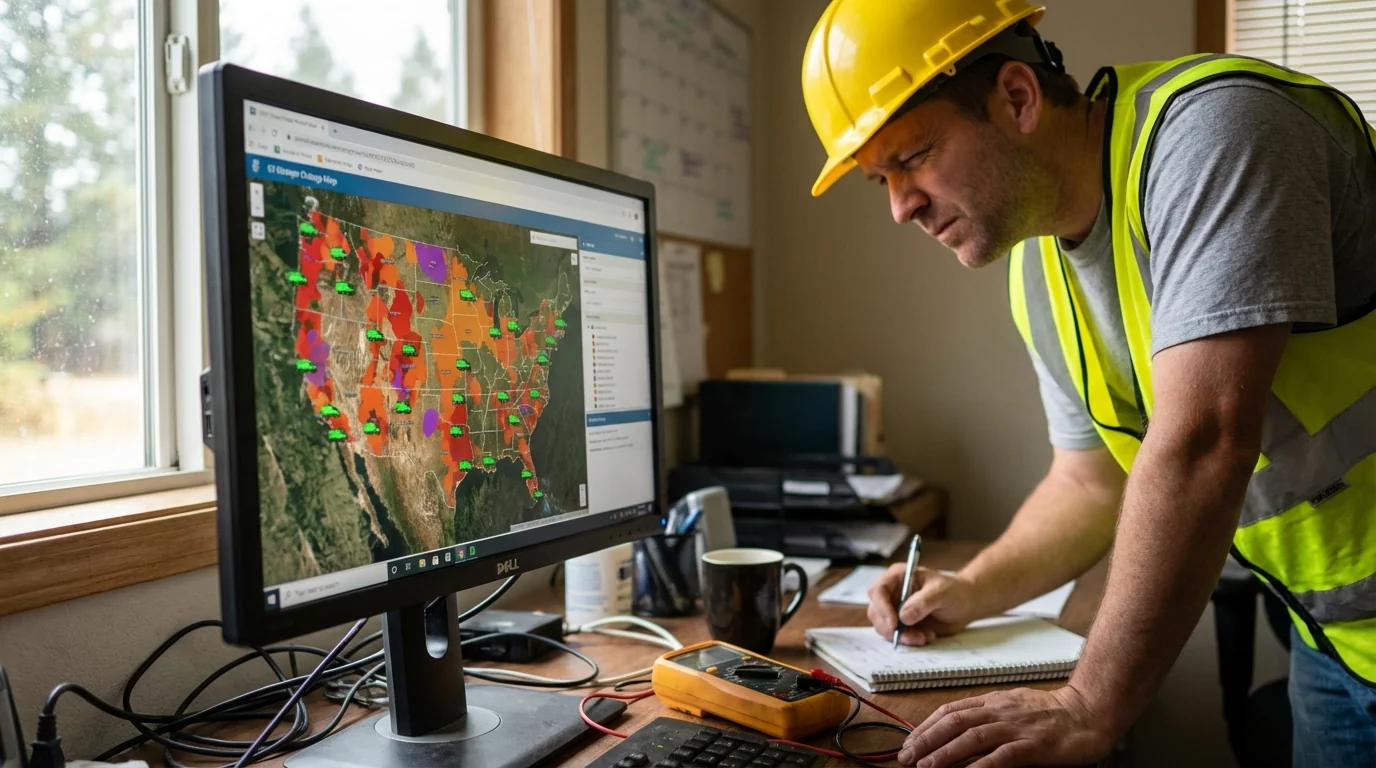
Those times on the map are not promises. They start as best guesses, then improve as crews arrive. Early in a storm, many estimates show as “assessing” or as broad time windows. That means a crew has not reached the site. Ice and traffic slow the approach. Once a crew tags the damage, times tighten.
You may see “assigned” with no time. That means a team knows about your outage and is working the list. “Partial restore” means some neighbors are back, others are on a different segment that still needs work. Trees can hide damage up-line. One fix can reveal another fault down the feeder.
Estimates change. Treat early times as placeholders, especially during freezing rain. Expect updates after crews complete a safety check.
Safety first during storm blackouts
Downed lines are deadly. The ice weighs them low. Some lines are hidden in tree debris or snow. Keep kids and pets inside. If a line is across a car, stay put and call 911.
- Keep generators outside, 20 feet from doors and windows.
- Conserve phone battery, dim the screen and turn on low power mode.
- Keep fridge and freezer closed to preserve food.
- Use flashlights, not candles, to cut fire risk.
Never run a generator in a garage or near vents. Carbon monoxide is invisible and can kill in minutes.
If you rely on medical devices, call your utility to flag your account. Check local warming centers through your city or 211. Drive only if you must. Blacked out signals should be treated as four way stops.
Why this storm hit the grid so hard
Texas sits where arctic fronts collide with Gulf moisture. As the climate warms, the atmosphere holds more water. That means heavier icing when surface air is below freezing. We are seeing more events where the rain is warm aloft and freezing at the ground. Ice, unlike dry snow, sticks to everything. It loads trees, wires, and hardware. The grid was built for heat waves and thunderstorms. Glaze ice finds every weak point.
Long term, the fixes are clear. Trim trees with climate risk in mind. Replace brittle hardware with ice rated fittings. Bury lines where density and soil allow. Build microgrids for hospitals and fire stations. Strengthen communications so outage maps stay accurate even when power and cell coverage fade.
What to expect tonight and tomorrow
Crews will first protect life and critical services. Hospitals, water plants, and major feeders come before individual lines. Side streets and backyard lines take longer. Expect a rolling wave of restorations as circuits are re energized. Expect some backslides too. Ice can break new parts as wind picks up again.
Help the grid while you wait. Turn thermostats down a few degrees. Unplug non essential devices. If your power returns, ease back on heavy use for the first hour. That cushion helps keep a fragile system steady.
Conclusion
Use the outage map, stay patient, and stay safe. This storm will pass, but the lessons are lasting. Know your utility, know your map, and plan for ice. In a warming world with wild swings, fast information is power, even when the lights are out.