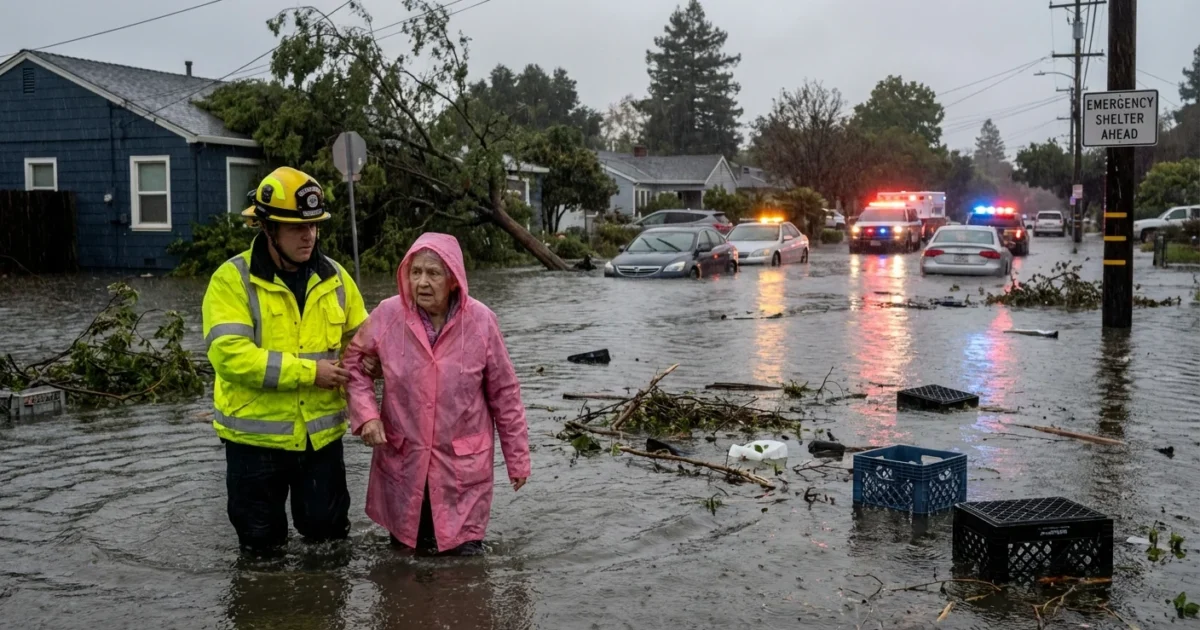
California is under a state of emergency tonight. A relentless run of winter storms drenched Southern California over the Christmas holiday. Streets turned into rivers. Slopes failed. Crews worked nonstop as flood rescues stacked up. In some neighborhoods, cars and homes sat buried to their windows in mud. This was the wettest Christmas many of us have ever seen, and the danger is not over.
State of Emergency Across Southern California
Officials moved quickly as rainfall totals exploded over a short window. Nearly half of Los Angeles’s typical yearly rain fell in about 72 hours. That flood of water overwhelmed drains and storm channels. Neighborhoods that rarely flood went under. Evacuation warnings expanded in foothill and canyon communities where burn scars and loose soils made landslides more likely.
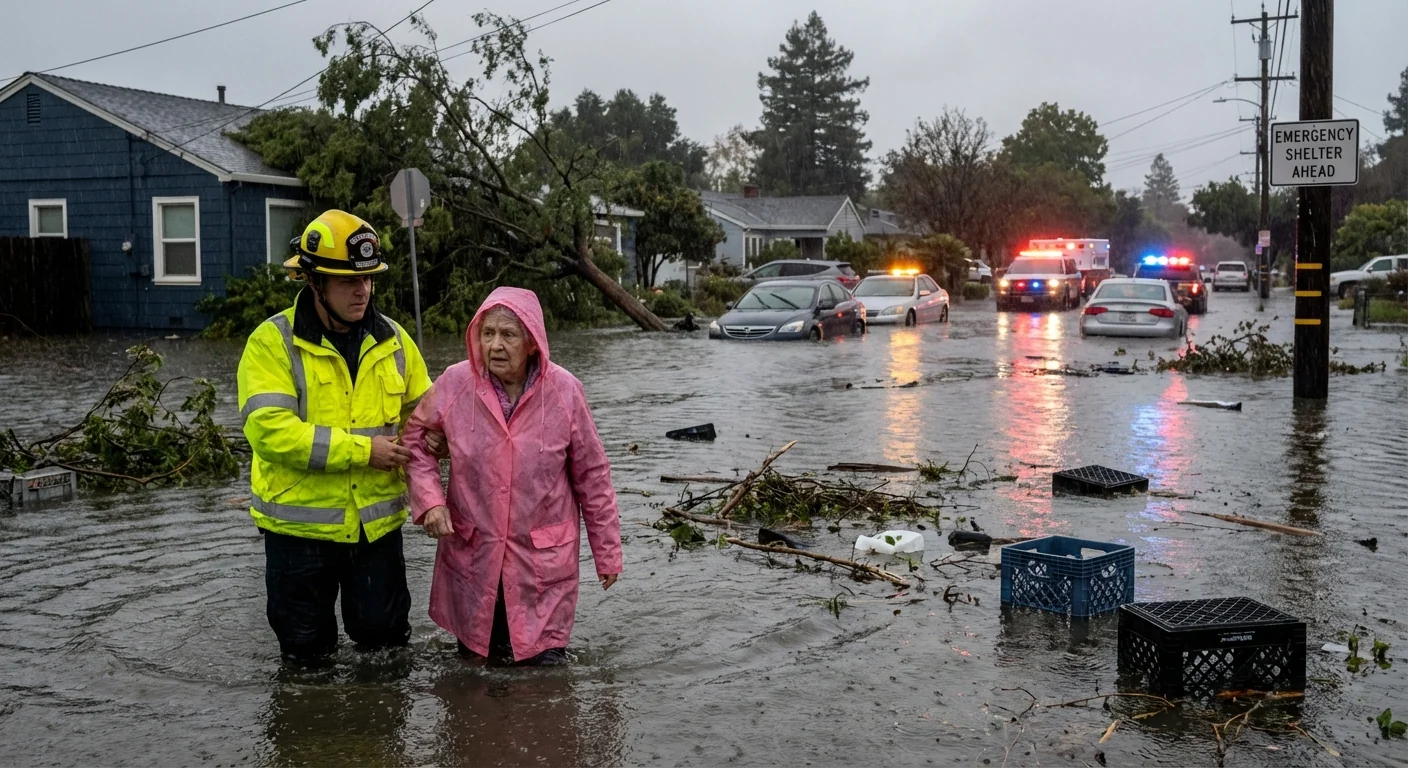
Multiple deaths have been reported. First responders have pulled people from stalled cars and flooded homes. Power outages and road closures cut off access in several areas. With more unstable slopes and high flows expected, the emergency order opens the door for faster aid, debris removal, and shelter support.
What Drove This Extreme Rain
This was not a normal winter soaker. A series of powerful Pacific storms lined up, then tapped deep moisture over warm ocean waters. That moisture fed a conveyor belt of rain into Southern California. The storms were slow to leave. The result was intense rain over the same ground, hour after hour.
Climate change is raising the ceiling on storms like this. A warmer atmosphere holds more water. When that water releases, rainfall rates spike. California is living the drought to deluge cycle. Longer dry spells bake the soil and reduce vegetation. Then stronger storms arrive and drop more water, faster. That mix leads to rapid runoff, flash flooding, and sudden slope failures.
Floods, Slides, and Human Toll
The physics are simple. When the ground is saturated, hillsides let go. We saw classic debris flows, fast and thick, that move like concrete. They plow through yards, fill garages, and sweep across roads in minutes. In lowlands, storm drains backed up. Small creeks jumped their banks. Major freeways turned into slow moving channels.
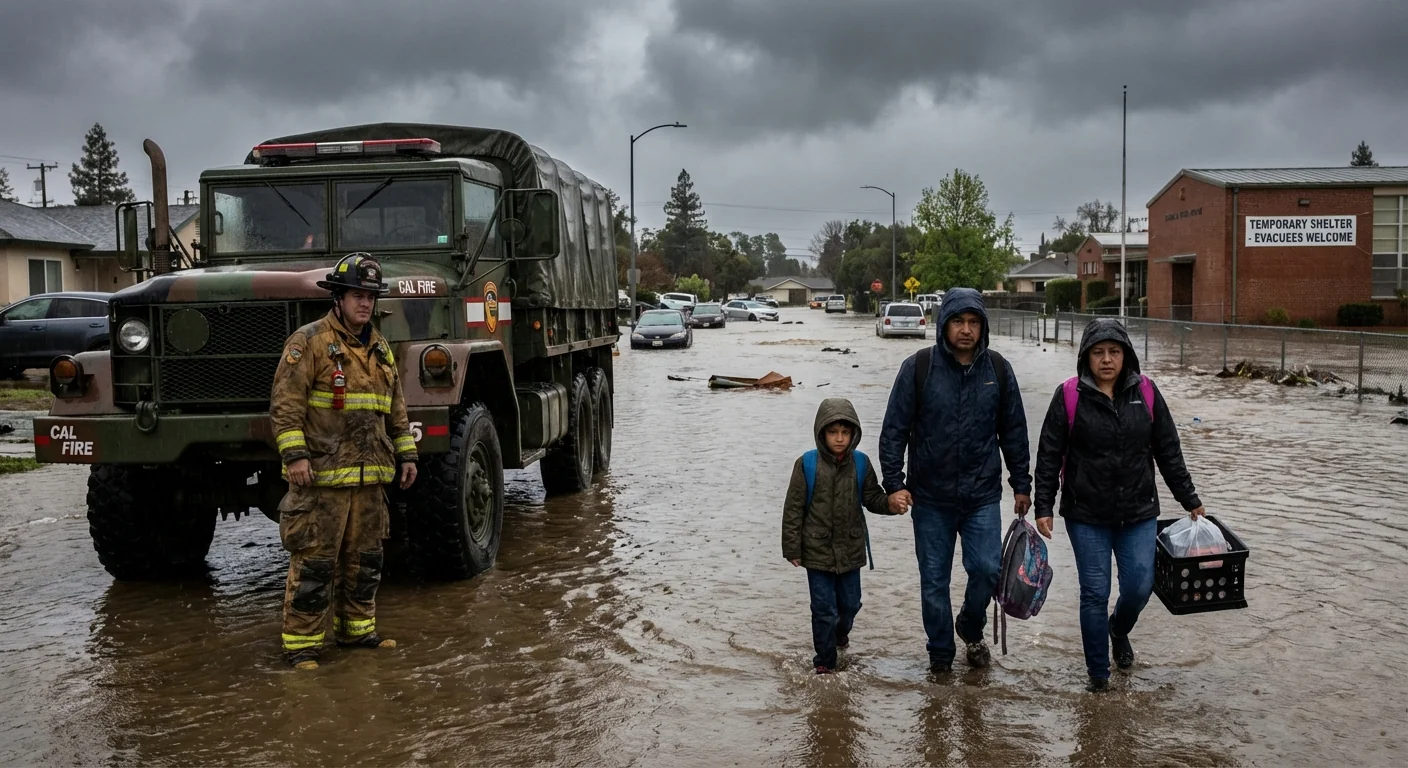
Rescues stretched from the coast to the inland valleys. Firefighters used high water vehicles and boats to reach trapped residents. Families left homes with what they could carry. Schools and parks became shelters. The emotional toll is heavy. The physical damage will take weeks to map and months to repair.
The Next 72 Hours
The air is drying in some zones, but the land is still dangerous. Water keeps working downhill. Soils stay slick and heavy long after the last drops fall. More showers may develop around lingering instability, and even light rain can trigger new slides on weakened slopes.
Do not drive through flood water. It hides sinkholes, debris, and strong currents. Turn around, even if it looks shallow. ⚠️
Crews will prioritize life safety, then restore access, then clear debris. Expect rolling closures on canyon roads and along burn scar corridors. Stormwater teams are clearing blocked culverts and opening channels to drop water levels. In floodplains, pumps will run around the clock.
If you live below a steep slope, watch for cracking ground, tilting trees, and new water seepage. Call it in early. Early warnings save lives.
Building Resilience for a Hotter, Wetter Future
We cannot sandbag our way out of this new normal. We need to redesign for it. That starts with mapping the true reach of water and earth under extreme rain. Zoning and rebuilding must reflect those lines, not the past.
Sustainable fixes are on the table and ready to scale. Green streets can slow and soak stormwater. Expanded urban tree canopies hold soil and shade neighborhoods. Restored wetlands and floodplains give rivers room to spread, which lowers peaks downstream. Permeable pavements can turn parking lots into giant sponges. And smarter reservoirs can capture big pulses, then release water slowly to recharge aquifers.
- Near term actions, clear debris basins and upsized culverts.
- Mid term moves, expand buyouts in chronic flood zones.
- Long term planning, invest in green infrastructure and managed retreat where risk is extreme.
- Always, pair early warning systems with community outreach in multiple languages.
Keep a go bag ready, with meds, chargers, water, and copies of key documents. Check on neighbors who may need help. 🌧️
The Bottom Line
This emergency proves the drought to deluge era is here. A warmer sky held more water, then dropped it fast, and Southern California paid the price. We can reduce risk, but only if we act at the speed of the weather. Recover now, rebuild smarter, and give water the space and time it demands. The storms will come again. Our job is to be ready.