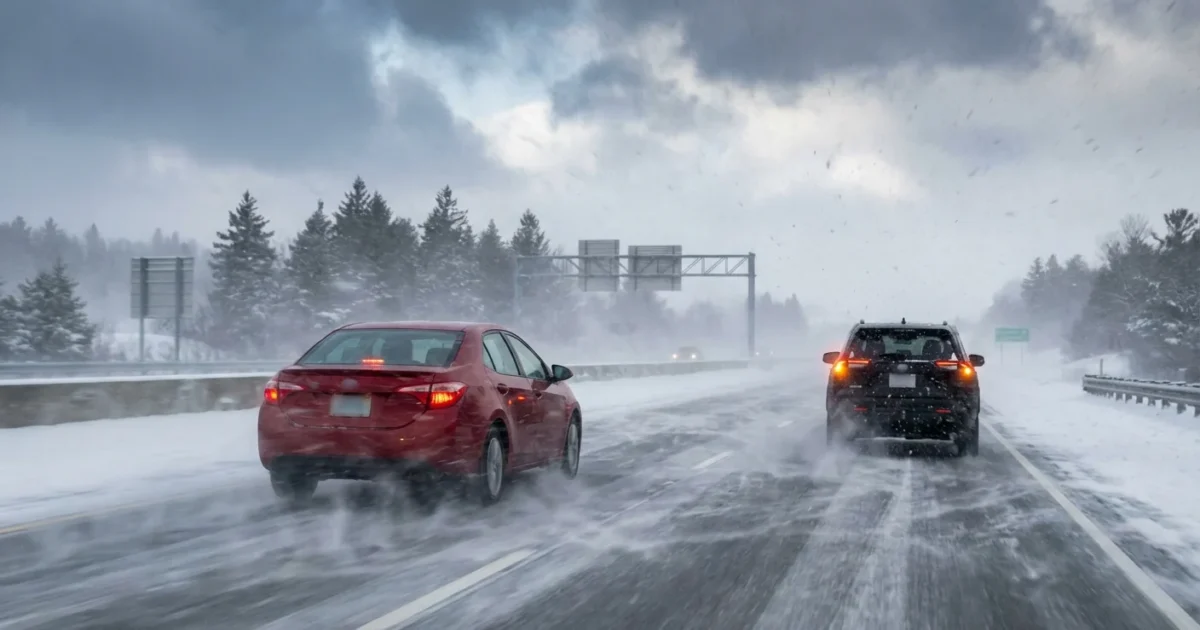
A sharp burst of snow is hitting parts of the Mid-Atlantic this evening, and it is not your usual flurry. This is a snow squall, a fast moving wall of snow and wind that can turn a clear commute into a whiteout in minutes. Roads that look wet can flash freeze. Visibility can drop to near zero. The danger rises fast, then moves on just as quickly. ❄️
What a Snow Squall Is, and Why It Hits So Hard
A snow squall is a brief but intense band of snow with strong, gusty winds. It often forms along an arctic front, or downwind of the Great Lakes and higher terrain. It usually lasts 15 to 60 minutes in any one spot. The burst is narrow and fast, like a winter thunderstorm without the thunder.
This is not a blizzard. A blizzard lasts at least three hours with steady strong winds. A snow squall is short, sharp, and surgical. On highways, it can be just as dangerous. Drivers go from dry to glare ice in a mile. That sudden change is the trap.
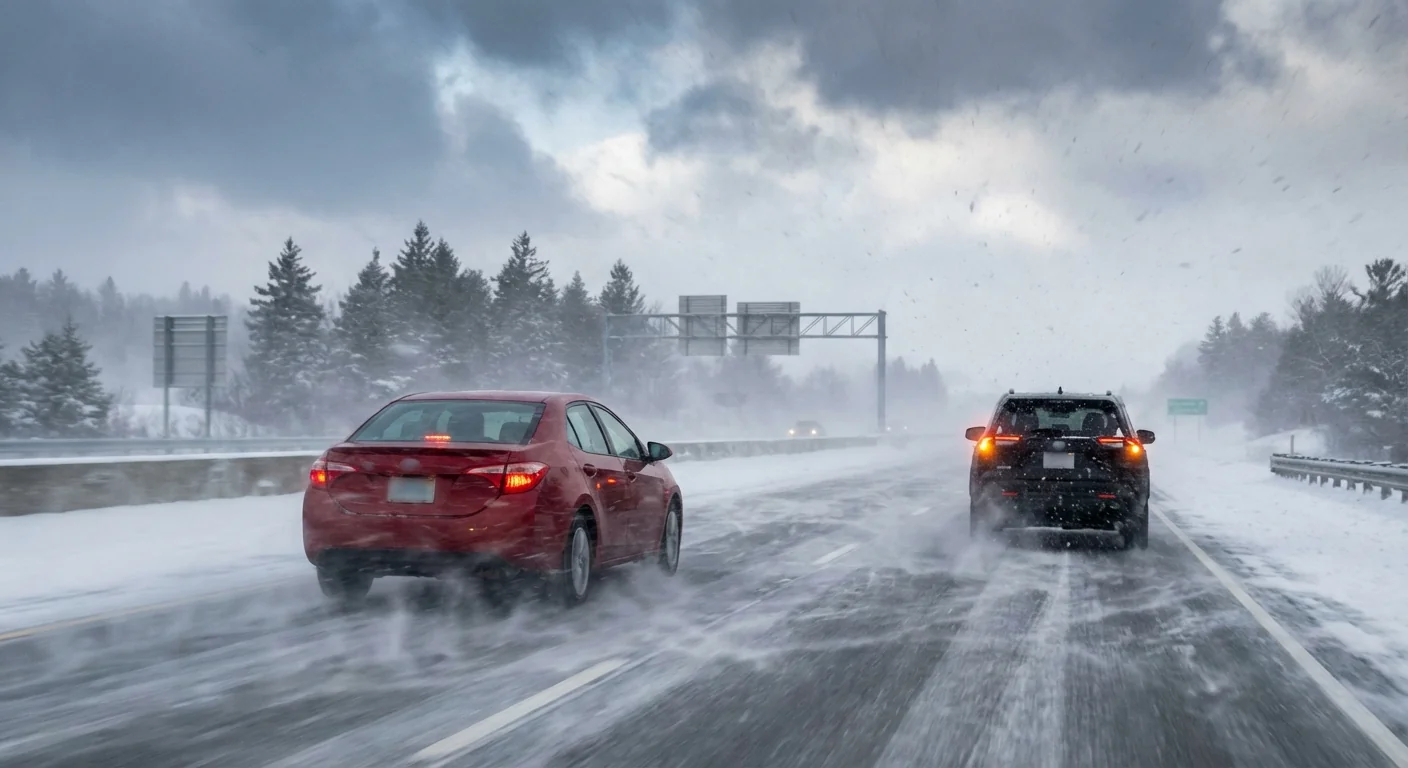
Snow Squall Warnings are urgent, short fuse alerts. If your phone buzzes with one, conditions are changing within the hour.
Why Now, and How It Forms
Cold, dry air is racing in behind today’s front. That air slides over pockets of lingering moisture near the surface. The clash squeezes out quick hitting snow bands. The steep temperature drop behind the front adds punch to the wind. That is a classic snow squall recipe.
In lake effect zones, open water adds heat and moisture to the passing cold air. When that air climbs over hills, the snow rate spikes. But the same mechanics can clip the cities and suburbs, especially along I 95, when the front lines up just right.
Climate signals are shaping the stage. Winters are warming overall, but temperature swings are sharper. When cold shots do arrive, they can tap into moister air in a warmer world. Less ice cover on the Great Lakes in many recent winters can feed stronger, more frequent lake effect bursts when the air is cold enough. That means fewer long storms in some years, yet more short, high impact surprises.
Road Risks You Can See, and Those You Cannot
The hazards stack up fast. Winds whip fresh snow into a screen. Tire spray turns to ice as air temperatures plunge. Bridges and ramps freeze first. Traffic stacks up behind brake lights, then pileups can follow.
If you are in a snow squall, do not slam on the brakes in the travel lane. If you must stop, pull off the roadway and turn on hazards only after you are clear.
Move Like a Pro When Minutes Matter
- Slow down early, leave extra space, and use low beam headlights
- Turn off cruise control, drive by feel and sight, not memory
- Watch the pavement, a wet black sheen can become ice in seconds
- If a warning hits and you can delay, delay the trip
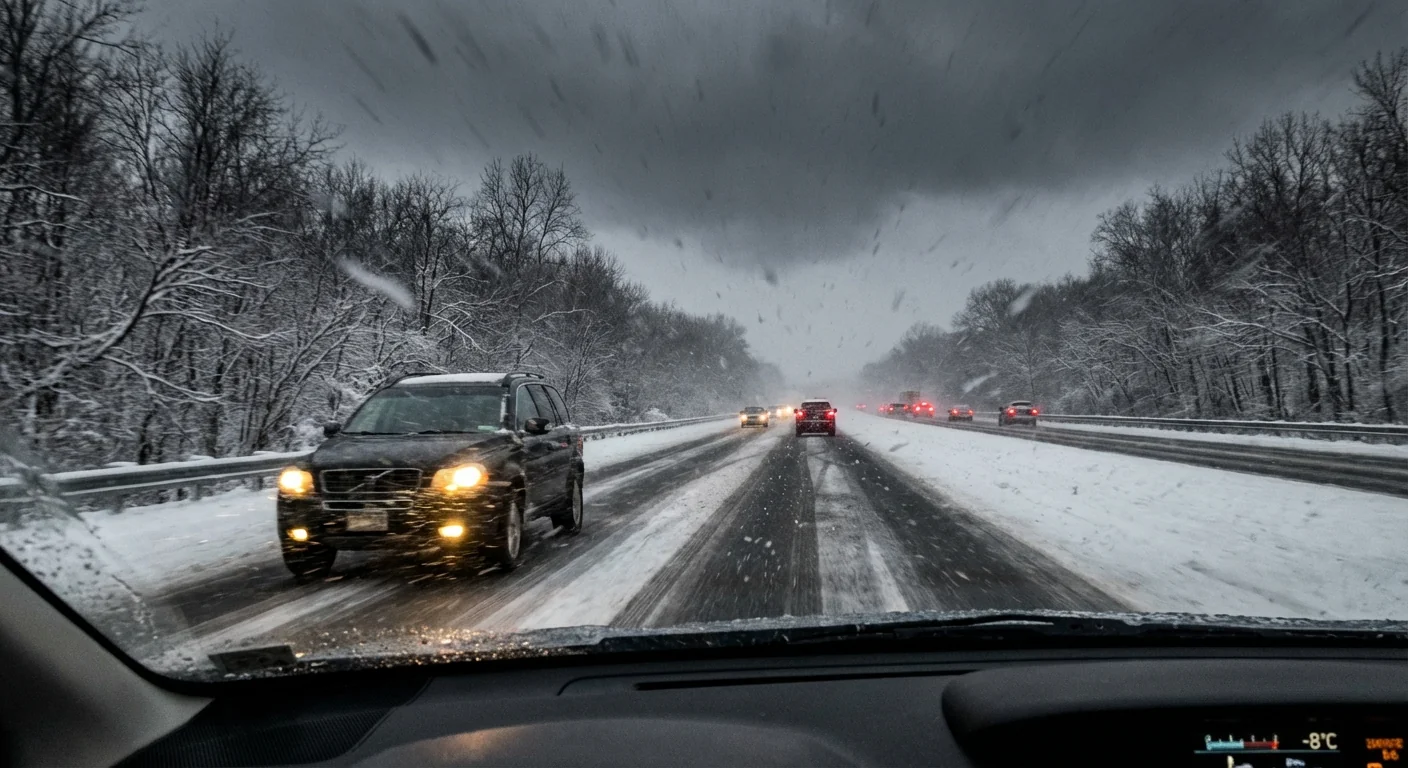
How to Read a Snow Squall Warning
These warnings are targeted to small areas and short time windows. They are not the same as Winter Weather Advisories or Winter Storm Warnings. Those cover broader, longer events. A Snow Squall Warning means the burst is imminent or already on the move.
You may get a loud push alert on your phone. Exit ramps and smart signs may flash messages. Treat it like a tornado warning for drivers. The threat is brief, but it is life threatening on high speed roads. If you are near the warned zone, look for the leading edge. The sky may darken. Wind may gust. Then the snow hits like a curtain.
If you see brake lights vanishing into white, increase following distance by at least four seconds. Space is your best safety tool.
Sustainability Meets Winter Readiness
There is a smart way to fight flash freeze without flooding streams with salt. Highway crews that pre treat with brine can prevent bonding of ice to pavement. That uses less salt and works faster than rock salt alone, which needs time and heat to melt. Cities can switch to lower chloride blends where possible, and protect sensitive waterways.
Drivers can do their part. Good winter tires shorten stopping distance. Clean off headlights. Keep washer fluid topped up. Employers can help by allowing flexible schedules during short fuse hazards. Fewer cars in the peak of a squall means fewer crashes and less idling, which also cuts emissions.
Local planners are adapting too. Variable speed limits, better road weather sensors, and quick trigger warnings save lives. These tools matter more as our winters tilt toward volatility. Fewer big storms does not mean fewer risks. It means the risks arrive in spikes.
The Bottom Line
A snow squall is winter’s ambush. It is short lived, but it hits with force. You cannot out drive a whiteout, but you can outsmart it. Know the signs, respect the warning, and give yourself time and space. As our climate warms and swings more, these sharp bursts will keep testing our roads and our readiness. Stay alert, and get home safe. ⚠️