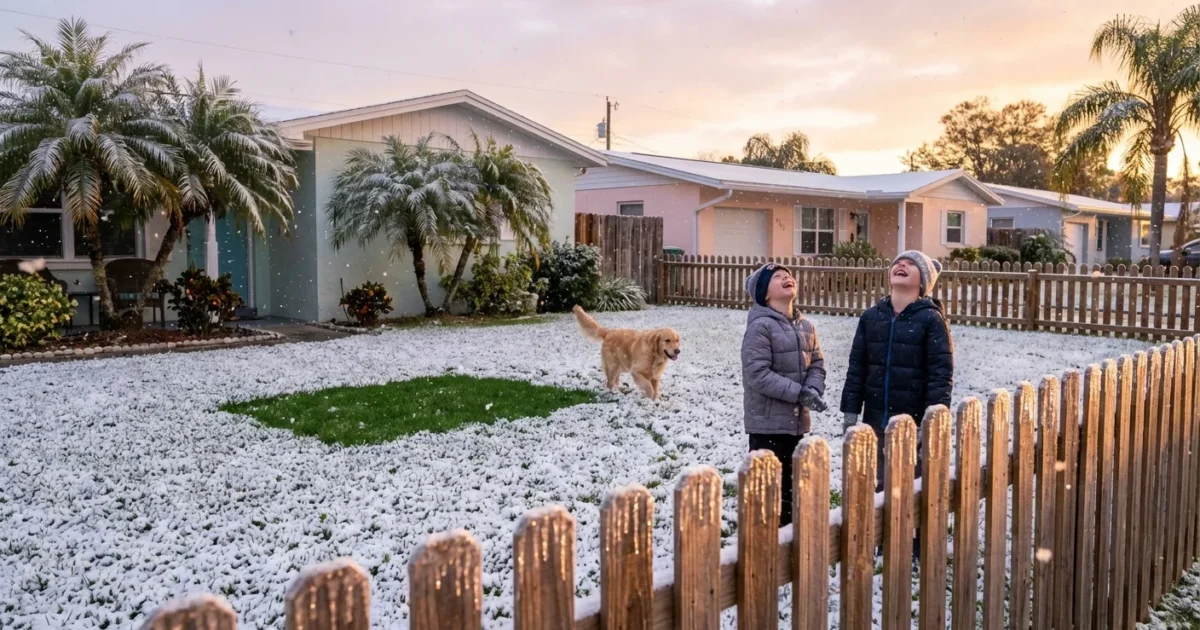
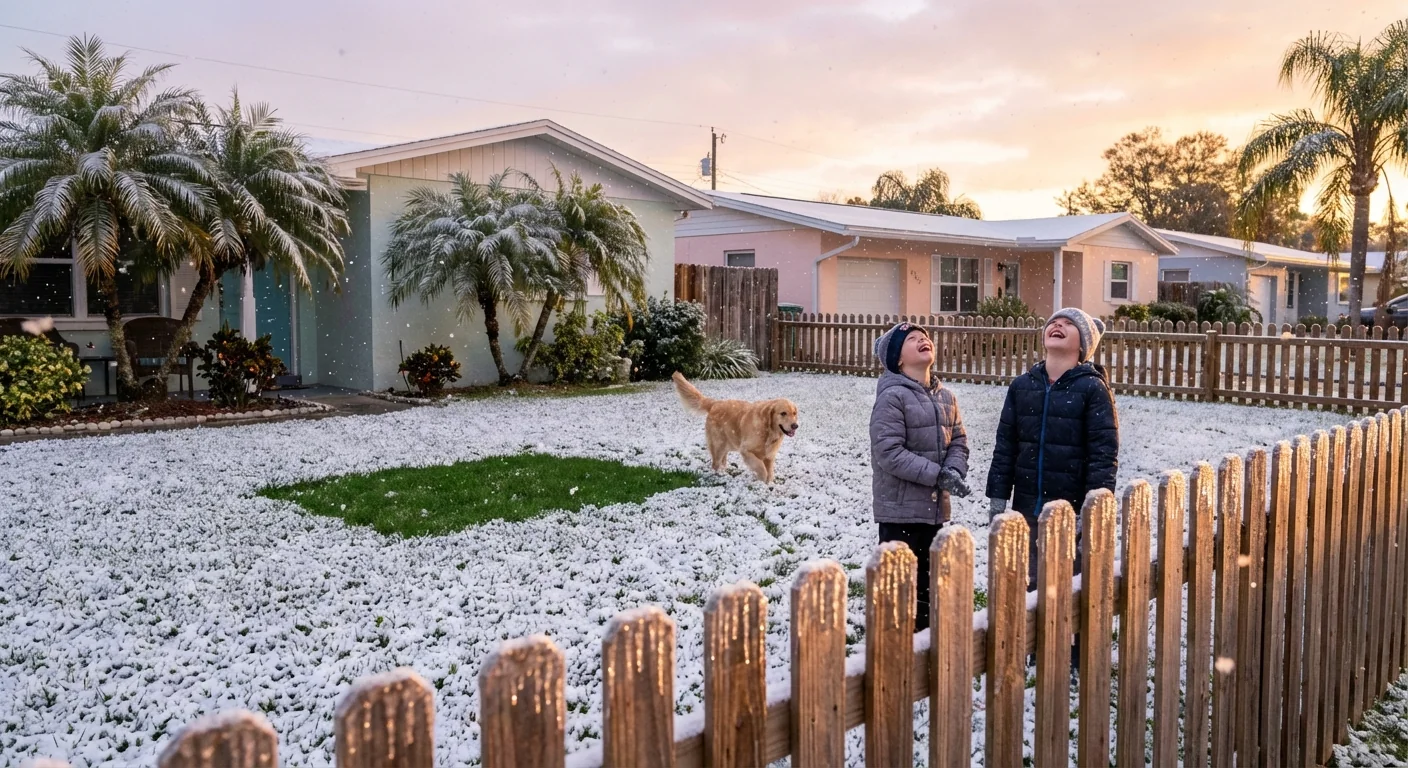
A rare winter blast turned parts of Florida white this morning. Light snow and flurries fell before sunrise, dusting lawns, rooftops, and car hoods. I confirmed the wintry burst across the Panhandle and into north and inland parts of the state. Temperatures dropped below freezing and stayed there through the morning. Roads turned slick in spots, and the air felt more like Tennessee than Tallahassee. ❄️
Snow in the Sunshine State
This was not a blockbuster storm. It was a fast hit of cold air meeting just enough moisture. That mix made the magic. Many areas saw flurries, with light coatings on grass, decks, and mailboxes. Bridges and overpasses were the first to ice, where wind chills kept surfaces colder.
The cold arrived early and bit hard. I tracked readings in the upper teens and low 20s across the coldest inland pockets. Even near the coast, numbers fell to freezing or just below. That was enough to keep flakes intact on the way down, at least for a short window around daybreak.
How an Arctic outbreak made Florida snow
An Arctic air mass plunged deep into the Southeast, then settled over Florida. Think of a great dome of cold, heavy air sliding south as the jet stream dipped. That cold alone does not make snow. Florida also needed a strip of moisture riding over the top. A weak disturbance provided lift, the atmosphere wrung out ice crystals, and flakes reached the ground before the dry air could eat them.
Snow is rare here because Florida usually lacks one ingredient. We often have plenty of moisture, but not enough deep cold. Or the reverse. Today, both showed up at the same time. That overlap was brief, which is why most totals stayed light.
This event fits Florida history. Northern counties see a few flurry episodes each decade. Central and South Florida can go many decades without it. The setup must be precise. Cold air must arrive early, moisture must be gentle and shallow, and winds must not shear the flakes into drizzle.
Hazards and what to do right now
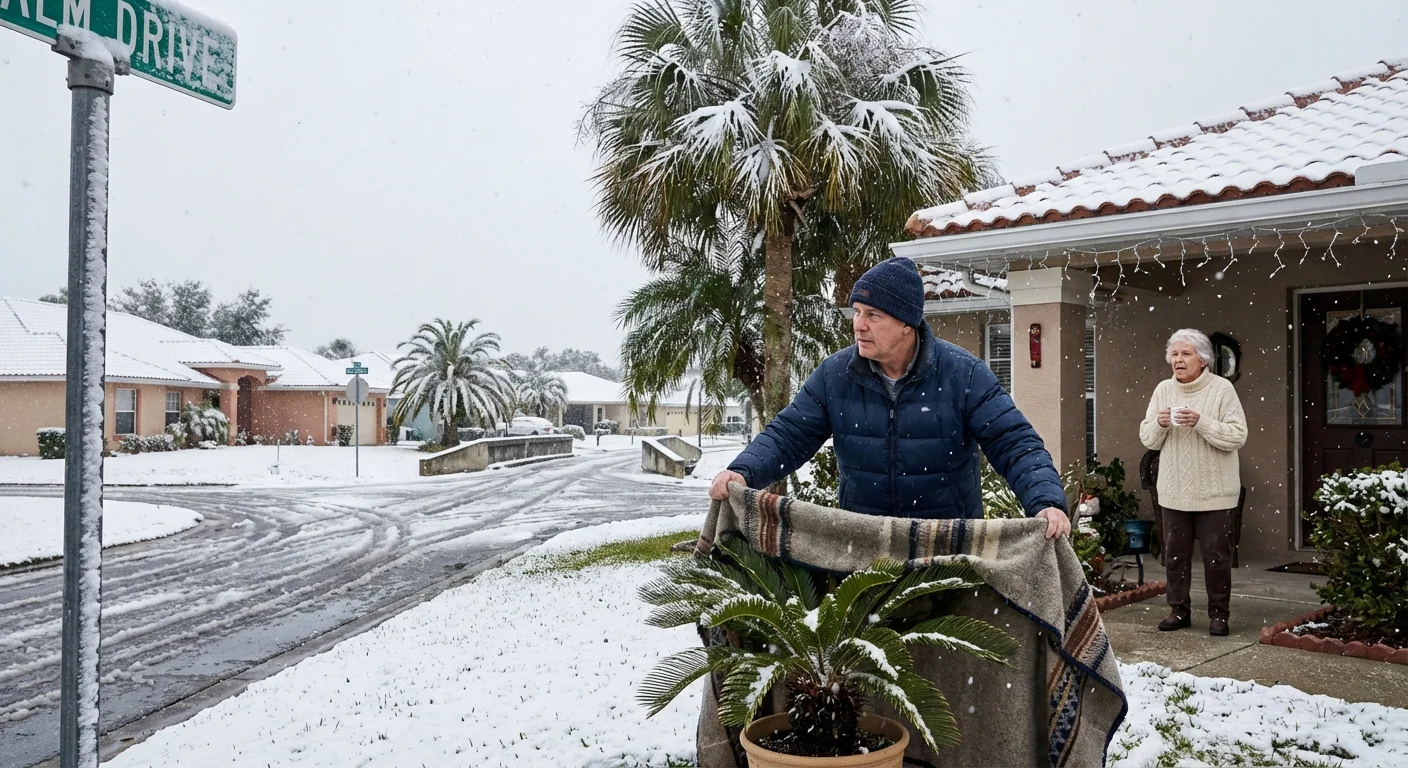
The biggest danger is black ice on bridges and ramps. It can look like wet pavement, then turn tires into skates. Pipes in exposed walls may freeze and burst. Tropical plants are at risk, and outdoor pets are in danger in this cold.
Icy bridges and overpasses will remain slick where shade and subfreezing air linger. Slow down, leave extra space, and avoid sudden braking.
If you must travel, give yourself time. If you can wait, let the sun do its work. Even then, some spots will refreeze after sunset.
- Bring pets indoors, and cover or move sensitive plants.
- Let faucets drip to protect pipes, and open cabinet doors under sinks.
- Drive slowly on bridges, and avoid cruise control.
- Check on neighbors, especially seniors and those without heat.
What this says about climate
A warming climate does not erase cold snaps. It changes the background. Across Florida, the number of very cold nights has trended down over many years. But the atmosphere can still deliver sharp Arctic shots. When those shots arrive over warmer oceans, there can be more available moisture. That can raise the odds of brief wintry mix events in places that rarely see them.
Scientists continue to study how a warming Arctic may influence the jet stream. Some research suggests larger swings, which can pull cold farther south at times. Other studies find weaker connections. What we know today is simple. Florida will keep warming overall, with fewer freezes, yet high impact cold waves can still break through. Planning must cover both heat and cold.
What comes next
The freeze will linger into tonight, with another hard hit in the coldest spots before dawn. Daytime temperatures will slowly recover, but shaded ice can hang on through midmorning. A gradual warmup is expected later this week, with highs returning to more typical Florida levels.
Protect people, pets, pipes, and plants until the cold breaks. These simple steps prevent injuries and costly damage.
Energy demand is high right now. If you can, lower your thermostat a couple of degrees and avoid using large appliances at the same time. That eases strain on the grid and helps keep everyone warm. Local shelters and warming centers are open in some communities. If you are in need, call your local emergency office to find the nearest site.
Florida woke up to a rare sight, and a clear message. Weather can still surprise, even in a warming world. Enjoy the brief beauty, then focus on safety. This cold will pass, but the lessons matter. Prepare for both heat and cold, build resilient homes and communities, and keep an eye on the sky. The next twist in our changing climate is never far away. 🌡️