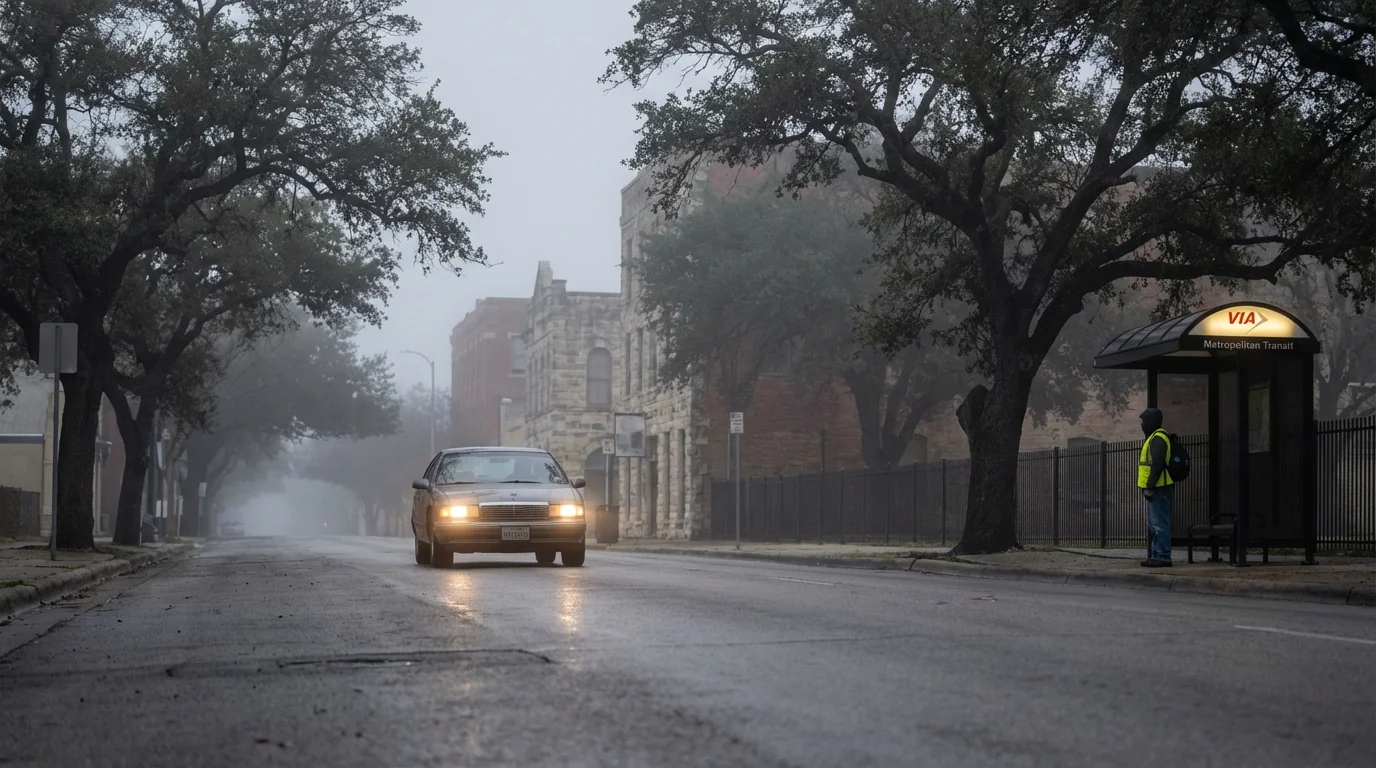
San Antonio wakes up inside a cloud. A Dense Fog Advisory is in effect right now, with visibility below half a mile in many spots and near zero in pockets along I-35 and I-10. I am tracking slowdowns and repeat fender benders on the north and east loops as drivers hit sudden gray walls. The fog will lift by mid-morning. The sun returns by lunch, and highs climb into the low 70s.
Fog Now, Sun Later
Thick fog formed before dawn as mild Gulf moisture met cooler ground. Streets are slick, and exits appear fast. This is not light mist. It is dangerous, low, and patchy. That makes it hard to judge speed and distance. Once the sun mixes the lowest air, the fog will break apart. Expect partly to mostly sunny skies this afternoon. Temperatures will reach the low 70s, with the evening in the upper 60s.
Fog safety: slow down, use low beams, and leave extra space. Do not use high beams. If you must stop, exit the road and turn on hazard lights only when parked in a safe spot.
A Dry Story Beneath the Fog
The ground below this fog is stressed. Most of Bexar County remains in Level 3 extreme drought. Since September, San Antonio sits about 8 inches below normal rainfall. That is a sharp deficit. Soil has dried out. Creek beds are thin. Brush is brittle.
Reservoirs show the strain. Canyon Lake is around 62.6 percent full. Medina Lake has fallen below 5 percent. That number should make every household pause. Even steady winter sun will not fix this. We need repeated, soaking storms to rebuild storage, and none are on the doorstep today.
Heat and drought feed each other. Hotter air holds more water. It pulls moisture from soil and plants faster. That speeds up drying between scarce rains. Winters here are trending warmer on average, and that shifts when and how much water we keep. Every gallon saved now helps stretch supplies for spring.
Quick ways to save water today
– Cut shower time by two minutes.
– Run full loads in washers only.
– Fix a running toilet. It can waste hundreds of gallons a day.
– Sweep driveways. Skip the hose.
Cedar Season Returns With a Bite
As the fog fades, another haze takes over. Mountain cedar pollen is now spreading across the Hill Country, and it rides the breeze into the city through mid February. This pollen can spike fast on dry, sunny days. It irritates eyes and throats. It steals sleep and energy, even for people who do not usually have allergies.
You can fight back. Keep car vents on recirculate during heavy morning counts. Rinse your face and hair after time outside. Use a HEPA filter if you have one. Talk to your doctor about daily meds if symptoms flare.
If you feel chest tightness or wheezing, limit outdoor activity and seek medical advice. Children and older adults are more sensitive to high pollen days.

What To Expect Next
Fog lingers through mid-morning, then clears citywide. Afternoon is bright and mild. Highs reach the low 70s, and light south winds continue. Another round of patchy morning fog is possible Saturday where low spots trap cool air. A stronger north wind looks likely by late weekend as a cold front slips in. That brings cooler air and gusts, but only a small chance for light showers. The drought picture does not change without a soaking system, and I do not see that in the short term.
Conclusion: This morning’s fog is a sharp, short-term hazard. The drought is the long haul story. Both shape our choices today. Drive with care, use less water, and protect your lungs as cedar season peaks. San Antonio can be ready for the next front, and the next dry spell, by acting now.