BREAKING: Northern Lights Surge South After Powerful Solar Blast
Skies across the northern United States and much of Canada are glowing tonight. A strong solar eruption has pushed the auroral oval south, lighting up places that rarely see the Northern Lights. I am tracking widespread reports from the Great Lakes to the Pacific Northwest, with the best viewing expected late this evening into early morning.
A strong geomagnetic storm is ongoing. Auroras are likely across northern states tonight, with best chances from 10 p.m. to 2 a.m.
What Happened Above Us
On December 6, the Sun fired an M8.1 flare from Active Region 4299. That blast launched a full halo coronal mass ejection, a giant cloud of charged particles that raced toward Earth. When those particles reached our magnetic field, they set off a G3 strong geomagnetic storm. That storm peaked earlier this week, and it is still active tonight with Kp values near 4 to 5.
The result is simple and stunning. The auroral oval expanded south, letting millions see ribbons of green with hints of purple and red. This window lines up with the Geminids meteor shower, so some viewers are catching meteors streaking through the same sky. It is a rare double show.
[IMAGE_1]
Where and When To Look
If you are in Alaska or across the northern tier, you are in play. Washington, Idaho, Montana, North Dakota, South Dakota, Minnesota, Wisconsin, Michigan, and Maine are favored. Parts of the Northeast and the northern Rockies also have a chance, especially away from city lights. Activity should pulse, so do not give up after a few minutes.
Clouds, moonlight, and local light pollution will decide winners and losers. Choose a dark site with a clear view to the north. The most common glow looks like a pale green arc at first. During stronger bursts, it ripples and climbs overhead.
- Best window: 10 p.m. to 2 a.m., with short bursts possible before dawn
- Face north, and scan low on the horizon first
- Get away from city lights by at least 10 to 20 miles
- Let your eyes adjust for 20 minutes
Even a faint gray band on the northern horizon can be aurora. Long phone exposures reveal color your eyes may miss.
Why This Matters For Tech and Climate Resilience
G3 storms are beautiful, and they can be disruptive. Power grid operators watch for extra currents on long transmission lines. High frequency radio can fade. GPS can jitter. Satellites experience surface charging and drag in the upper atmosphere. Aviation routes near the poles sometimes shift to reduce radio risk.
These events are a reminder. As we build out cleaner energy, we are adding more long lines, more inverters, and more sensors. Space weather readiness is part of climate resilience. Hardening transformers, improving real time monitoring, and sharing alerts across utilities reduce risk. Satellite builders now add better shielding, safe modes, and drag forecasts. These steps protect the backbone of renewable power, communications, and navigation.
Expect minor navigation errors, radio dropouts, or brief power quality issues during spikes in activity. Have backup navigation and a charged power bank if you travel.
How To Watch And Photograph It
You do not need fancy gear to enjoy the show. But a few simple moves help you see more and bring home a great shot.
- Pick a dark spot with a clear northern view, and keep car lights off.
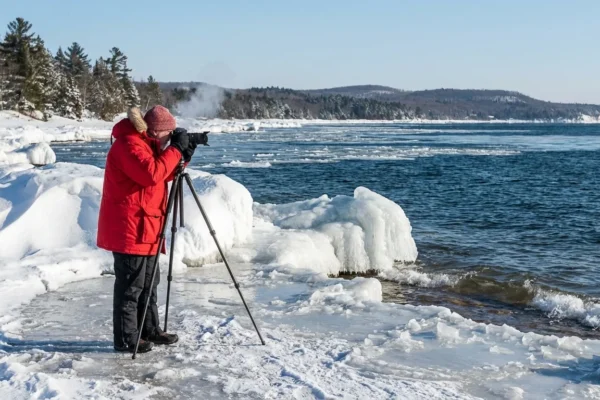
- Use a tripod. Set phone to night mode, or use a camera with 5 to 15 second exposures.
- Go wide. ISO 800 to 3200, focus at infinity, and shoot in bursts.
- Stay warm, and keep checking the sky. Auroras pulse and can brighten fast.
[IMAGE_2]
If your photos are blurry, switch to manual focus, set it to infinity, and lower exposure time to reduce star trails.
The Bottom Line
A major solar eruption earlier this month set the stage. Tonight, the sky is delivering. If you have clear weather and a dark horizon to the north, step outside. The Northern Lights are visiting, and the window is open. Keep your expectations flexible, your batteries warm, and your eyes on the edge of the night.