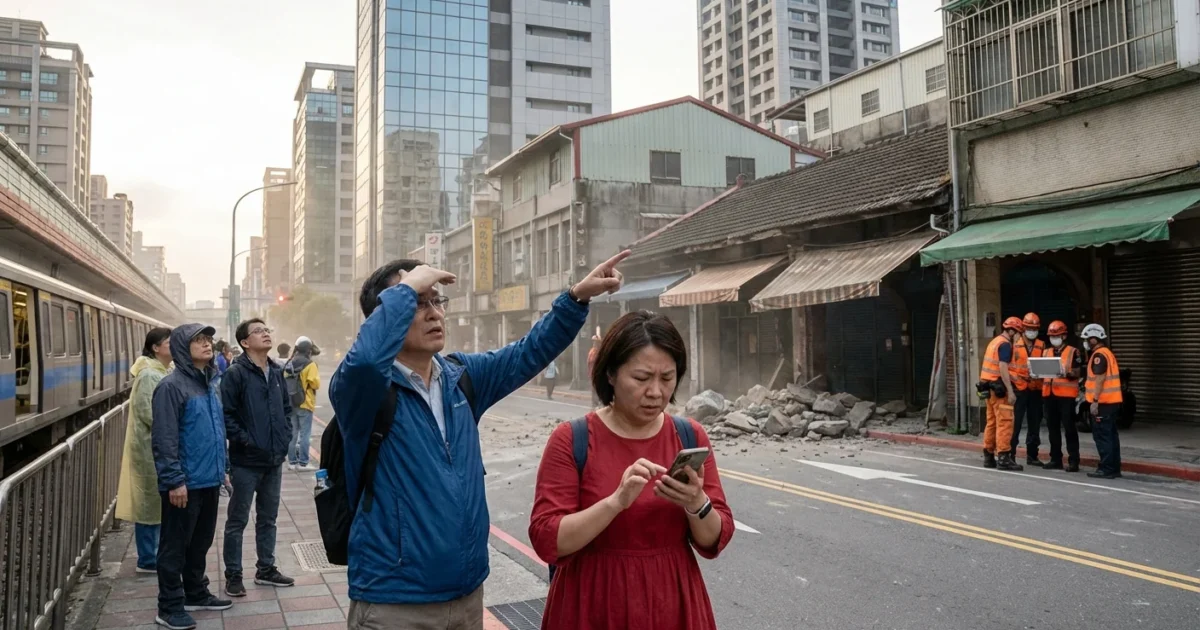
A deep jolt rattled Taiwan late tonight. At 11:05 p.m. local time, a major quake struck off Yilan, and buildings swayed from Taipei to the east coast. Elevators halted, alarms buzzed, and thousands stepped outside into cool night air.
What happened, and where it hit
Taiwan’s Central Weather Administration placed the quake at magnitude 7.0. Instruments show a depth near 73 kilometers, offshore of Yilan County. The U.S. Geological Survey lists it slightly lower, at about 6.6, which often happens when agencies use different models. The quake was deep, so the shaking spread far, yet surface damage was limited.
Power blinked out briefly in parts of Yilan, with about three thousand homes affected before service returned. In Taipei, tall buildings swayed for many seconds, a sign of deep, long period motion. Trains paused for inspections, and some roads saw small rockfalls in known trouble spots. No major injuries have been reported so far.
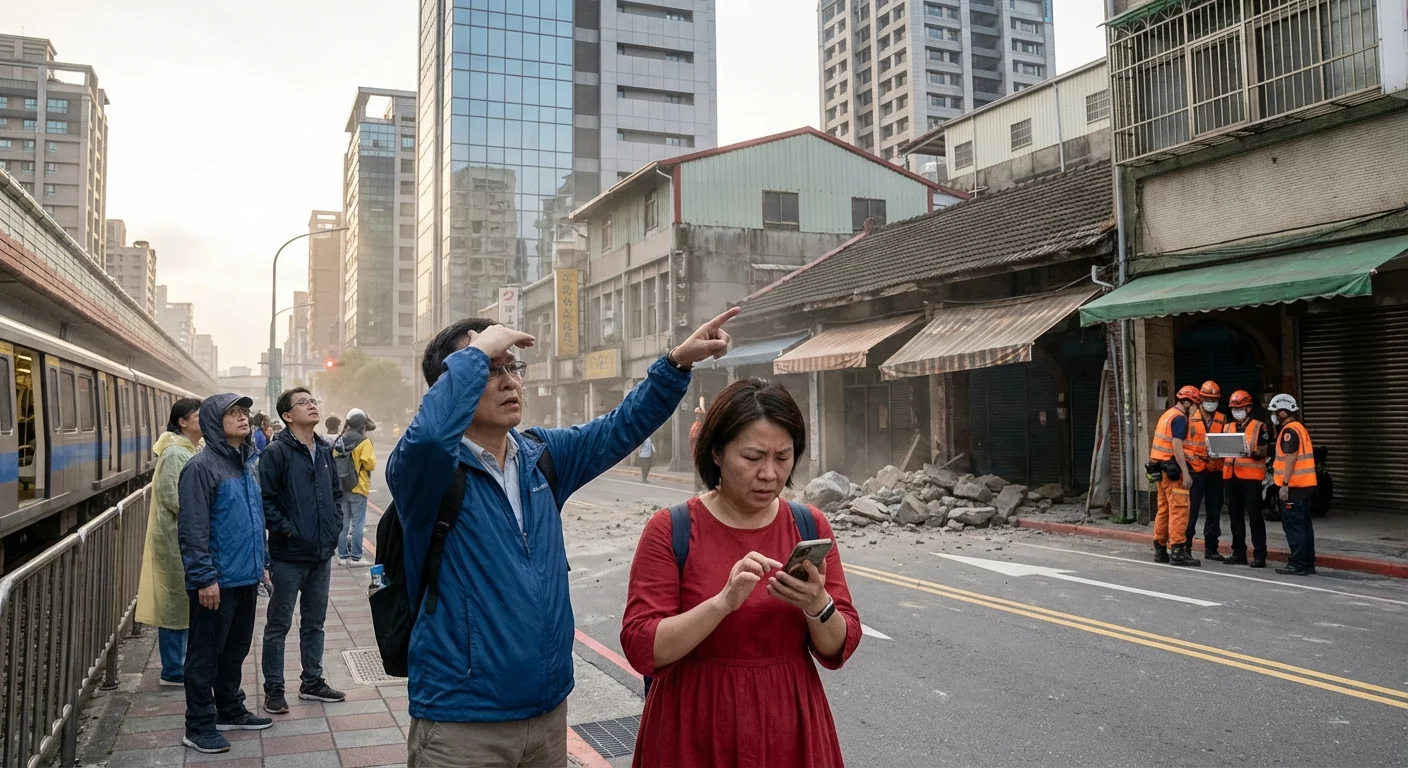
Given the depth, the tsunami risk from this event is low. Coastal residents should still follow local alerts.
Why the numbers differ, and what that means
Magnitude is not a single fixed score. Agencies use different stations, filters, and time windows. A deeper event also releases energy differently, so models can vary. Whether 7.0 or 6.6, this was a strong quake. Its depth acted like a dimmer, lowering the chance of severe surface damage in cities, but it widened the felt area.
Three days ago, a 6.1 quake shook Taitung at a shallow depth. That one felt sharper close to the epicenter. Taken together, these events underline Taiwan’s restless plate boundary, where the Philippine Sea Plate meets the Eurasian Plate. Clusters can alarm, but they are part of life on this island arc.
Immediate impacts, from homes to high tech
Lights flickered, but the grid held. Grid operators shed small loads, then restored power as checks cleared. Water and telecoms remained stable, with minor local outages.
Semiconductor plants in Hsinchu and nearby parks followed strict playbooks. Some facilities met evacuation thresholds and moved staff outside for brief checks. Tools shut down safely, chemicals stayed contained, and cleanrooms were inspected for vibration impacts. Short stoppages protect both people and production. These steps also limit accidental releases, which is essential for air and water quality.
Factories designed for seismic safety save energy and money over the long run. Automatic shutoffs reduce fire risk, toxic leaks, and unplanned flaring. That lowers both local pollution and climate emissions during emergencies.
The earth, the season, and layered risk
Taiwan’s mountains are steep and wet in winter. The northeast monsoon brings steady rain that loosens slopes. Shaking, even from a deep source, can tip fragile hillsides. Crews are surveying known landslide corridors tonight, especially along river valleys and coastal cliffs.
Spring and typhoon seasons add to this layered risk. Heavy rain saturates soils, then aftershocks can nudge them past the limit. Strong building codes are only part of the answer. Slope drainage, debris basins, and forest restoration reduce slide hazards and protect water supplies.
We have learned painful lessons from past quakes. Newer buildings ride out deep events far better. Older stock still needs retrofit, especially schools, hospitals, and small factories near faults. Resilience is not a one time fix, it is a program that keeps paying off.
Aftershocks are likely in the coming days. Most will be small, but a few can be strong enough to knock items loose.
What to do next
Expect aftershocks, many too small to notice, and some that feel sharp. Deep events often produce fewer damaging aftershocks, yet caution is wise. Keep gas valves, elevators, bridges, and hillside roads under watch. Businesses should rerun safety checks before restarting sensitive processes.
- Drop, Cover, Hold On when shaking starts, stay away from windows and tall shelves.
- Check gas, water, and power lines, if you smell gas, turn it off and call for help.
- Secure tall furniture and lab cylinders, clear exits, and brace storage racks.
- Keep a go bag with water, meds, chargers, lights, copies of IDs.

Charge phones and battery packs tonight, and keep shoes by the bed to avoid cuts from broken glass.
The path forward
Tonight’s quake was a stress test, for homes, for industry, and for our plans. The island passed the first round, thanks to depth, strong codes, and fast responses. But the message is clear. Invest in retrofits, manage slopes like critical infrastructure, and harden factories for both safety and sustainability. The ground will move again. Prepared communities bend, they do not break.