Power is out across Maine tonight. A fast hitting storm snapped trees, soaked soils, and pushed wind gusts near 60 miles per hour. Thousands of CMP customers lost electricity as lines came down and roads closed. Midcoast schools sent students home early. Travel is still risky, and cleanup has only begun.
Power out, wind up
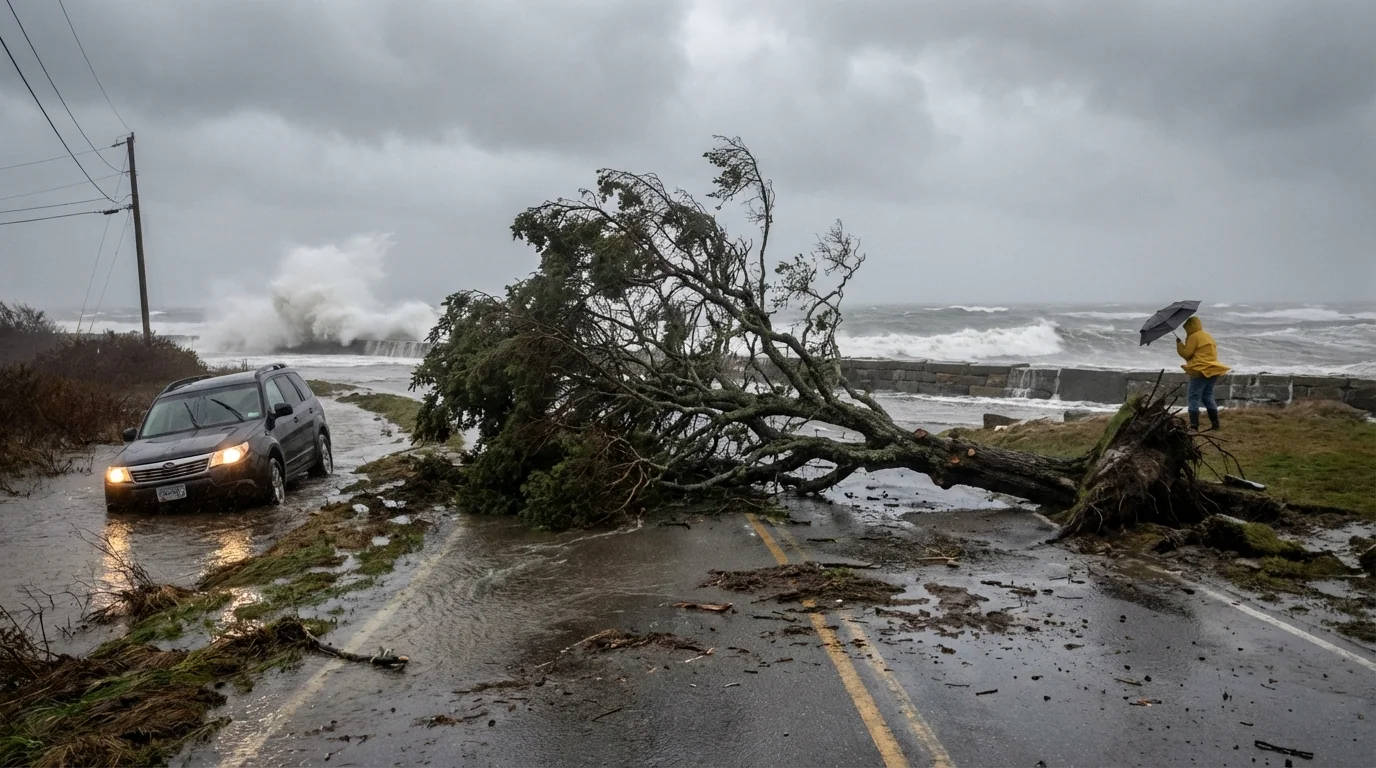
Heavy rain fell into already wet ground. That loosened roots. Then the wind hit from the south and southeast. Gusts climbed toward 60 miles per hour along the coast and higher hills. Trees gave way. Limbs tore at wires. Poles leaned and some fell. The mix of rain and wind was the breaking point for many corridors.
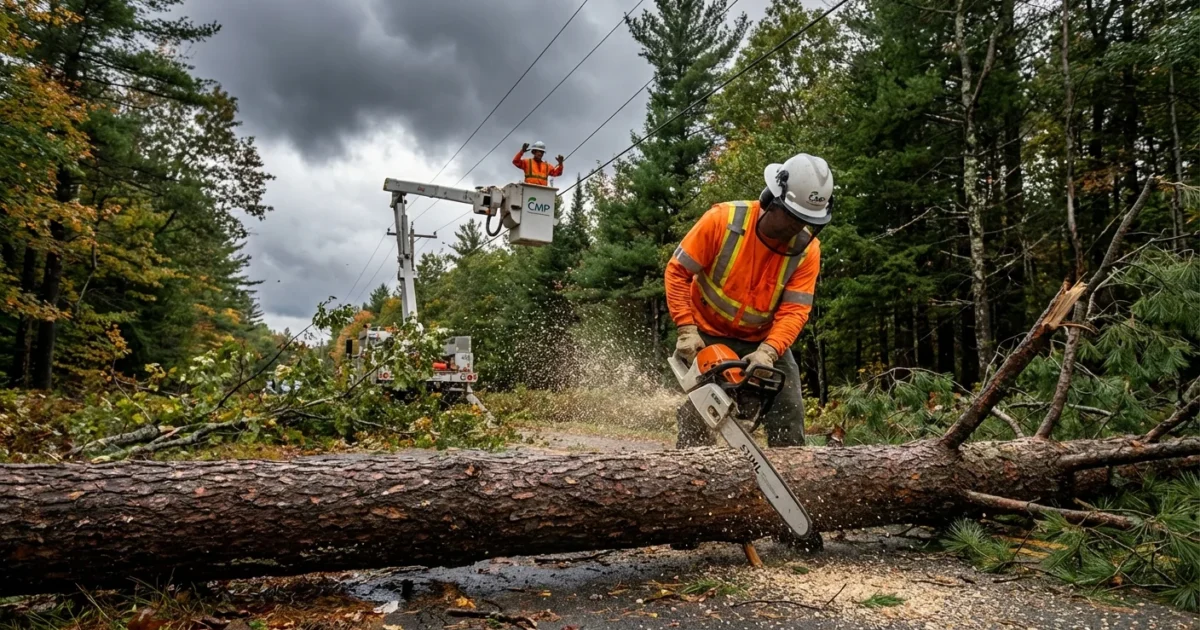
I am tracking outages across the Midcoast, central Maine, and parts of the Down East coast. CMP crews are moving from hazard to hazard. Chainsaws and bucket trucks are clearing paths. Town road teams are pushing aside debris once lines are declared safe. School leaders cut the day short because bus routes were not safe in the peak gusts.
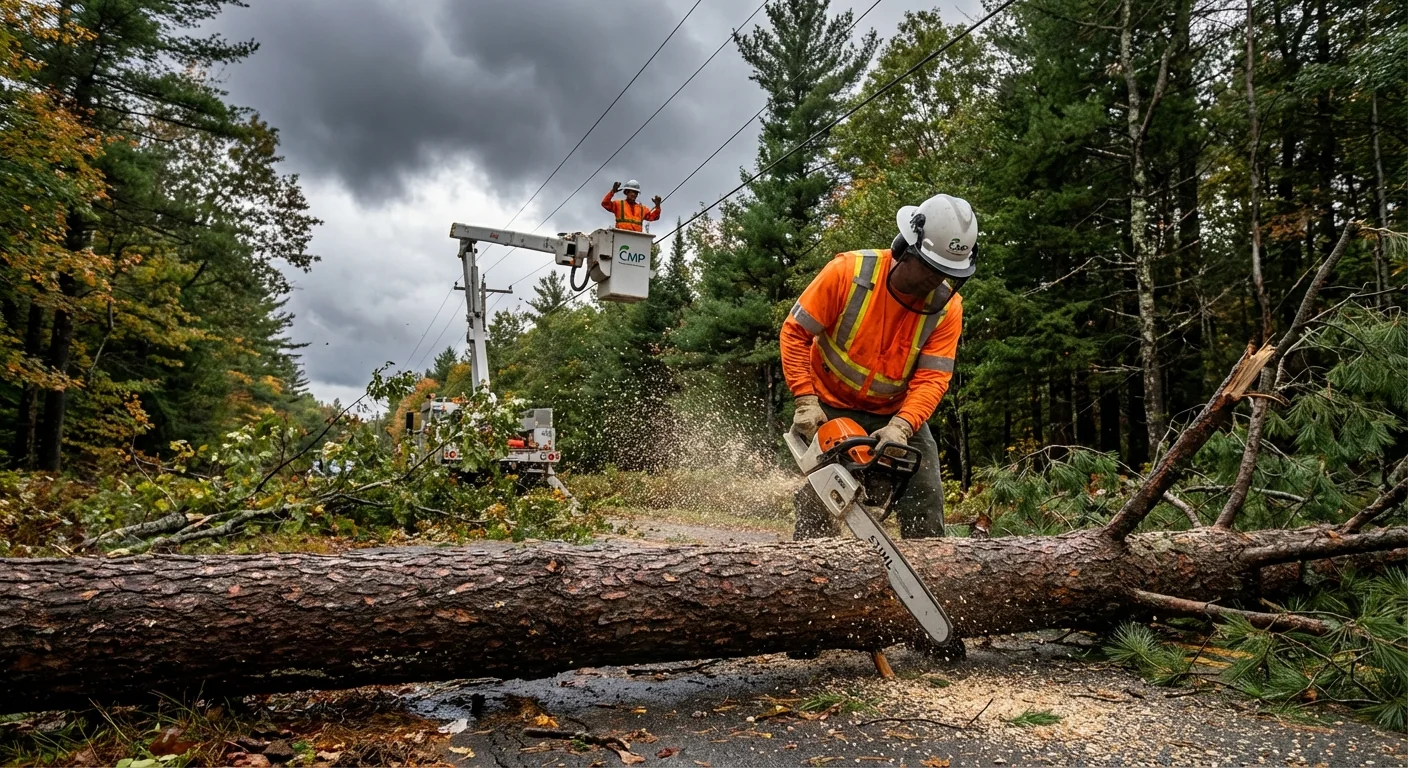
Travel remains slow. Flooded shoulders and scattered limbs block lanes. Some low lying roads ponded with water after the heaviest bursts of rain. Expect detours as daylight reveals more damage.
Assume every downed wire is live. Stay at least 30 feet away. Call 911 and CMP. Do not drive over lines.
Why this storm hit so hard
This was not just about wind. The air carried a lot of moisture. Warmer air can hold more water. When storms tap that moisture, rain rates jump. Soils saturate faster. Roots lose grip. Even a healthy tree can fail when the ground acts like soup and the wind keeps pushing.
The Gulf of Maine is among the fastest warming ocean regions on Earth. That warmth feeds moisture into coastal storms. Pressure contrasts can also sharpen as seasons shift, building stronger wind fields. Fall and winter storms in Maine now bring heavier rain more often, not just snow. That means more runoff, more flooded culverts, and more stress on roadside trees. Add sea level rise to the mix, and high tides ride higher during wind events, flooding coastal roads that used to stay dry.
Restoration and risks
CMP reports thousands without power. The number will change through the evening as crews work and new damage is found. Work starts with clearing live hazards, then rebuilding broken spans. Some neighborhoods will see lights return quickly. Others will wait until crews can safely access remote lines. Patience matters tonight, but so does planning.
Generators can help, but use them with care. Keep them outside and away from windows. Carbon monoxide is deadly and invisible. If you smell gas or see sparks, leave the area and call for help. Blocked roads can slow ambulances and utility trucks, so keep side streets clear for crews.
Run generators outdoors, never in garages. Charge phones, gather flashlights, and keep fridge doors closed to hold the cold.
What you can do right now
- Check CMP’s outage map and your town alerts for updates.
- Avoid flooded roads. Turn around, even if water looks shallow.
- Keep a safe distance from tree crews and bucket trucks.
- Conserve phone battery and report outages once, not repeatedly.
Midcoast families should plan for morning delays. Some schools may need more time to clear routes. Early dismissals today helped keep buses off the worst roads. That was the right call with gusts lifting tree canopies and blowing debris across lanes.
Building a tougher grid
This outage is another stress test for a forested, rural grid. Vegetation grows fast along Maine rights of way. More frequent heavy rain and wind means more pruning and faster cycles. Strategic underground lines can help in dense downtowns and key hospital routes. They are not a silver bullet, but they cut exposure to falling trees.
Smart switches can isolate faults and restore power to more customers faster. Local microgrids with battery storage can keep critical sites on, including shelters, fire stations, and water plants. Rooftop solar paired with home batteries gives families another layer of resilience. None of this replaces line workers. It gives them a grid that bends less and breaks less in storms like this.
The bottom line
Tonight’s CMP outages tell a clear story. Stronger rain and wind are testing Maine’s grid more often. Crews are out, schools acted early, and many towns are still clearing roads. Stay safe around downed lines. Check official updates. Prepare for a longer cleanup in the hardest hit pockets. We will keep tracking restoration and the next round of weather as Maine builds a grid ready for the climate we now live in.