The night sky is about to ignite. A powerful solar eruption is inbound, and I am tracking conditions for a strong aurora show across much of the United States tonight and into tomorrow. A full-halo coronal mass ejection from an M8.1 flare is racing toward Earth, and a G3 geomagnetic storm watch is now in effect.
A Solar Blast Sets the Sky in Motion
Here is what that means. Sunspot Region 4299 fired an M8.1-class flare. It launched a cloud of charged particles, a CME, straight at us. When that cloud hits Earth’s magnetic field, energy pours into the upper atmosphere. That is when auroras bloom.
The arrival window centers on the nights of December 8 and 9. Magnetometers are already rising, and models point to a strong, sustained event. If the magnetic field tilts south on arrival, the show gets even better, and the storm grows.
Timing has a cushion of about seven hours. Be ready early and stay patient.
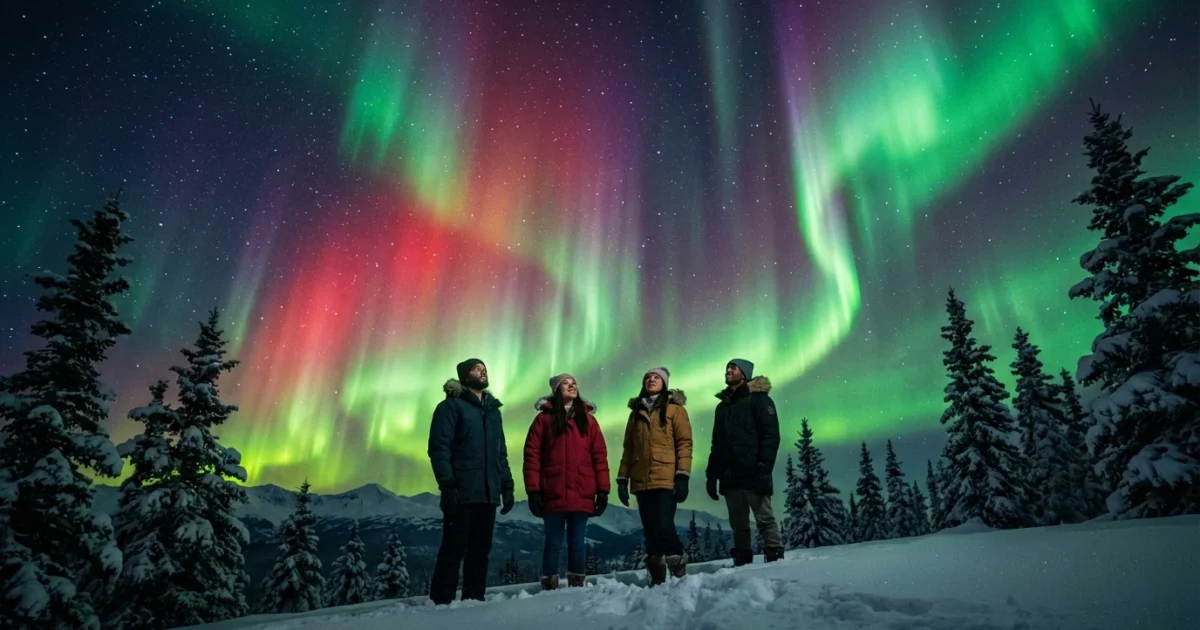
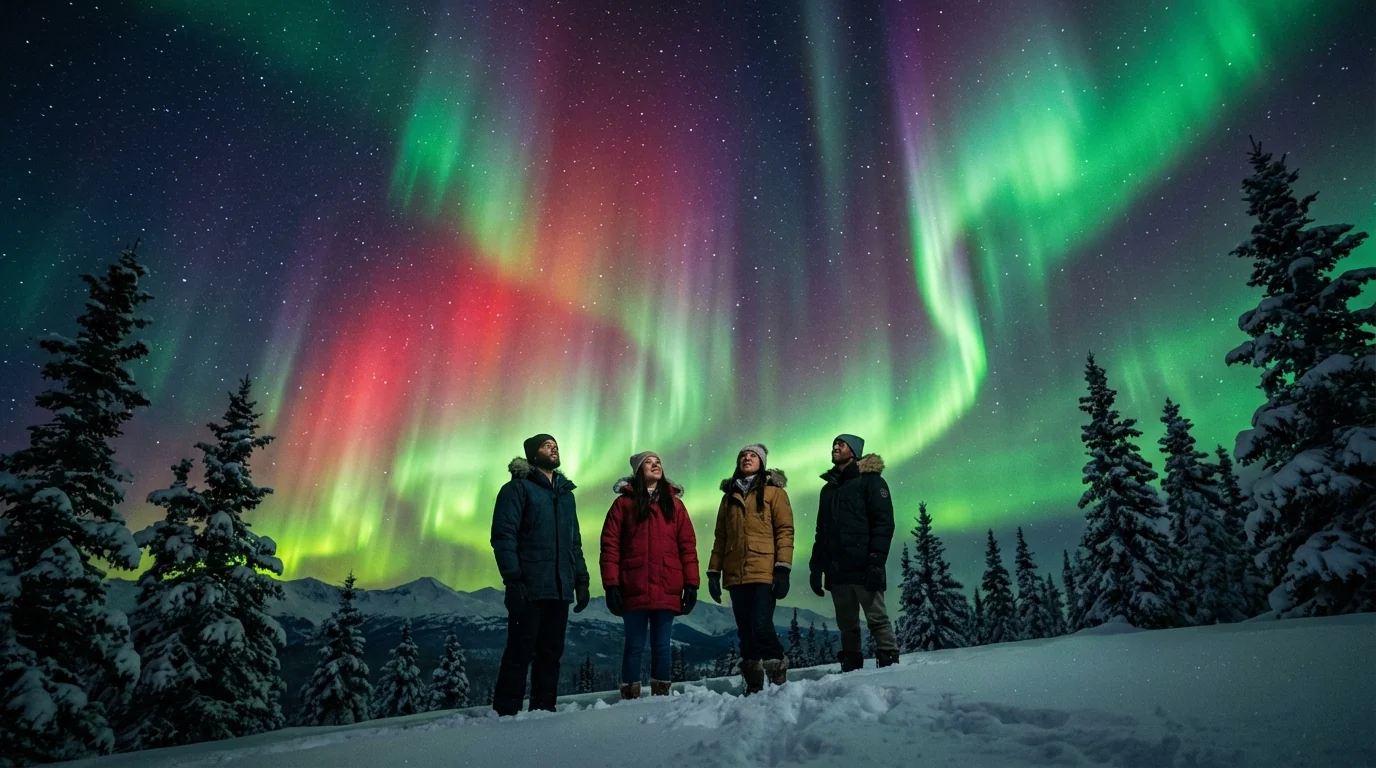
Expect vivid curtains and pulses of green, plus hints of red and purple near the horizon. This is the kind of storm that moves the auroral oval well south of its usual home. Viewers far from the Arctic now have a real shot.
When and Where to Look
The prime window is late evening into early morning. Aim for 10 PM to 2 AM local time. You want dark skies, a clear northern view, and as little city light as possible.
Auroras may be visible across the Upper Midwest and Great Lakes, including North Dakota, Minnesota, Wisconsin, and Michigan. The odds improve across northern New England, with chances in Vermont, New York, and Maine. If the storm peaks, a faint arc could dip even farther south, especially in rural areas.
Local weather still decides your view. Skies that clear behind a passing front will be ideal. If clouds linger, drive toward a darker, drier patch of sky. Rural hilltops often beat valleys for clarity.
Face north, let your eyes adjust for 20 minutes, and keep checking the whole sky. Auroras can surge fast.
Quick viewing checklist:
- Get away from streetlights and parking lots
- Turn off porch and car lights
- Bring warm layers and a red flashlight
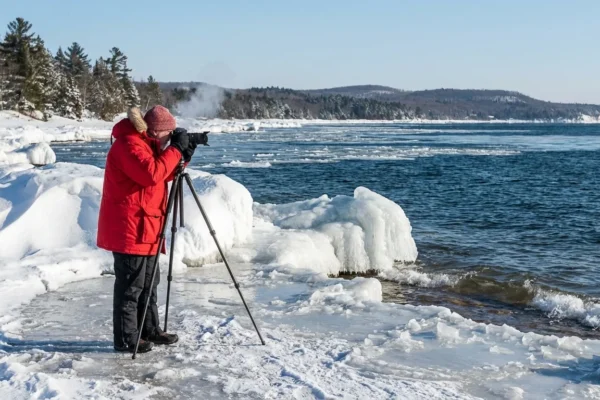
- Use a tripod or steady surface for photos
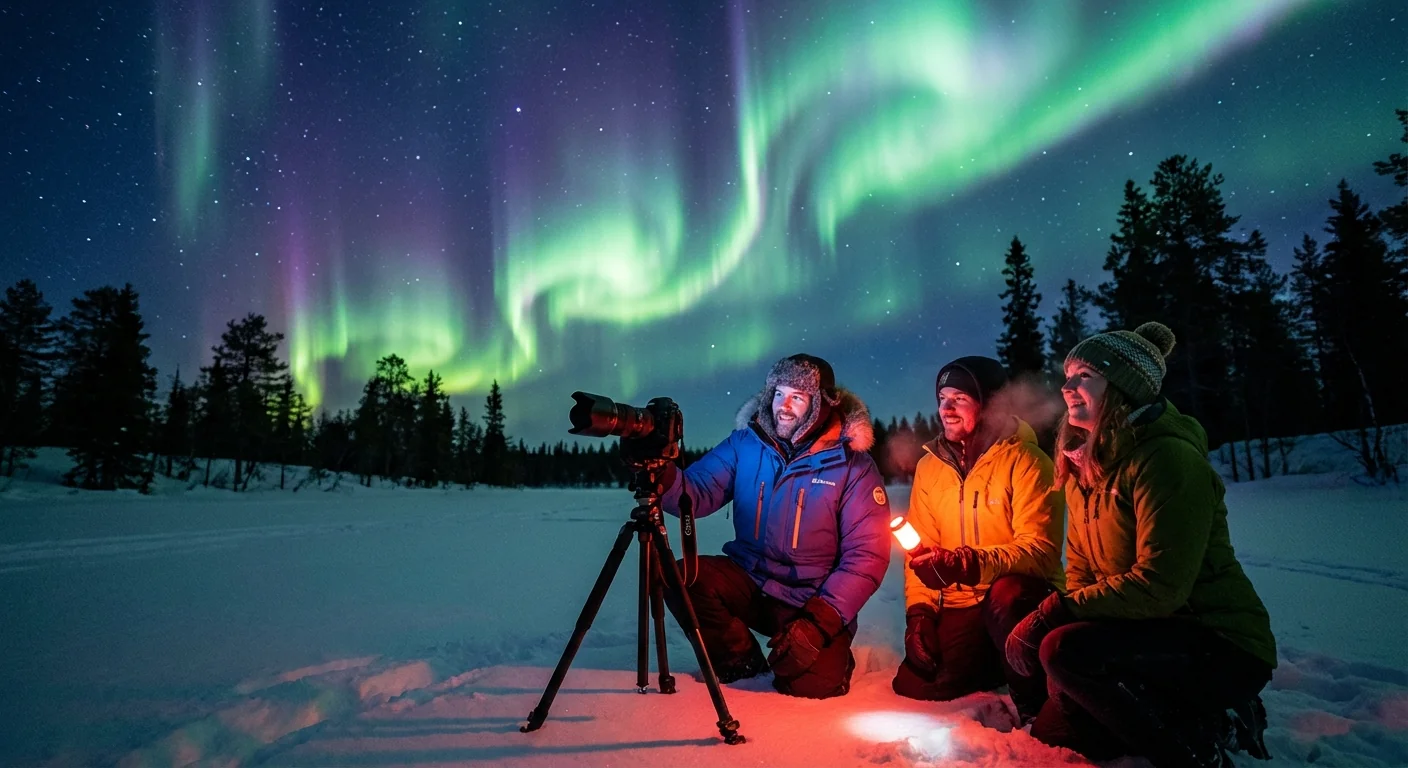
Easy photo settings
Start with a wide lens at f/1.8 to f/2.8. Try 5 to 10 seconds at ISO 1600 to 3200. Focus manually on a distant light or bright star. Take a test shot, then adjust. Shorter exposures freeze detail. Longer ones smooth the glow.
What This Means for Infrastructure and Sustainability
A G3 storm is strong. It can cause intermittent GPS drift and patchy radio fade. High-frequency radio can drop out at times, especially at high latitudes. Satellites can feel extra drag, and airlines may adjust polar routes.
Power grids prepare for events like this. Expect operators to watch voltage swings and manage reactive power. Most impacts are brief and manageable. Still, this is a reminder. Our clean energy future runs through a tougher grid, smarter forecasting, and resilient satellites. Space weather, like extreme heat and storms on Earth, is part of climate adaptation planning.
If you rely on GPS for farm work, survey jobs, or backcountry travel, have a backup plan tonight.
There is also a climate science link. Satellites that track ice, oceans, and greenhouse gases rely on stable orbits. Space weather hardening protects the tools we use to measure a warming planet. Investing in resilience protects both the grid and our data lifelines.
The Science Behind the Glow
The aurora starts when solar wind crashes into Earth’s magnetic shield. Energy funnels toward the poles and into the upper atmosphere. Collisions with oxygen create familiar greens. Higher altitudes can glow red. Nitrogen adds pink and purple at the edges. During solar maximum, like this year, flares and CMEs happen more often. That means more chances for nights like this.