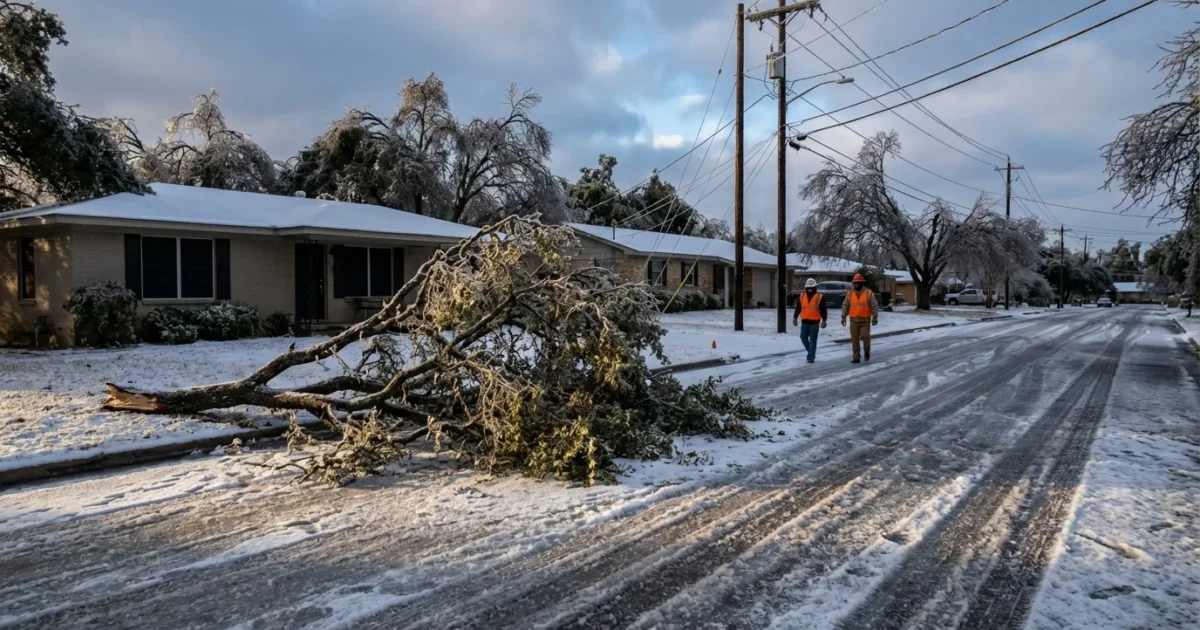
Ice is building across Texas this morning, and power lines are wearing a coat of glass. I am tracking freezing rain and sleet from Dallas–Fort Worth to Austin and into the Houston area. Streets are slick. Schools are closed. Tree limbs are bending and breaking. Scattered power outages are already popping up, with more likely as the day wears on.
What is happening now
A shallow push of Arctic air has moved in at the surface. Warmer, wetter air from the Gulf rides above it. That setup turns rain into ice on contact. The result is classic Texas freezing rain, hard to see and hard to fight.
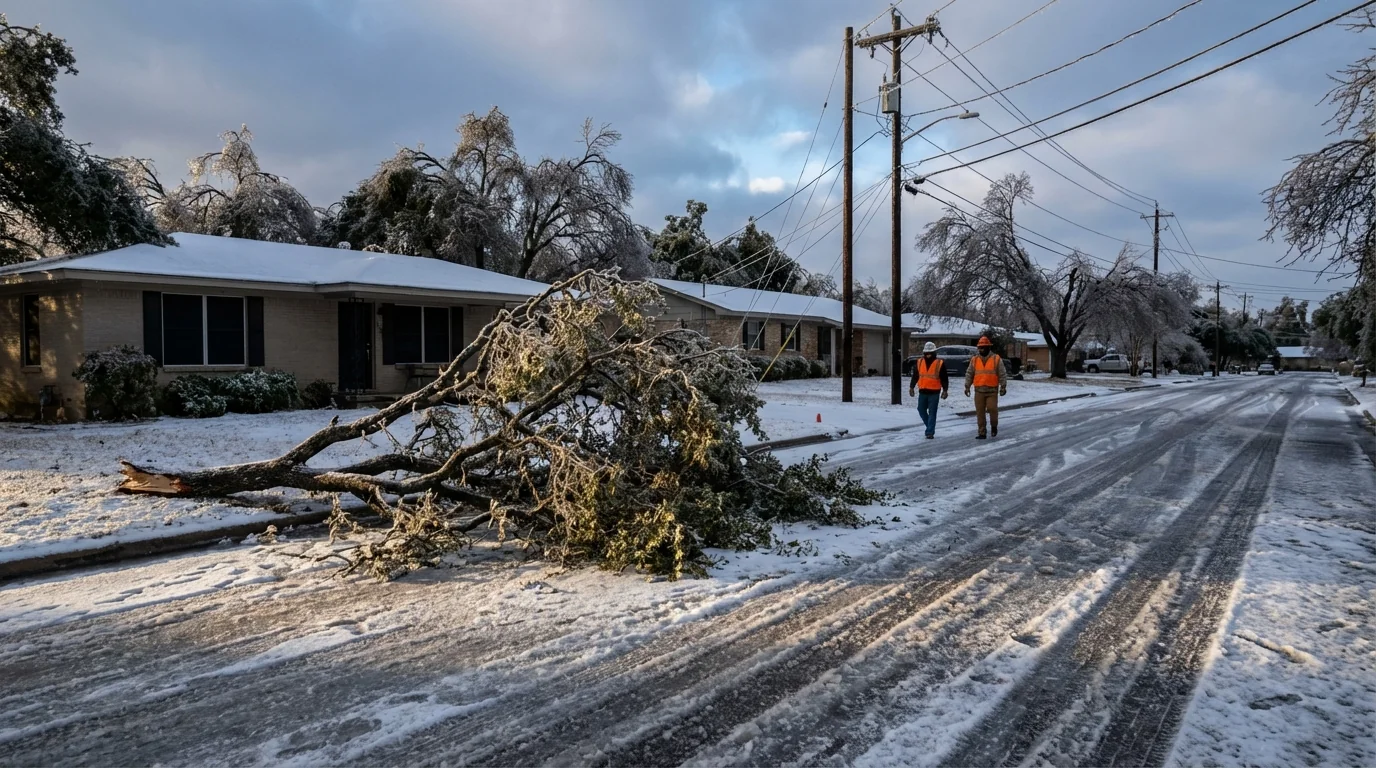
North Texas, Central Texas, and much of Southeast Texas sit under ice or winter storm warnings. Bridges and overpasses glaze first, but trees and power lines are next. Ice adds heavy weight. Limbs crack. Lines sag. A small branch can take out a neighborhood circuit. Repair crews are staging, but travel is slow, and restoration takes time when everything is slippery.
Why ice knocks out power
Ice is different from snow. It clings to every wire and twig. A quarter inch of glaze can add hundreds of pounds to a span of line. Poles and hardware are built for wind, not that much extra weight. When limbs hit wires, protective devices trip to prevent fires. That cuts power to homes until crews can clear the damage and reclose the circuit.
This is also an urban forest story. Drought and heat last summer weakened many trees. Brittle limbs snap sooner under ice. The mix of live oaks, pecans, and pines across our cities creates a patchwork of risk. That is why outages today will be scattered and local, not uniform across the state.
How this differs from 2021
I am watching grid conditions, and there is a key difference now. Since 2021, ERCOT and utilities have added winter safeguards, extra reserves, and fuel coordination. Power plants and gas supply are better protected against cold. That lowers the risk of statewide rolling blackouts in this event.
The main threat today is distribution damage, not a shortage of generation. Think downed lines and iced equipment in your neighborhood. Those problems are fixed one circuit at a time. Restoration can take hours if roads are dangerous. It can take longer if ice keeps forming or if a second wave of freezing rain arrives.
If your lights flicker, unplug sensitive electronics. Leave one lamp on, so you know when power returns.
What to do right now
Check your local outage map and report your loss of power. Use your utility’s tools, not 911. Oncor serves much of North Texas. CenterPoint covers the Houston area. Austin Energy serves the city of Austin. CPS Energy covers San Antonio. Most providers let you text or use an app to report and track repairs.
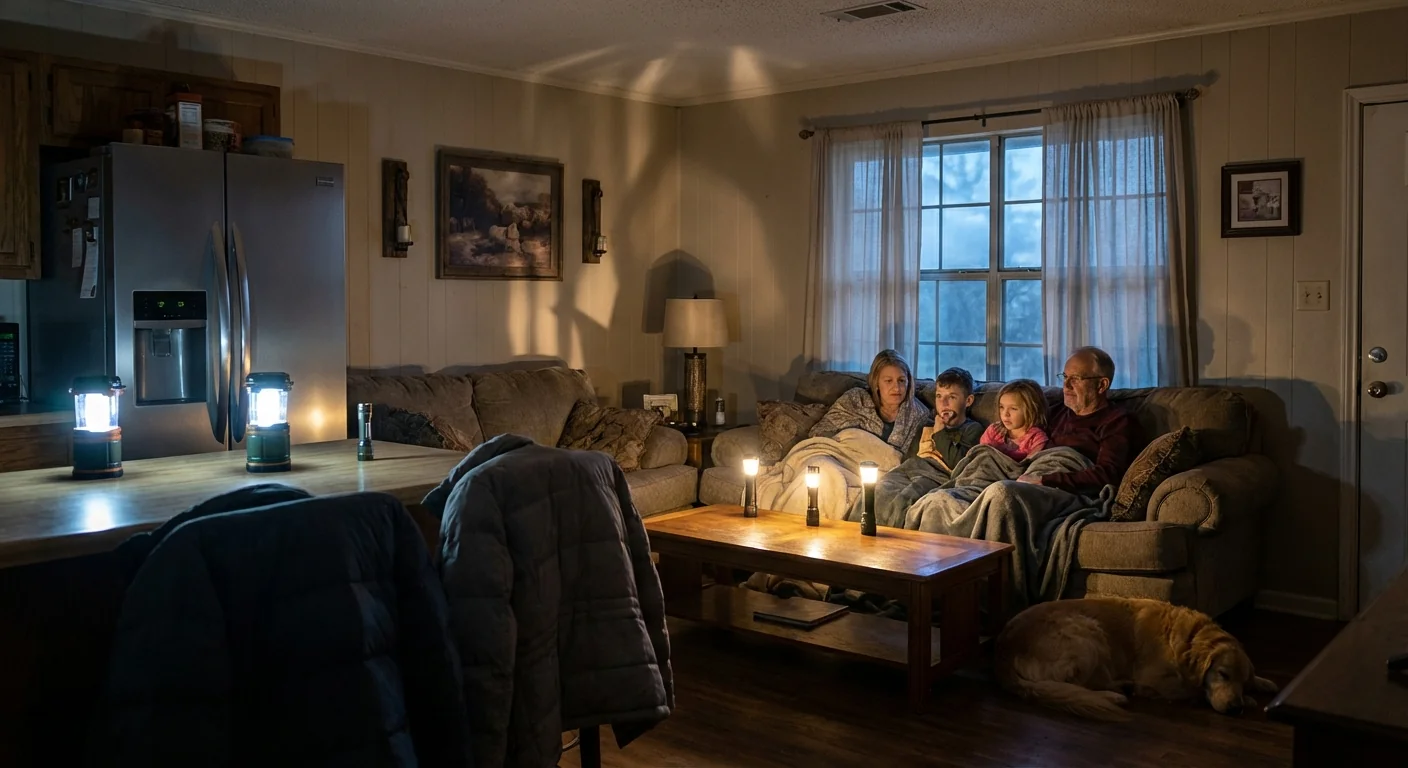
Keep your phone charged. Conserve battery by lowering screen brightness and closing extra apps. Avoid using generators or grills indoors. Carbon monoxide builds fast and is deadly. Keep pipes insulated and faucets dripping to avoid bursts. If you see a fallen line, stay far back and call your utility.
- Flashlights and batteries beat candles for safety
- Keep fridge doors closed to hold the cold
- Dress in layers and avoid risky driving
- Check on neighbors who may need help
Treat every downed line as live. Do not touch it, your car, or anything it touches. Call your utility, not 911, unless there is a fire or injury.
How utilities restore power
Crews patrol lines, clear limbs, and swap out broken hardware. They focus first on lines that bring power to the most people and to critical sites like hospitals. They cannot safely work if ice is still falling on live equipment. De-icing happens by weather and time, not by spraying. As temperatures climb, restoration speeds up.
Mutual aid crews from other regions may be rolling in. Traffic and ice slow bucket trucks, so allow extra time. If you rely on electrically powered medical devices, move now to a charged backup or to a safer location if you can travel.
The climate signal and the path forward
Texas lives at the edge of warm Gulf air and cold continental air. A warming climate loads the air with more moisture. That means heavier rain events. When shallow cold sneaks in, that extra moisture can freeze on contact. Fewer pure snow days, more icy ones. It is a messy future if we do not adapt.
Sustainability starts at home and on the block. Trim trees away from service drops before storms. Ask your city for resilient species that bend, not break. Support utility investments in stronger poles, covered conductor, and smart switches that isolate damage. Cut your own risk with weatherization at the meter and inside your home.
Conclusion
Ice is today’s enemy, not the grid. Expect scattered outages, slow travel, and patience from line crews doing dangerous work. Report outages to your utility, keep warm safely, and stay off icy roads. As the thaw arrives, power will follow. The bigger task is clear. We need resilient trees, resilient lines, and a climate plan that lowers the odds of the next ice day landing this hard. Stay safe, Texas. ❄️