Atlanta woke up to roads that bite back. A glassy skin of ice covers bridges, ramps, and shaded streets. Traffic moves in bursts, then stops. Crews battle downed trees and lines while power blinks across neighborhoods. This is a fast moving situation, and it is dangerous. ❄️
What is happening on the roads right now
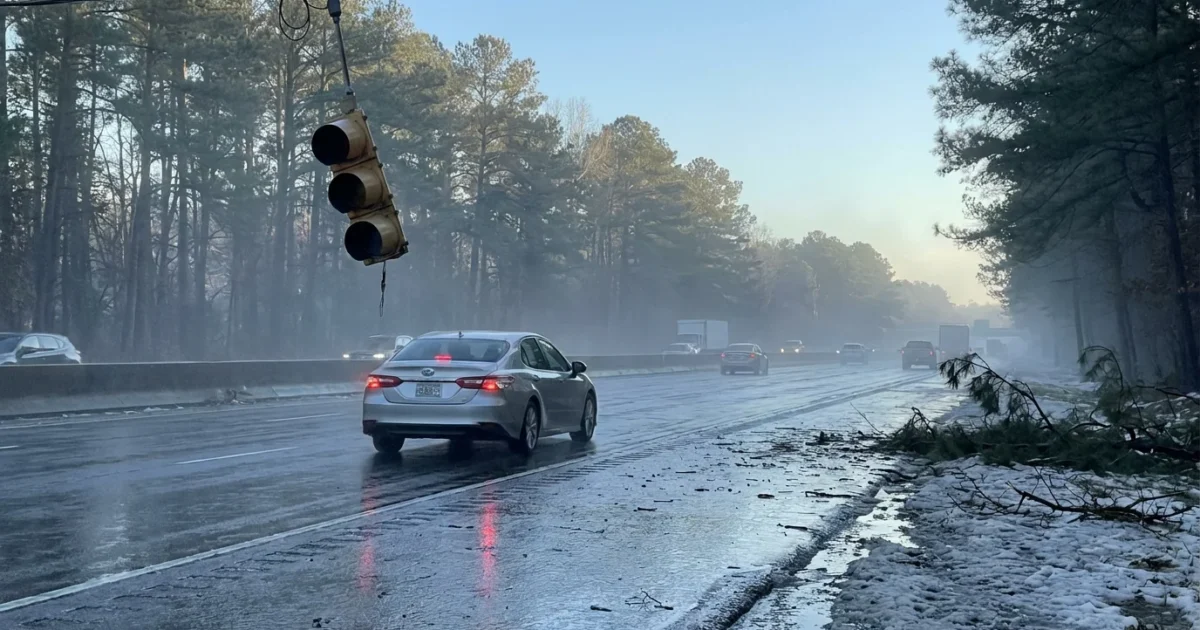
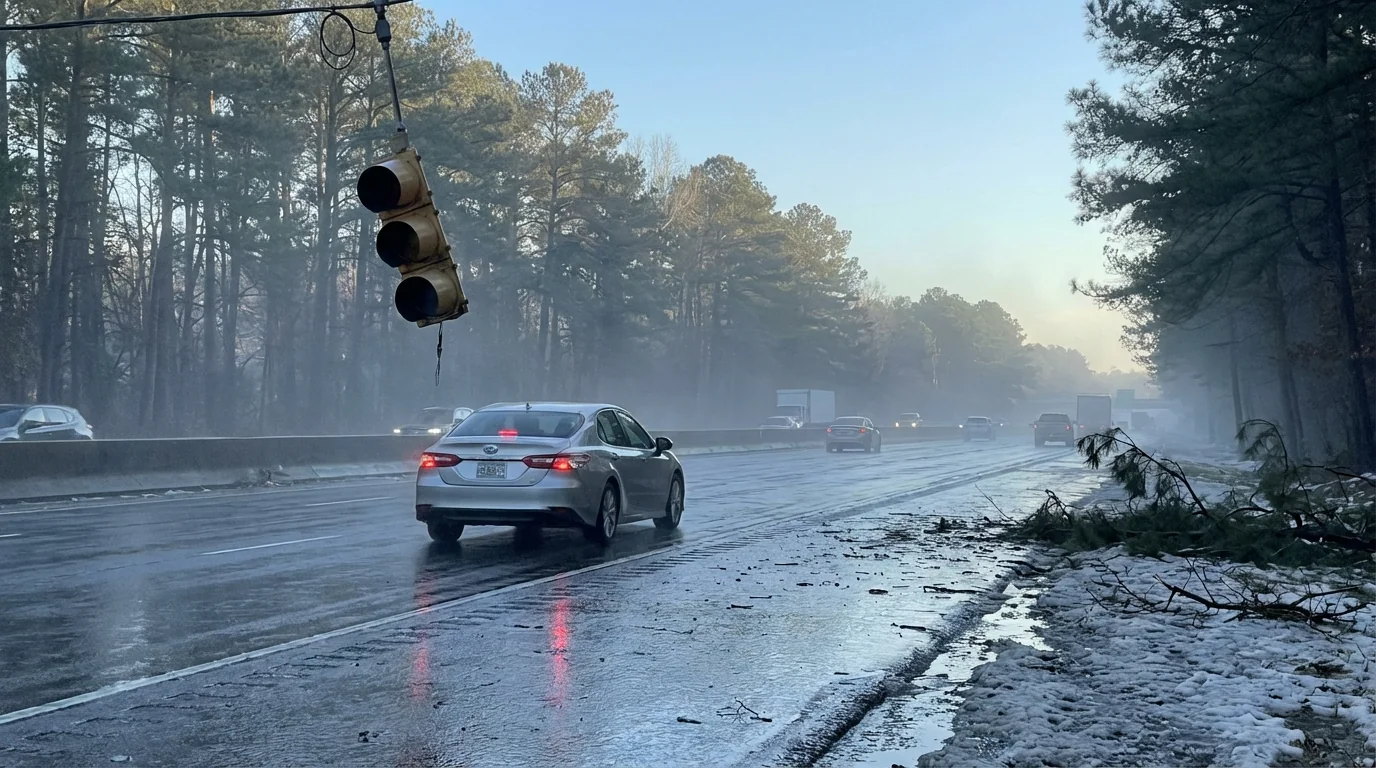
Black ice is the hidden threat this morning. It looks like wet pavement, then your tires lose grip. Shaded corridors and overpasses are the worst spots. Tree limbs hang low over lanes. Some have fallen. Power lines are tangled in a few corridors, and traffic signals are dark in scattered pockets. Treat every dark signal as a four way stop. If you can delay your drive, do it. Sun and traffic will help, but only slowly.
Crews are sanding and brining bridges first. Neighborhood streets will take longer. Expect debris in the shoulders and in the middle lanes where plows and trucks have pushed it aside. Expect sudden lane shifts around work zones. Keep your headlights on, even in daylight.
Black ice, fallen branches, and dead signals are widespread this morning. Slow down, add space, and do not swerve.
Why this storm hit so hard
This was a classic Southern ice setup. A shallow slice of Arctic air slid in at ground level. Warmer, wetter air rode over it. Rain fell into near freezing air at the surface and turned to glaze on contact. Trees took on a heavy coat. Lines sagged. Roads went from damp to deadly in minutes.
Ice storms are rare but not random. A warmer atmosphere holds more water vapor. In the Southeast, that means stronger rain events in winter. When cold air pools near the ground, that moisture can freeze on contact. We also see more freeze and thaw swings. Roads warm in the afternoon, then refreeze after sunset. That cycle cracks pavement and creates black ice patches. Bridges cool faster than the ground, which is why they fail first.
Climate science points to more winter precipitation arriving as rain that can flash freeze. That is a different risk than deep snow. It is quieter, harder to see, and just as disruptive.
Getting around safely today
If you must drive, plan your route like a pilot. Start later if you can. Give yourself more time than usual. Watch for bridges, flyovers, and shaded ramps. Expect tree crews working at curb lines in older neighborhoods. Avoid sudden moves. Your traction control will not beat physics.
- Pull out gently and brake early, not hard
- Leave at least six seconds of space to the next car
- Stick to main roads, they get treated first
- Assume every overpass may be slick
- If you skid, steer where you want to go and ease off the gas
Flights are stabilizing as airlines recover, but ground travel to the airport remains slow. Check your airline before you leave. Transit riders should look for service alerts and possible detours around debris.
For real time details, use GDOT 511 for road conditions, your utility’s outage map for restoration times, and your airline’s app for flight status.
Power, trees, and the road ahead
More than 70,000 customers lost power across metro Atlanta and North Georgia at the peak. That number will fall through the day as crews cut limbs and restring wire. You will see bucket trucks in narrow streets and on highway shoulders. Give them room. Downed lines can hide in slush and branches. If you see a wire on the road, do not touch it and do not drive over it. Call it in.
This storm was hard on trees. Ice adds weight fast. Shallow rooted species and over pruned trees fail first. That is why urban forestry matters. Better pruning, smarter species choices, and wider utility clearances reduce outages and road blockages. Burying lines helps in dense corridors, but it is expensive and takes years. Grid hardening, faster switching, and more microgrids also cut outage time. Those investments pay off on mornings like this.
Salt and brine help keep lanes passable, but they carry a cost. Chlorides wash into streams and stress freshwater life. Agencies balance safety with impact by brining early, targeting bridges, and using sand in sensitive areas. Drivers can help by not tailgating plows and by avoiding sudden lane changes that throw spray and brine onto sidewalks.
Daylight will improve traction on exposed pavement. Meltwater will refreeze after sunset. Expect a second round of slick spots tonight. Park off the street if you can so crews can clear debris piles and treat lanes.
The bottom line
Atlanta can handle heat. Ice is our harder test. Stay patient through the morning, drive like every block hides a patch of glass, and give crews room to work. Conditions should ease with sun, then tighten again after dark. We will keep tracking roads, power, and cleanup all day. Keep your phone charged, your gas tank half full, and your plans flexible.