BREAKING: Ice storm slams Middle Tennessee, NES outage map becomes a lifeline
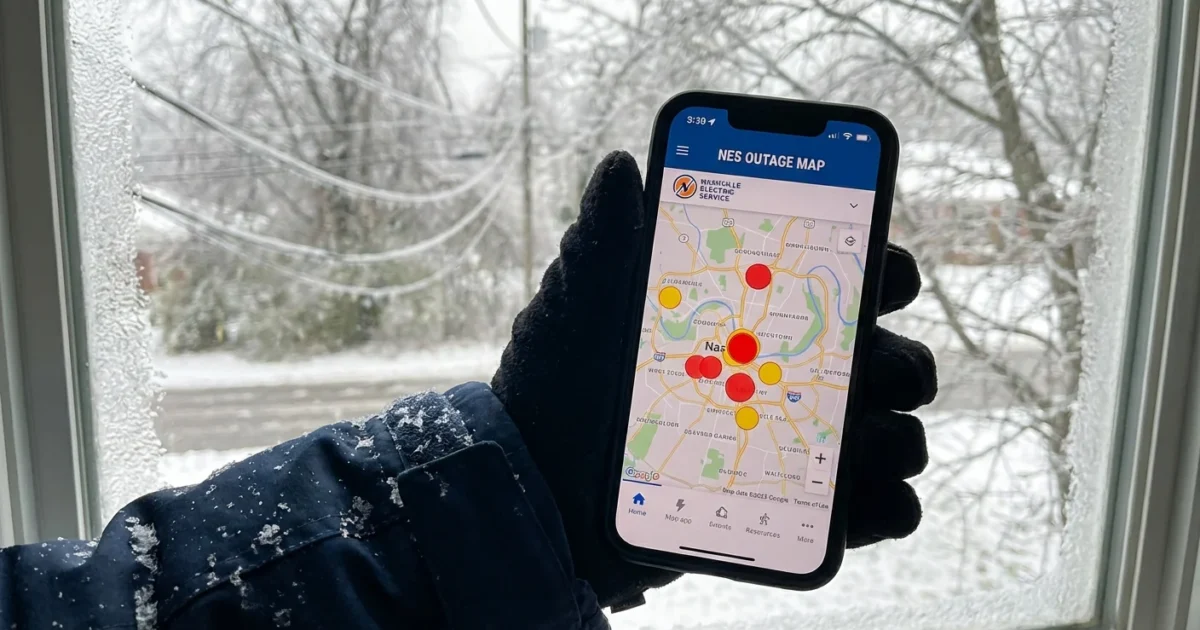
Ice locked onto Middle Tennessee today, coating trees and lines in a hard glaze. The lights went out fast. I am tracking Nashville Electric Service conditions right now. Nearly 70,000 customers in Davidson County have lost power, with more than 200,000 across the region in the dark. Limbs are snapping. Poles are tilting. Lines are down. The NES outage map is the clearest window into what is failing, and what will come back first. ❄️⚡
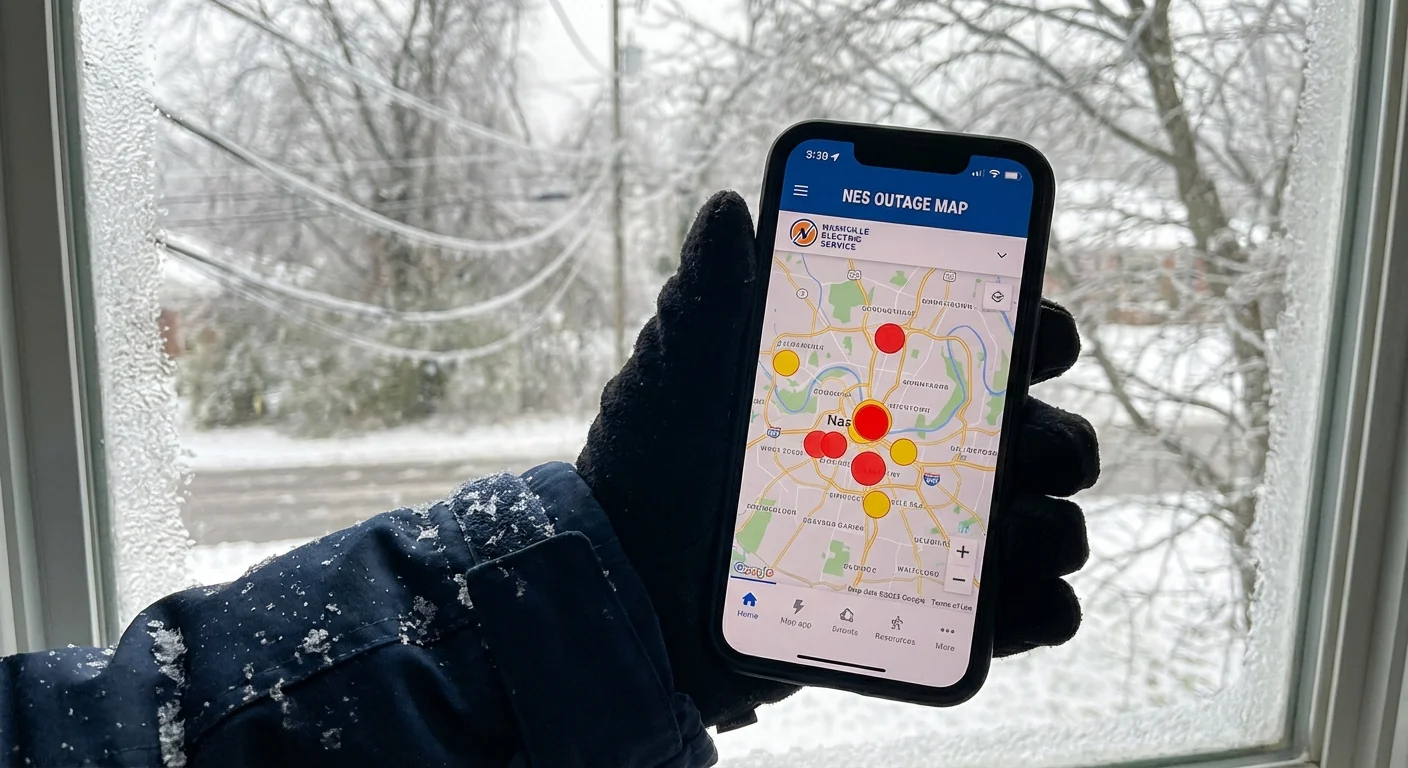
What the NES outage map shows
The NES outage map covers all of Davidson County, which NES serves. It marks outage clusters, shows estimated restoration times, and lists how many customers are out in each area. Red and orange shapes point to heavier damage. Small dots show scattered outages that take longer to find and fix.
Those ETAs can shift, sometimes by hours. Ice storms are tricky. Crews must move slowly, and new breaks pop up as the weight builds. Think of the map as a pulse check, updated often, not a promise.
Bookmark the NES outage map and refresh it. Use Wi-Fi when possible to save phone battery.
How to use the map fast
When the power is out, speed matters. Here is the fastest way to get what you need.
- Open the NES outage map and enter your address.
- Tap your area to see customer counts and the current ETA.
- Report your outage, even if it is shown, so NES can match a precise location.
- Check nearby clusters to see if you are part of a larger fix, or a smaller pocket.
If you depend on medical devices, call your provider and NES now. Crews prioritize critical facilities like hospitals, water plants, and fire stations. Then they work the largest outages. Smaller pockets and single homes come after the big wins.
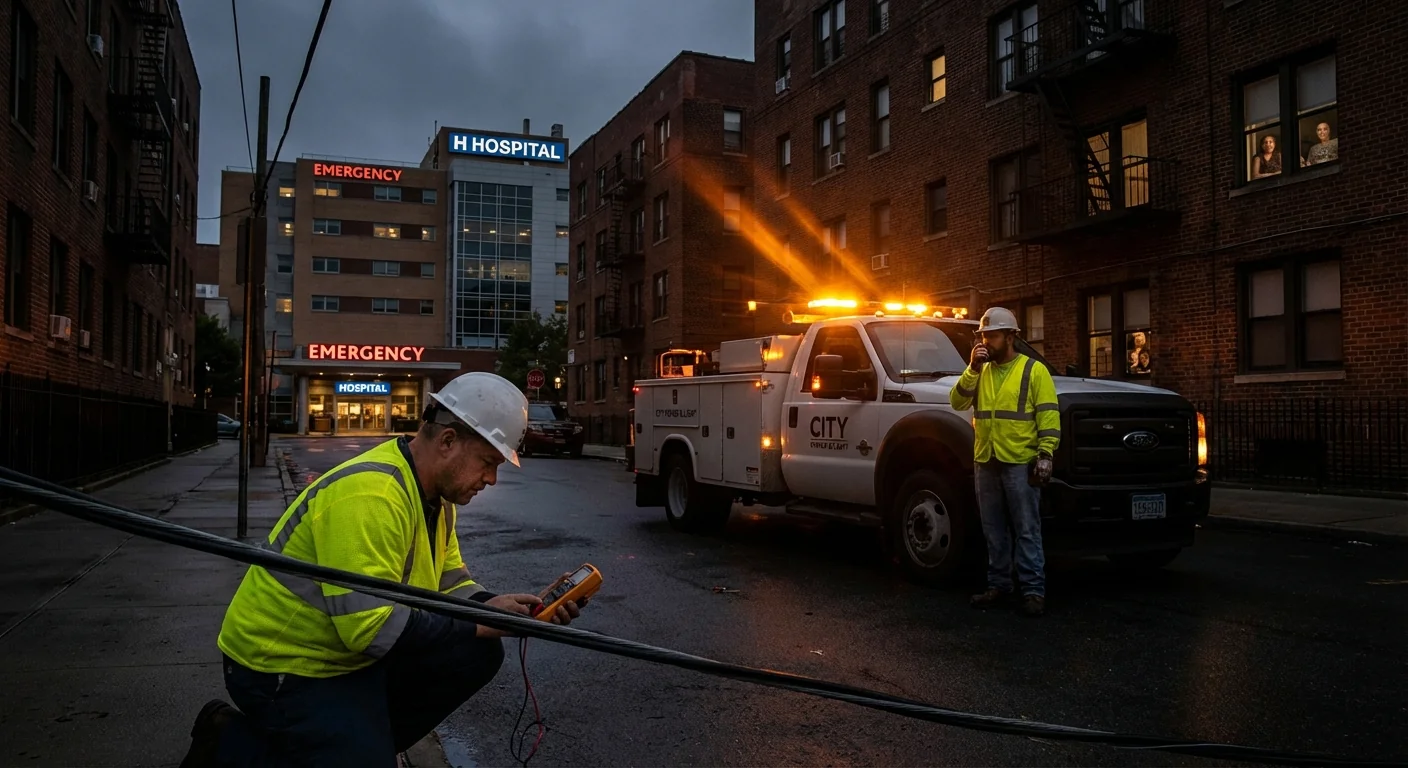
Restoration follows a clear order, based on safety and scale. Critical services first, then the largest clusters, then smaller pockets.
Why ice outages take longer
Ice storms slow everything. Bucket trucks cannot move quickly on slick roads. Tree crews must cut and clear before line crews can even begin repairs. Many faults are up high or hidden by ice, so crews must trace them pole by pole. A fix can be undone when another iced limb falls. That is why ETAs bounce and why clustered cuts get priority, because one repair can restore thousands at once.
This storm also tests our urban forest. Trees stressed by past droughts and heat break more easily. In a warming climate, winters tend to carry more moisture. When that moisture meets a shallow freeze, freezing rain forms. It looks pretty on branches. It is brutal on a grid that was built for lighter loads and calmer skies.
Safety and sustainability while you wait
Stay smart while crews work. Keep heat in, and danger out. Conserve, plan, and help neighbors who need it.
- Run generators only outdoors, far from doors and vents.
- Keep freezers closed. A full freezer can hold cold for two days.
- Layer clothing. Use blankets, not ovens, for warmth.
- Unplug sensitive electronics to prevent surge damage.
Treat every downed line like it is live. Stay back. Call 911 and NES. Never run a generator in a garage, even with the door open.
Small steps pay off. Close curtains. Seal drafts with towels. Drip faucets to protect pipes. Charge phones in the car only if you can park outside, and never leave a car running in a garage. Check on older neighbors and those with medical needs. Share warmth if you have it.
The climate signal behind the storm
This is a snapshot of a changing winter. Warmer air holds more water. When a storm crosses the freezing line, the result can be heavy ice instead of light snow. That means more weight on branches and lines. It means more outages and slower fixes.
We can build a grid that fits this new reality. Better tree trimming along key lines. Stronger poles and hardware. Targeted undergrounding in the hardest hit corridors. More local solar, batteries, and microgrids to keep clinics and shelters powered when lines fail. Home upgrades like insulation and heat pumps cut demand, which eases strain during storms. These choices are not abstract. They cut outage hours and save lives.
The bottom line
I am monitoring the NES outage map and field conditions across Davidson County. Crews are out, but ice makes every step careful. Keep your phone charged, follow official updates, and report your outage even if it appears online. This storm is another push to harden our grid and our homes. We will get through tonight, and we can prepare better for the next one.