Florida is shivering tonight. A statewide cold snap is gripping the peninsula, with freeze warnings reaching into Miami-Dade and Broward. I am tracking widespread power outages as temperatures plunge to near record lows. Central Florida woke to its coldest morning in 16 years. The wind cuts through light jackets. It feels more like Atlanta than Miami. ❄️
What is happening right now
An Arctic air mass has spilled south behind a series of winter storms across the country. North winds drove that air straight down the peninsula. Dry skies and clear nights are letting heat escape fast. That is why temperatures are crashing hardest before sunrise.
Freeze warnings now stretch from the Panhandle to South Florida. Inland neighborhoods are most at risk. Wind chills are hazardous, especially before dawn. Officials are telling everyone to protect people, pets, pipes, and plants. Thousands are without power as the grid strains under heavy demand and wind knocks lines around. Utilities are racing to restore service.
Dangerous wind chills are likely from late night through mid morning. Limit time outdoors. Check on neighbors, especially seniors and those without heat.
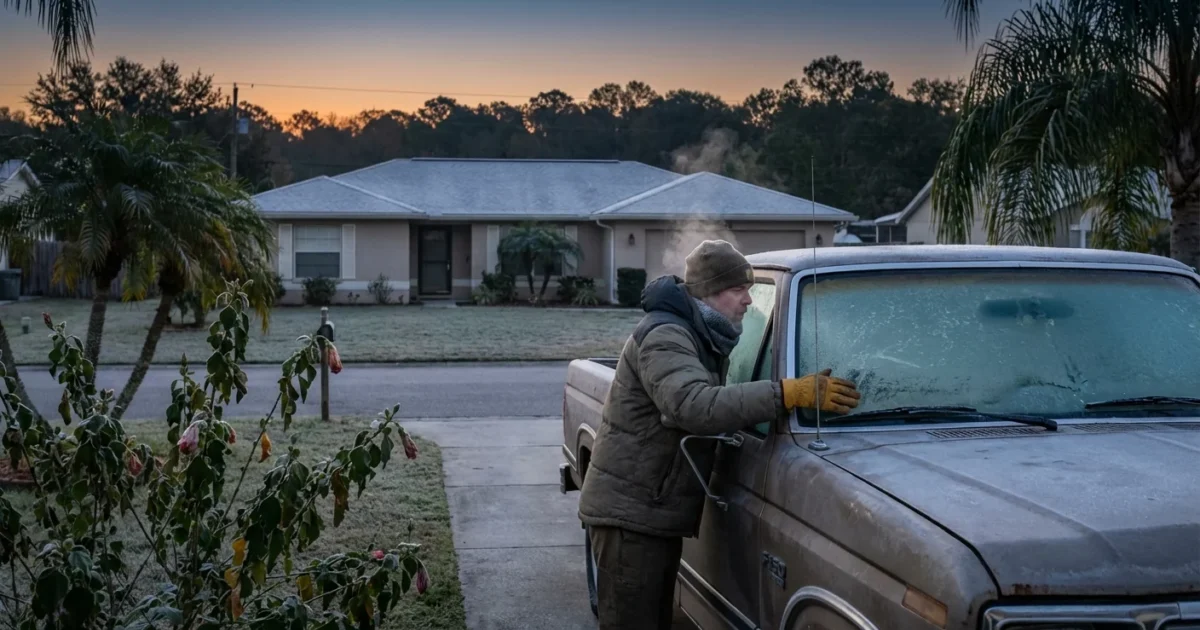
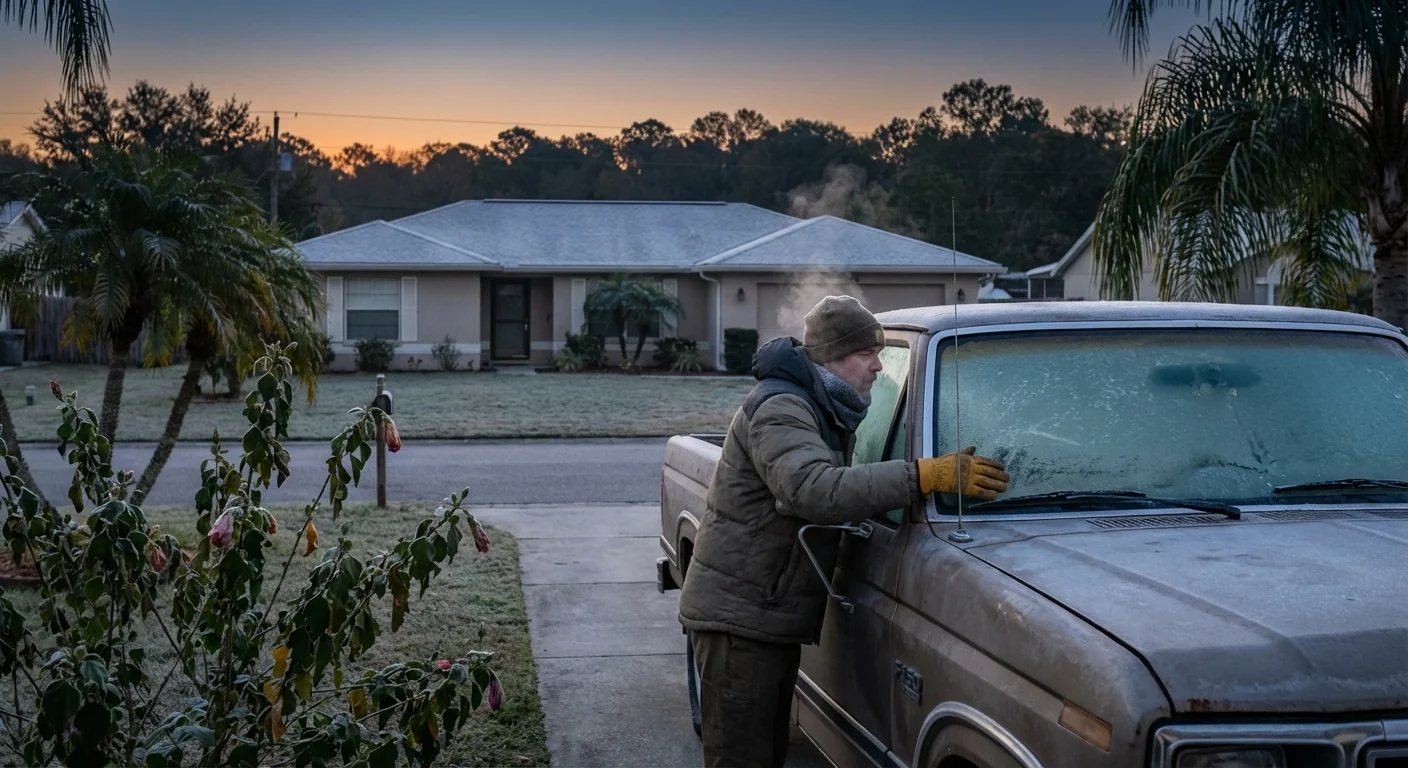
Frost is already coating lawns and car roofs well south of Orlando. In parts of Central Florida, readings hovered at freezing or below at sunrise. South Florida is not spared. Temperatures there are dropping enough to threaten sensitive crops and tropical landscaping. Bundle up, even near the beaches. 🌬️
Why this Arctic blast reached Florida
Florida sits at the end of the continent. When an Arctic high pushes south, there is nowhere else for the cold to go. The jet stream dipped and opened a path. Cold air is heavy and dense. It slides along the ground, filling the state like water in a bowl. Clear skies and low humidity help the chill deepen overnight. This is classic radiational cooling.
Cold snaps in a warming world might feel odd. The long term trend in Florida is warmer nights and hotter summers. That trend is clear. Still, large swings can occur. A wavier jet stream can send sharp shots of cold south, even as average temperatures rise. Scientists are studying how Arctic warming may be affecting those swings. One night does not rewrite the climate story, but it does test our readiness.
Power, housing, and agriculture under stress
Florida’s grid is built for summer peaks. Air conditioners drive demand in July. Tonight tells a different story. Electric heat, space heaters, and heat pumps are running hard. That sudden winter load can expose weak links. Some outages are weather related. Some reflect simple physics, too many homes pulling power at once.
Housing is also on the front line. Many Florida homes have thin insulation. Some lack central heat. Mobile homes and older houses lose warmth fast. This raises risks for hypothermia, especially for people living alone, working outdoors, or sleeping unsheltered. Counties are opening warming options where they can. Transportation can be a barrier before sunrise.
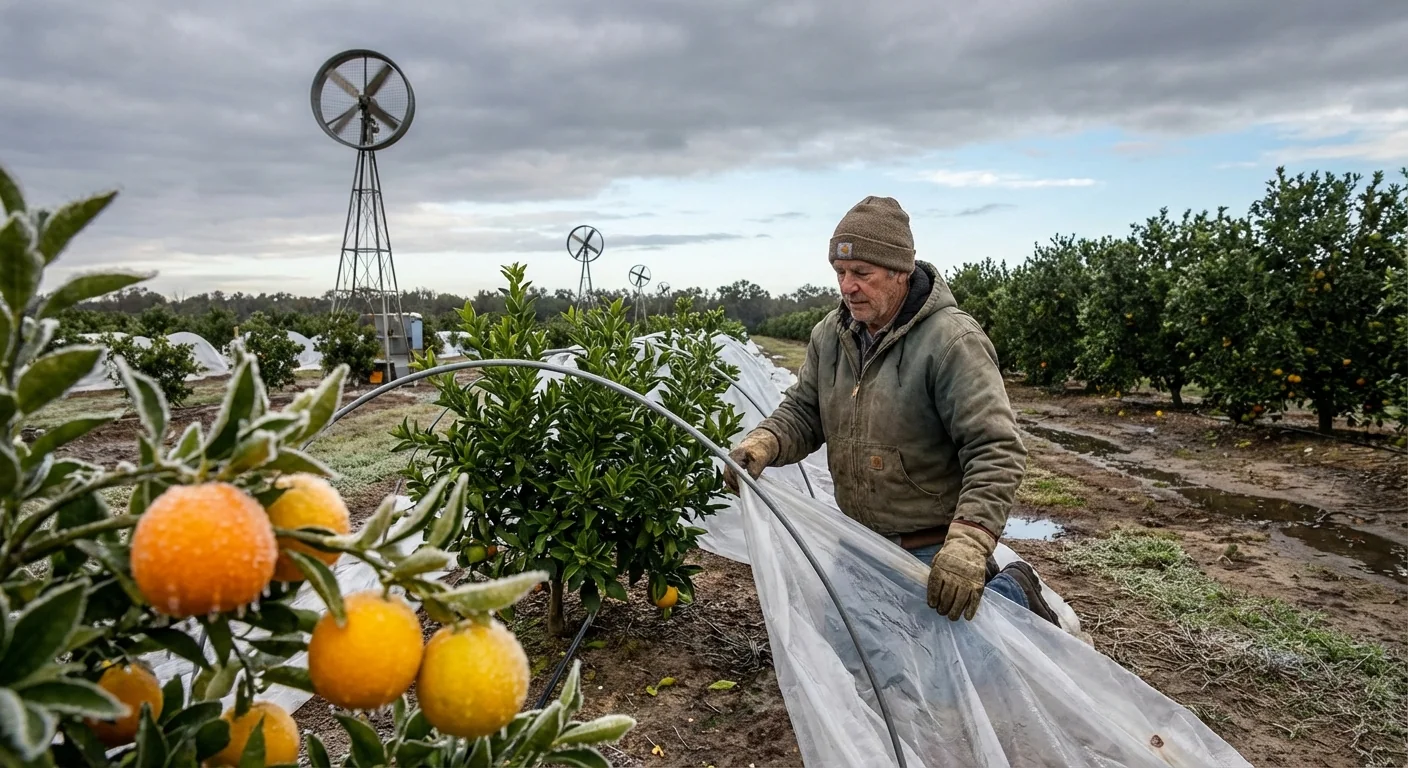
Crops feel the shock as well. Citrus, strawberries, tomatoes, peppers, and tropical nurseries are vulnerable. Farmers are irrigating to form protective ice around fruit. They are using wind machines to mix slightly warmer air near the canopy. Plastic row covers help, but sustained freezing can still burn leaves and blossoms. Even a brief dip below 32 can scar yields.
What to do tonight and for the next cold snap
Act now. Small steps make a big difference before dawn.
- Bring pets and plants inside. Cover what you cannot move.
- Drip indoor faucets and open cabinet doors to warm pipes.
- Use space heaters with a clear three-foot zone. Never use an oven for heat.
- Layer up. A hat and gloves cut heat loss fast.
Set your thermostat a bit lower than usual, then add blankets. You save the grid and still stay warm.
If you lose power, call your utility, then switch off major appliances. That prevents a surge when power returns. If you must drive early, watch for black ice on bridges and overpasses. It is rare here, but not impossible on a night like this.
Looking ahead, build resilience at home. Weatherize doors and windows. Add attic insulation. Service heat pumps so they perform in rare freezes. Community wide, Florida needs stronger winter plans. That means smarter grid management, more demand response, and targeted upgrades in neighborhoods with older housing. Solar plus batteries and neighborhood microgrids can keep critical services on when the grid is stressed.
The longer view
Florida will keep warming over the coming decades. That means hotter summers and rising seas. It does not erase winter risk. Instead, it reshuffles the deck of extremes. Nights like this may stay uncommon, but they will not vanish. Planning for both heat and cold is the new normal.
Tonight, the message is simple. Respect the cold. Protect the vulnerable. Help the grid by using only the heat you need. By morning, the sun will do its work. The coldest air will ease north by midweek. Until then, Florida, hold tight and stay warm.