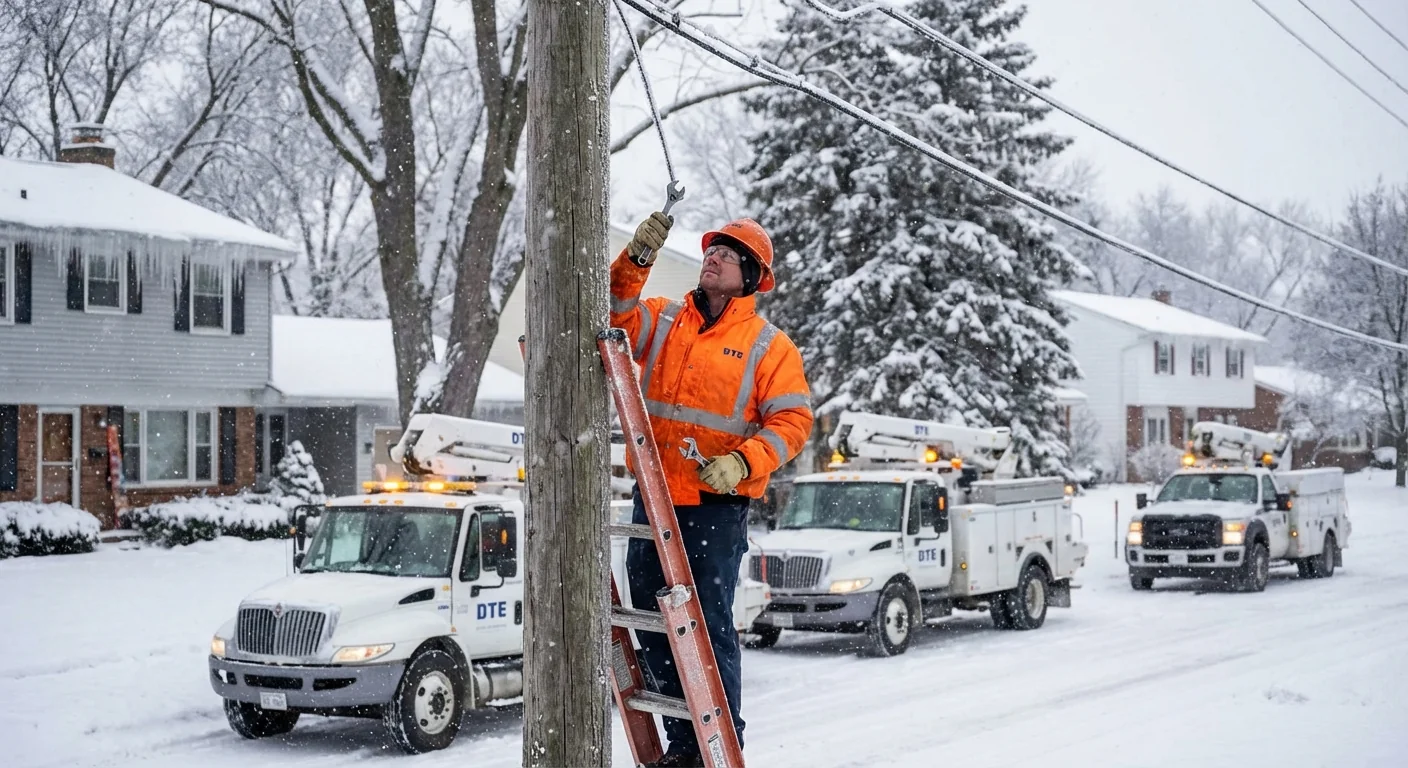
Freezing rain glazed Metro Detroit overnight. Branches bent. Ice stacked on lines like glass. I am tracking widespread power cuts across southeast Michigan as the storm drags on. At the peak, more than 41,000 customers lost power. Outages are clustered along main corridors and neighborhood circuits. The DTE outage map is the fastest way to see what is down and when it may come back.
Ice coats the grid, and the grid fights back
This was a classic wintry mix setup. A warm layer sat aloft, so rain fell through cold surface air and froze on contact. A quarter inch of ice, sometimes less, is enough to snap limbs and pull lines. Winds are not strong, but even light gusts move ice-heavy branches into wires. Roads and sidewalks are slick. Travel is slow.
Another weak system may arrive late in the weekend. That may add light snow and keep conditions cold. It also means crews will work in waves, restoring power between bouts of ice and snow. Expect ETAs to shift as teams test lines and replace hardware.
What the DTE outage map shows right now
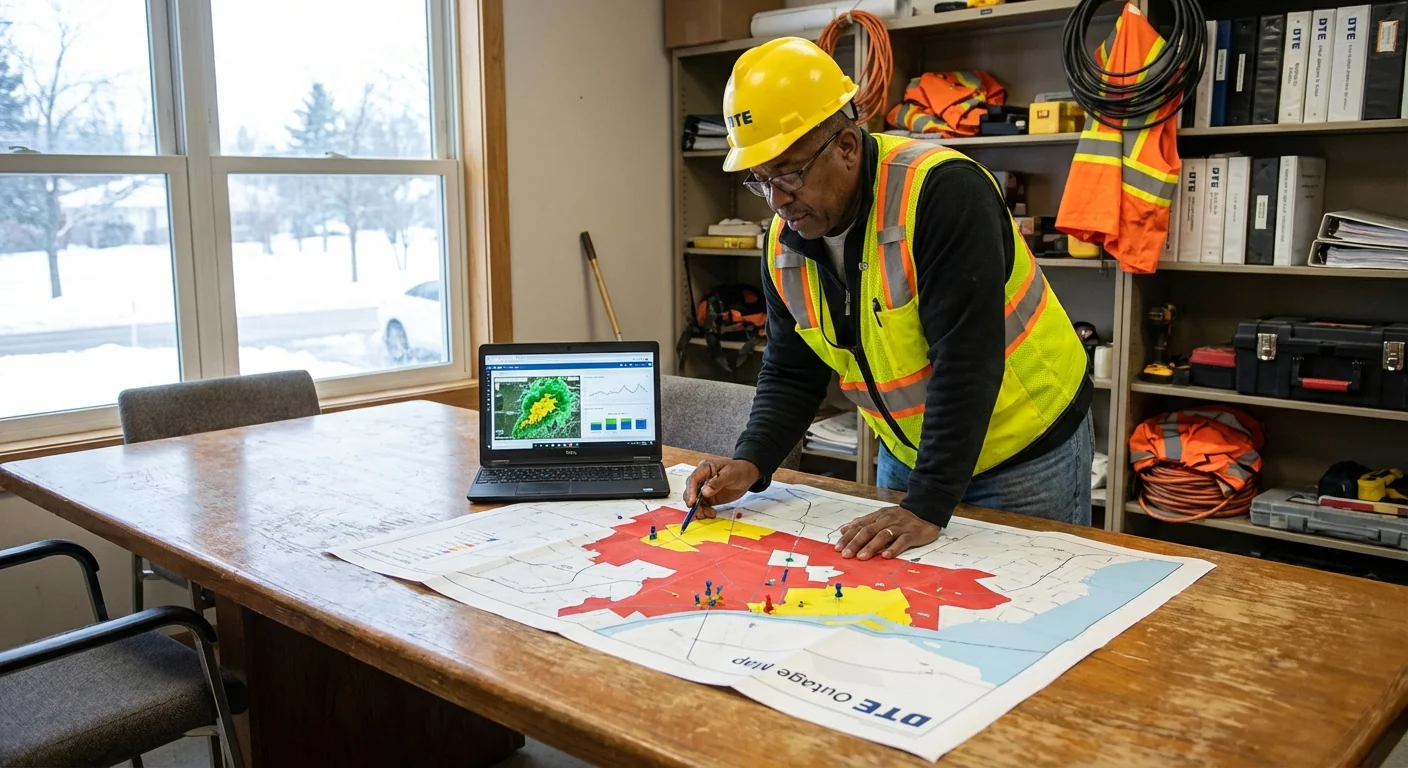
The map lays out outages by area. Colored shapes show grid segments that are dark. Pins call out hazards and work zones. Tap your area to see a local count and the size of the affected circuit. You will also see an estimated restoration window. That window can change as crews confirm damage.
Critical sites come first. Hospitals, fire stations, and water plants are prioritized. After that, crews focus on lines that restore the most customers fastest. Neighborhood taps and single homes come next. That is why a nearby street can light up while yours stays dark.
Refresh the map often, about every 15 minutes. Save a screenshot of your address and ETA to reduce phone use and save battery.
How to use the outage map and report a problem
If you have power, use Wi-Fi. If you are out, switch to low power mode first. Then follow these steps.
- Open DTE’s outage map on the website or in the mobile app.
- Enter your address, then toggle Show outages to highlight active events.
- Tap your cluster to open details, including the count, cause, and ETA.
- Select Report outage if your home is dark but not shown, add hazards like downed lines or a trapped vehicle.
- Sign up for text or email updates, confirm your phone and keep the ticket number.
Stay at least one full tree length away from any downed line. Assume every wire is live. Call 911 to report immediate danger.
Why freezing rain hits harder in a warming climate
Warmer winters do not mean fewer winter storms. They change the kind of storms we get. When air just above the ground runs warm, rain falls into subfreezing surface air. It coats trees and wires with ice. That load can be brutal. A half inch of glaze can add hundreds of pounds to a single span of line.
The Great Lakes region is seeing more winter rain and mixed events. Freeze and thaw cycles are also more frequent. That stresses poles, crossarms, and tree canopies. It increases the chance of ice accretion followed by wind. Grid hardening can blunt the hit. Smarter reclosers, stronger poles, and wider tree clearances help. Underground lines reduce exposure, but they cost more and take time. Battery storage and demand response can shave peaks and keep key sites powered while crews rebuild.
Stay safe, stay warm, and plan for the next hour
Heat loss is the main risk now. A well insulated home can hold warmth for several hours. Older homes cool faster. Keep doors closed. Guard your battery power and your food.
- Layer clothing, hats, and gloves, and gather in one room to share heat.
- Run faucets at a slow drip to reduce frozen pipes during long outages.
- Unplug sensitive electronics until power is stable.
- Check local warming centers and make a plan to get there safely.
Never run a generator or grill indoors or in a garage. Carbon monoxide is deadly and builds fast. Keep generators outside, at least 20 feet from doors and windows.
I will keep tracking the grid as the storm evolves. Crews are moving methodically, clearing hazards, then rebuilding broken spans. The DTE outage map will update as circuits come back. Use it to report, to plan, and to stay safe. This ice will ease, but winter is not done. Tonight is a reminder, in a warming world, ice storms can hit harder and more often. Keep your phone charged, your neighbors close, and your options clear.