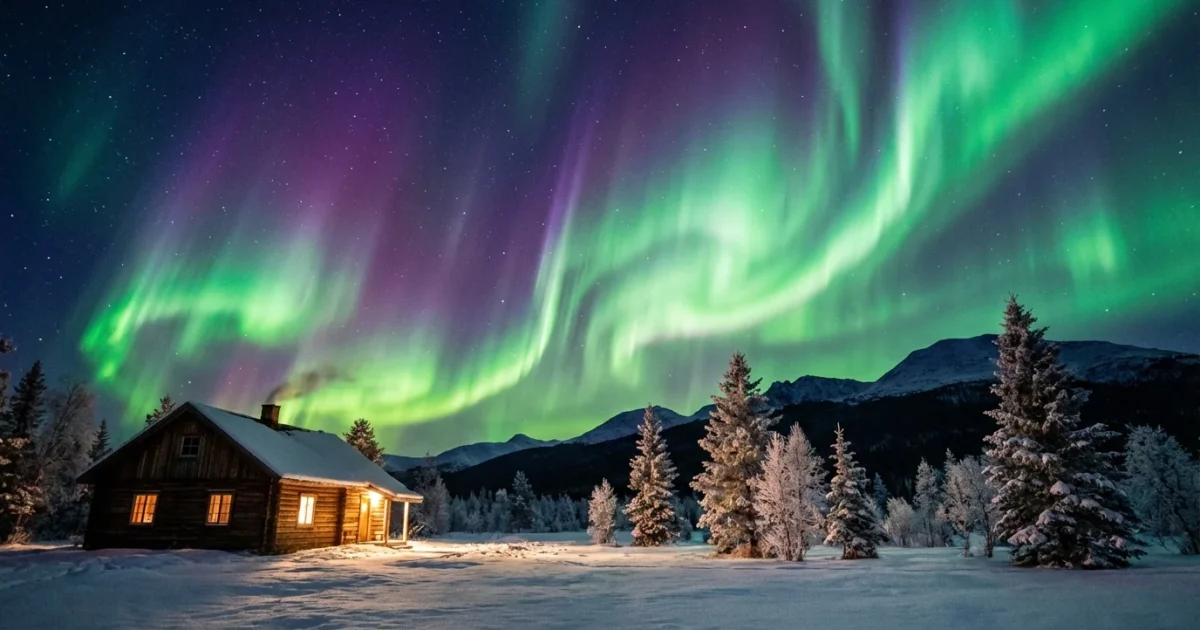
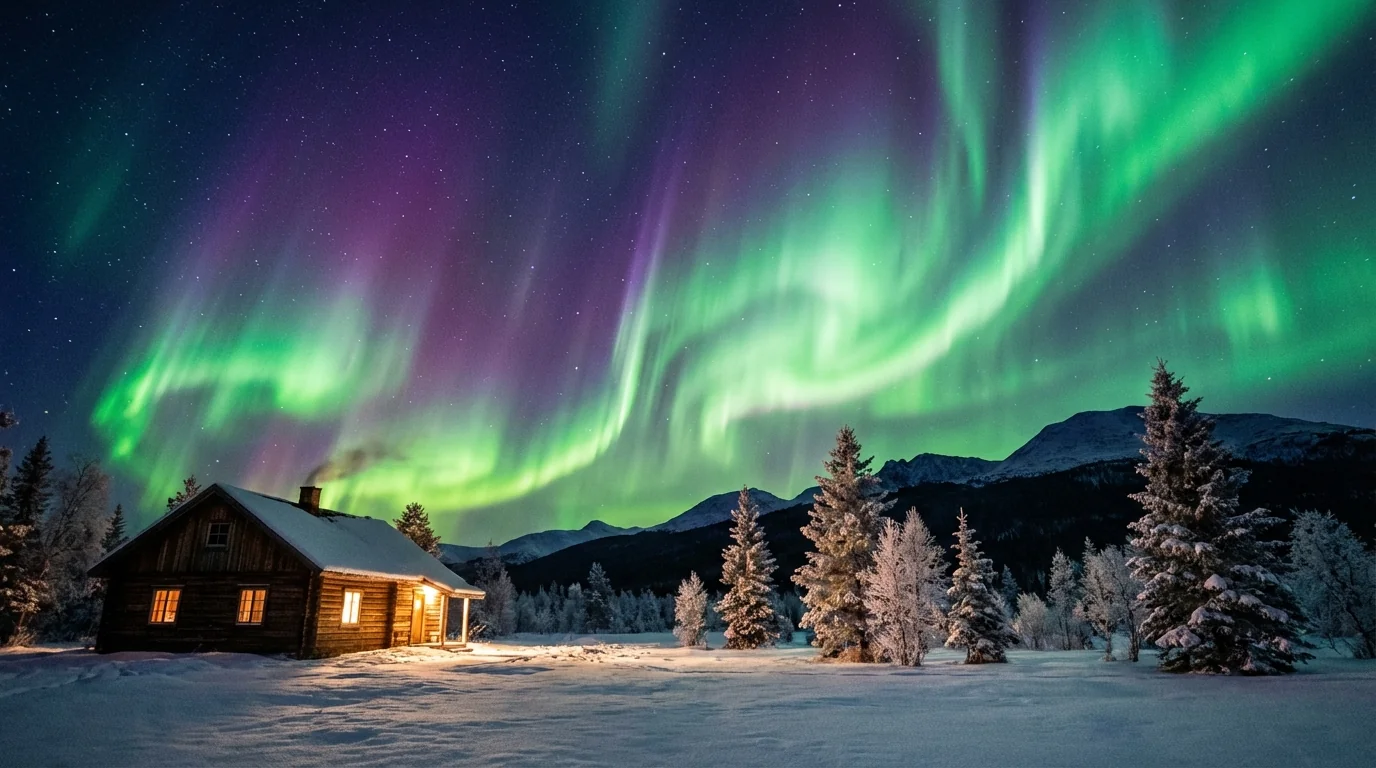
Breaking Now: A strong solar storm is heading for Earth tonight, and the sky could answer with color. I am tracking a G3, strong, geomagnetic storm watch for this evening, December 8. A powerful M8.1 solar flare on December 6 launched a full‑halo coronal mass ejection toward us. The arrival window is early to midday UTC on December 9, which means late tonight through early Tuesday morning across North America. If the hit is on target, the Northern Lights could spill far south of their usual home.
How and when to see it
Timing matters. Watch the northern horizon after dark, then stay patient. Aurora often builds in waves. The best window is late evening into the early morning hours. Even brief breaks in the clouds can be enough for a shot.
Dark skies help. Get away from city lights if you can. Face north, keep your eyes on the low to mid sky, and give your eyes 20 minutes to adjust. Green is common at first. Red, pink, and purple can flare during stronger substorms.
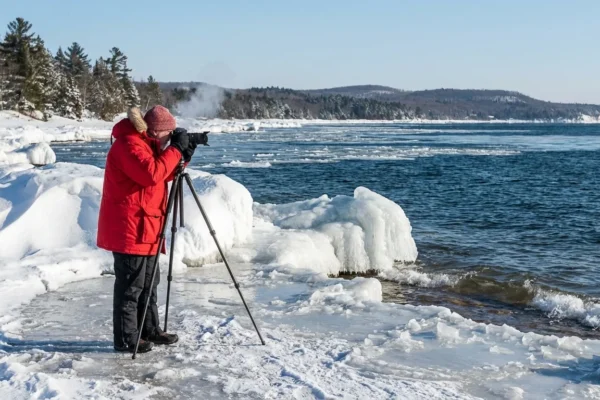
Aurora photo quick start: use a tripod, shoot 5 to 10 second exposures, ISO 1600 to 3200, and a fast lens, f/2.8 to f/4. Manual focus to infinity, then fine tune on a bright star. A headlamp with a red light saves night vision. 📷
Cold air is likely tonight for many. Dress in layers and bring spare batteries. They drain fast in low temperatures. If you drive to dark skies, plan your route and watch for ice.
What a G3 storm means for power, flights, and the grid
A G3 storm is strong. It is not extreme. For most people, it is a light show, not a hazard. Still, space weather has real effects. High altitude radio can fade. GPS and satellite links can wobble. Power grid operators can see extra currents on long lines. Utilities prepare for nights like this, and many activate storm protocols. That can include higher staffing, tighter voltage control, and closer watch on transformers.
This is space weather, not Earth weather. It does not change our climate. The Sun’s cycle peaks every 11 years, and we are near a solar maximum. That raises aurora odds for months, not just tonight. It also tests resilience. The modern grid faces heat waves, storms, fires, and now more frequent geomagnetic kicks. Investments in grid hardening, better forecasting, and transformer protection pay off on nights like this.
Airlines sometimes adjust polar routes when storms spike. That can add time but protects communication. Pipeline operators monitor currents that can affect corrosion control. These are known playbooks, and tonight fits them.
Do not look at the Sun with the naked eye or through optics. Tonight’s show is after dark, but solar viewing requires certified filters.
The week ahead: energy, policy, and climate signals
This storm opens a week where weather, science, and policy connect. The Federal Reserve meets Wednesday, December 10, for its final 2025 decision on interest rates. Borrowing costs shape clean energy builds, from wind farms to home heat pumps. A rate cut would lower financing costs, which can speed projects and expand access. Grid upgrades depend on that math too.
Political headlines also carry environmental weight. Ongoing debates over executive power affect how agencies set and enforce climate rules. Infrastructure dollars for transmission, EV charging, and coastal resilience move faster when legal paths are clear. Meanwhile, communities are focused on safety and transparency after a deadly U.S. military strike in the Caribbean. Accountability in crisis is part of the same public trust needed for big climate work.
Today’s cultural observances, from Bodhi Day to the Feast of the Immaculate Conception, invite reflection. Many will gather outside under winter skies. If you are lighting the night, consider shielded fixtures and warmer bulbs. Small steps reduce light pollution, which helps both night skies and wildlife.
The bottom line
Tonight, December 8, the sky is part of the news, not just the backdrop. A strong solar storm could paint North America with aurora. It is a reminder to build resilience, from our power lines to our policies. Keep your eyes north, stay warm, and stay tuned. I will keep updating as the night unfolds.