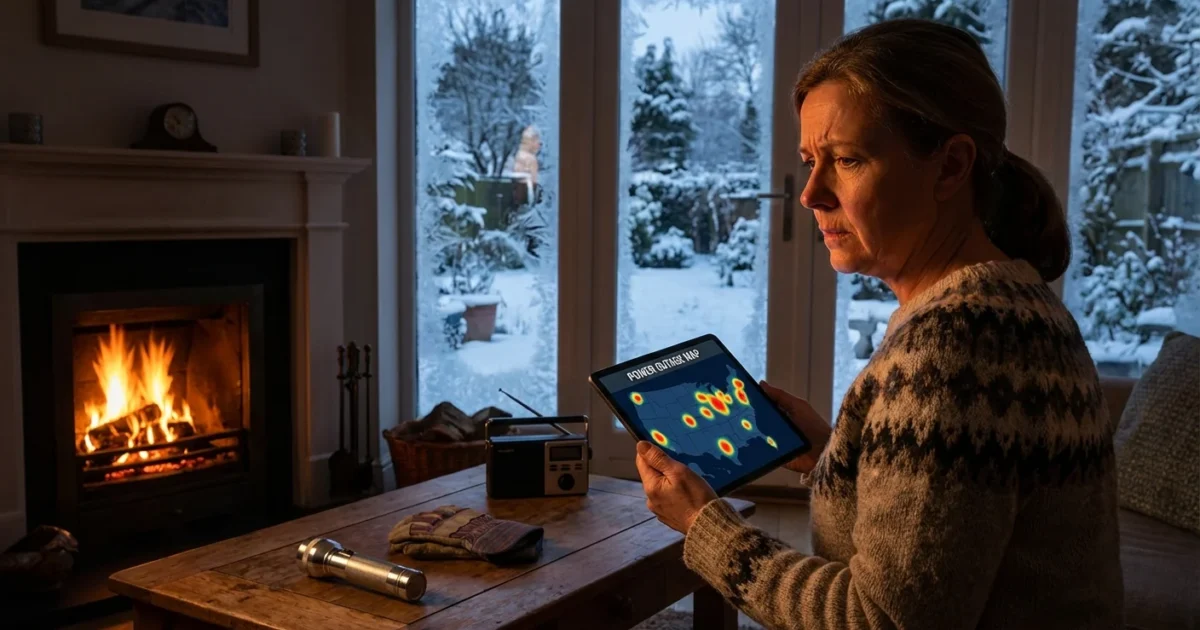
Freezing rain is glazing power lines as an arctic blast drives in. Lights are blinking out in pockets across the region. The consumers outage map is now the most important screen in the house. It shows where the grid is hurting, and how fast crews can move as the ice grows.
What the outage map shows right now
The map updates in near real time. It clusters outages by size and location. Click a cluster and you see estimated restoration windows. You may also see icons for assigned crews or damage assessments. That is your best snapshot of the grid’s health in this storm.
Expect some lag. Utilities blend automated sensor data with reports from customers. Signals can fail in ice. Lines can trip again in wind gusts. Early estimates can slip if a second fault appears.
The ice is doing the classic winter damage. It adds weight to branches, then branches fall on wires. High winds rock iced lines, which can snap insulators or gallop lines into contact. Transformers do not like the stress. This is why the map lights up in patches, then grows.
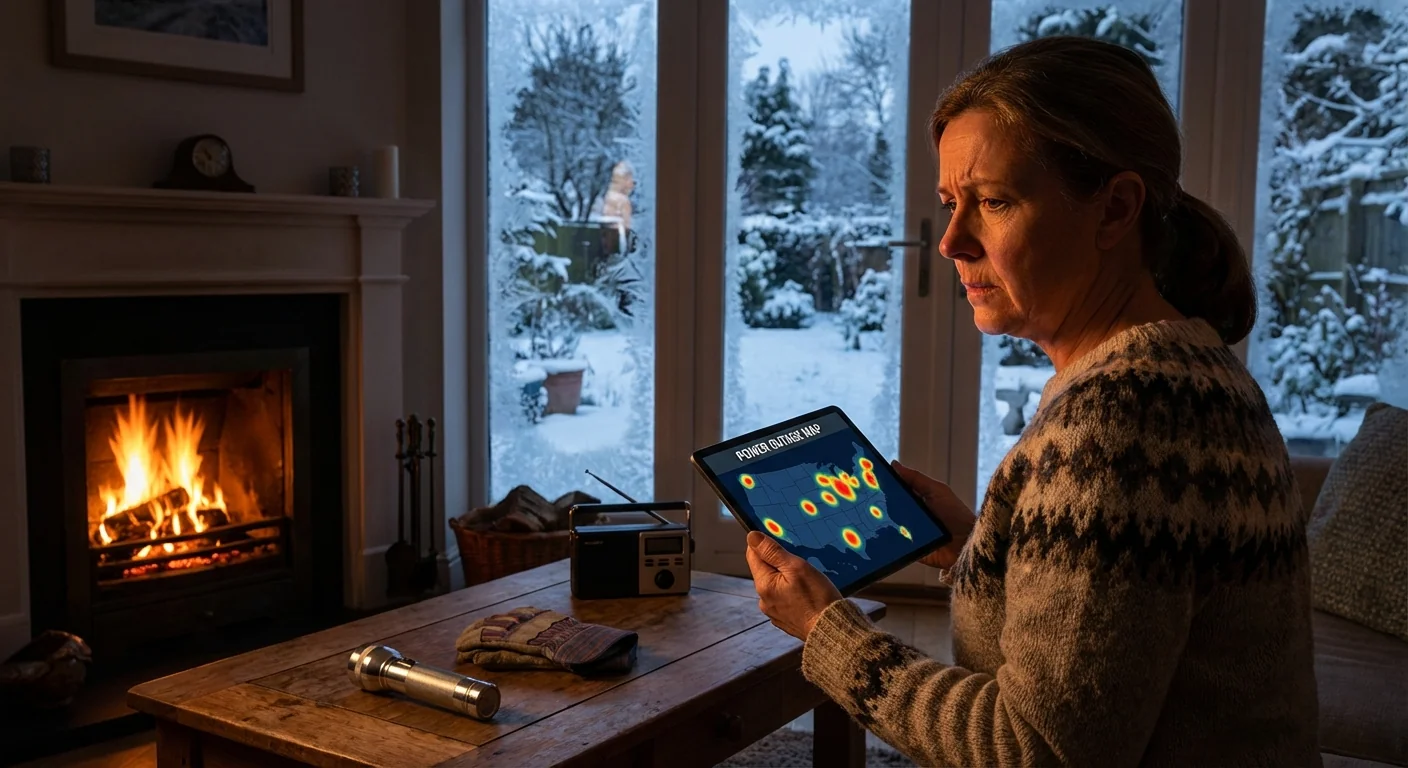
Report your outage through the utility website, app, or phone. Your report helps the map lock on to real damage and speeds triage.
How to use the consumers outage map in this storm
You need fast, clear steps while the house cools. Here is the simplest path.
- Open your utility’s outage map on the website or app. Bookmark it on your phone.
- Search your address. Zoom to street level to see your block and nearby circuits.
- Tap the icon over your area. Read the cause if listed and the estimated restoration time.
- Toggle layers for crew status or weather if available. Check neighboring clusters for a sense of scale.
- If your home is dark but not shown, report the outage. Add notes about downed lines or tree damage.
If the estimate is a wide window, that is normal in ice storms. Crews must first make hazards safe. They need time to inspect multiple breaks on a single line.
What to expect from restoration
Utilities restore critical sites first. Hospitals, water plants, and emergency services come ahead of neighborhoods. After that, they target repairs that bring the most people back at once. A single fix to a main feeder can restore thousands. A backyard break may bring back only a few homes and can take longer.
The weather sets the pace. If freezing rain continues, crews must cycle between cutting power for safety and testing live lines. Tree crews need clear access. Slick roads slow bucket trucks. It is better to get a later time that holds than an early time that slips.
Ice storms fit a changing pattern. Warmer winter air can hold more moisture. When a shallow cold layer hugs the ground, rain freezes on contact. That sharpens the risk to the grid. We are seeing that pattern today.
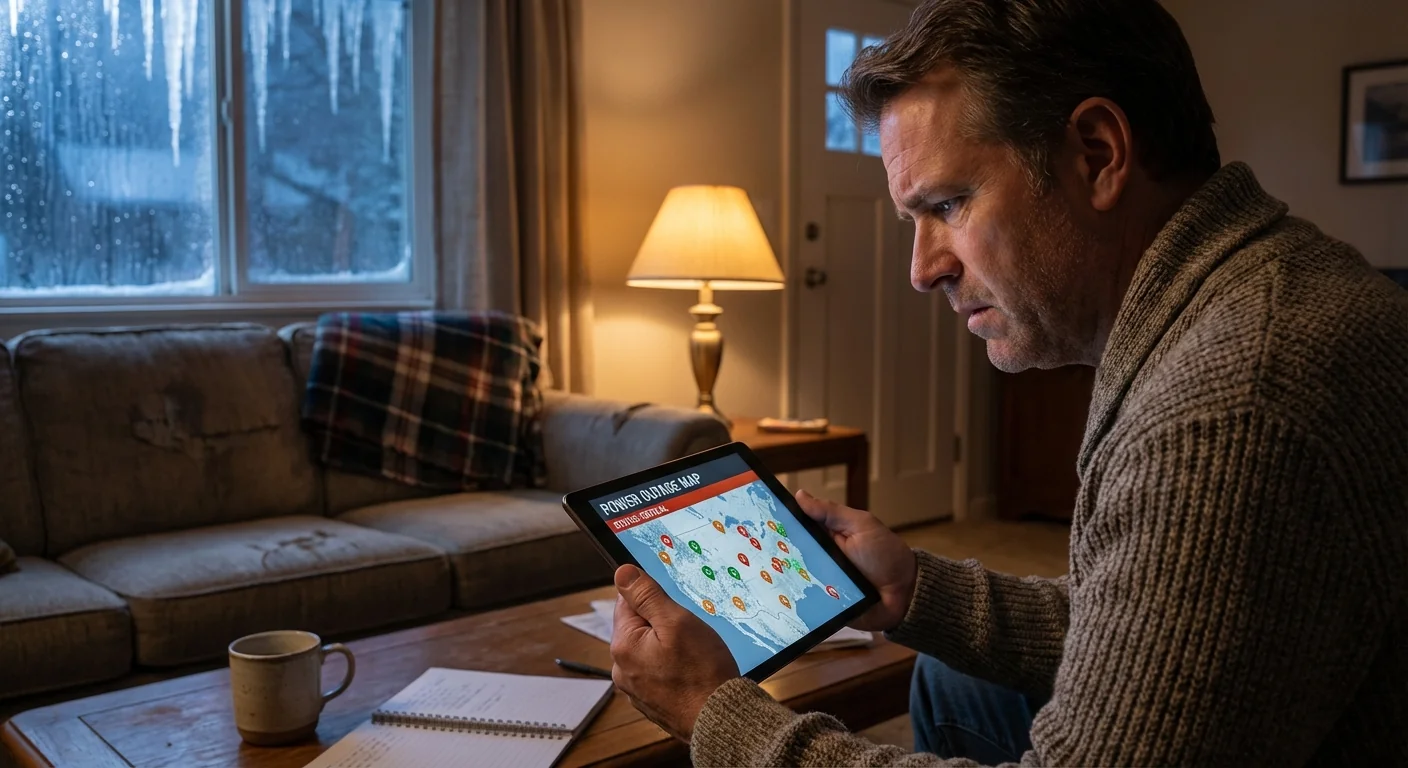
Safety first while the grid is stressed
Stay safe while you watch the map and wait for crews. Treat every downed line as live. Keep kids and pets away. Carbon monoxide from generators and grills kills fast and without smell. Ventilation is not a luxury in this cold.
- Never touch or drive over downed lines. Call your utility and 911 for hazards.
- Run generators outdoors, far from doors and windows. Never in a garage.
- Keep the fridge closed. Eat perishable foods first if the outage lingers.
- Protect pipes. Let faucets drip and open cabinet doors to share heat.
- Charge phones in the car only with proper cables. Crack a window to avoid fumes.
If you feel dizzy, sick, or confused while running a generator, get fresh air at once and call for help. CO exposure is an emergency.
Why this keeps happening and what can change
Our grid was built for the old climate. Today’s winter brings sharper swings. Arctic air drops in fast. Storms carry more moisture. That raises ice accretion risk. Trees grow longer in warmer seasons, then break under winter loads.
There are fixes. More aggressive tree trimming helps. Stronger poles and insulated spacers reduce slap and shorting. Underground lines work in dense areas with stable soils. Community microgrids keep key services on. Rooftop solar with batteries can cover essentials for hours. Weatherizing homes holds heat when the power goes out. Cold climate heat pumps and smart panels can shed load smoothly. Each step eases the strain when storms stack up.
The outage map is part of the solution. It guides crews, informs neighborhoods, and shows where the grid fails again and again. That is a roadmap for smart investment.
The bottom line
The storm is here, and the grid is feeling it. Keep the consumers outage map open. Report your outage. Follow the safety rules. Check on neighbors. The faster we see the damage, the faster the lights come back. Then we build for the climate we live in now, not the one we remember.