Breaking: Arctic air slammed the Upper Midwest overnight, and trees are popping like firecrackers. The sounds are sharp, even scary. I am confirming the pops are real, but the threat is not what the name suggests.
What “exploding trees” really means
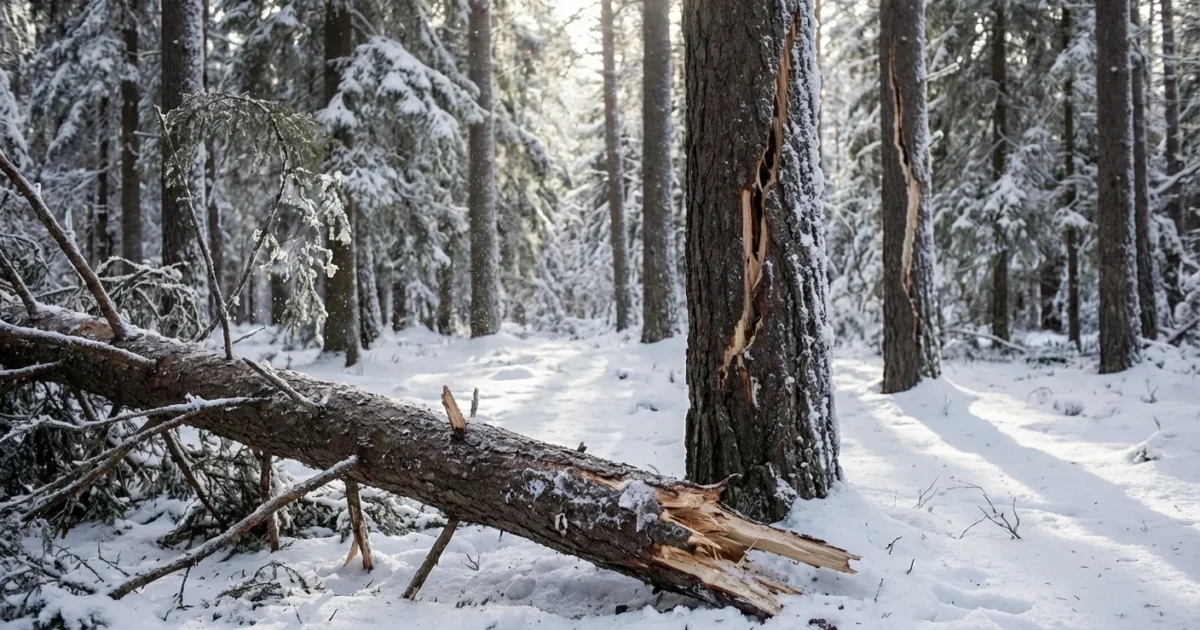
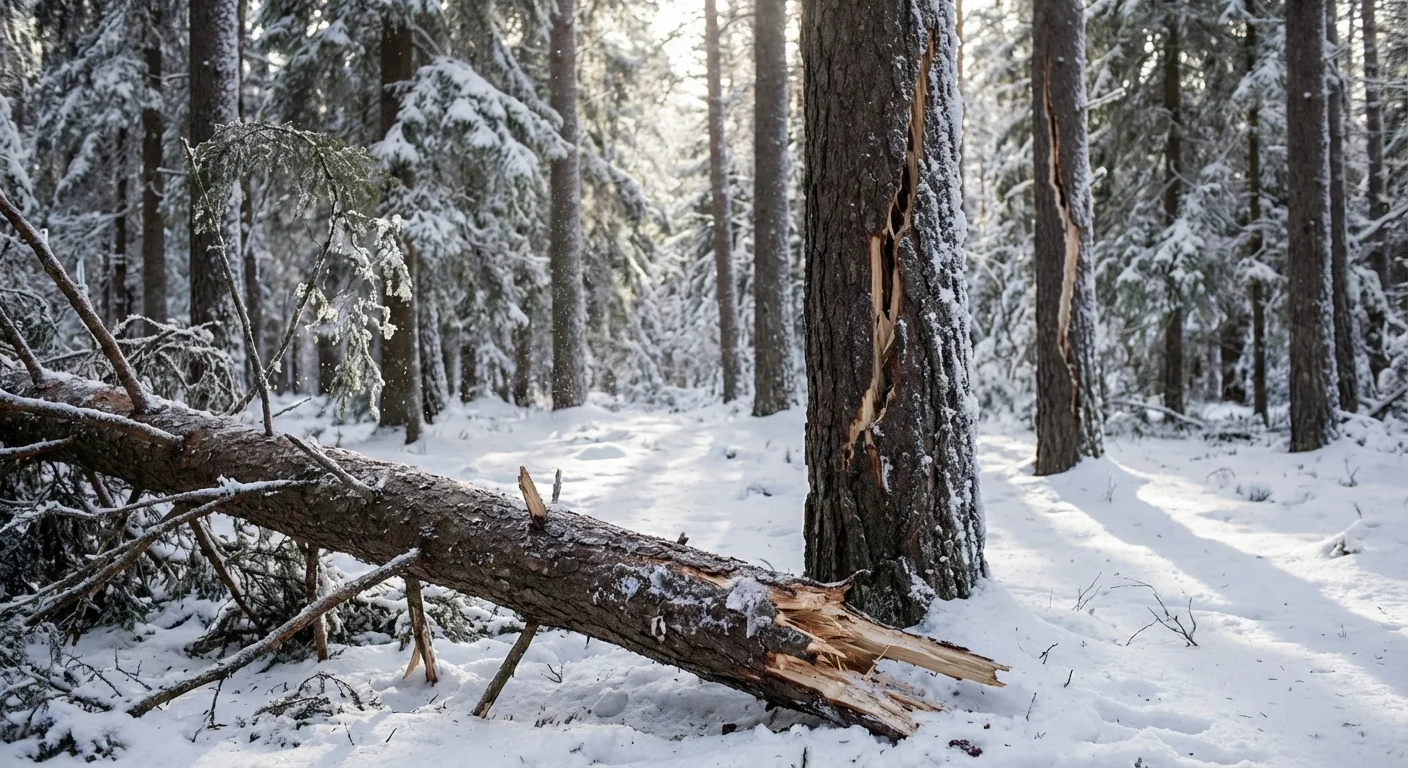
Trees are not detonating. They are cracking under stress from extreme cold. When temperatures plunge fast, the water and sap inside a tree can freeze. Ice takes up more space than liquid water, so pressure builds. Bark can split, and limbs can fail. The crack can sound like a gunshot in the quiet of deep cold.
The loud pop is often a frost crack along the trunk. It can also be a limb snapping after ice adds weight. Most trees survive these hits. Many end up with a scar in the inner bark that looks dramatic but heals over time. The real hazard is falling wood, not a blast.
The physics in brief
Water expands as it freezes, and sap is water with sugars. That mix can freeze unevenly if the outside of a tree cools faster than the core. The outer layers contract and the inner layers lag behind. Stress rises until something gives. The release, a split or limb break, creates that sharp report.
The boom you hear is a bark split or a limb cracking under stress. It is not a full tree explosion.
Why this cold snap sets the stage
This outbreak brought rapid drops to well below zero. Wind drove the cold faster into the wood. That speed matters. A slow freeze is less damaging. A fast plunge can shock a tree, especially one already stressed by drought, insects, or past pruning.
Species matter too. Thin bark hardwoods with high moisture, like maples and young oaks, are more likely to crack. Preexisting wounds and cavities raise the odds. Ice loading makes it worse. Add gusts, and weak branches can shear off. ❄️
There is a wider climate story here. Winters are warming on average, but we are also seeing swings that are more extreme. Freeze, thaw, then deeper freeze. That whiplash is hard on trees. Warmer air also holds more moisture, so ice storms can load branches before Arctic air arrives. The result, a louder and riskier cold snap for our urban canopy.
Do not stand or park under large, ice laden trees during extreme cold and wind. Move pets and play away from drip lines.
Real risks to people and property
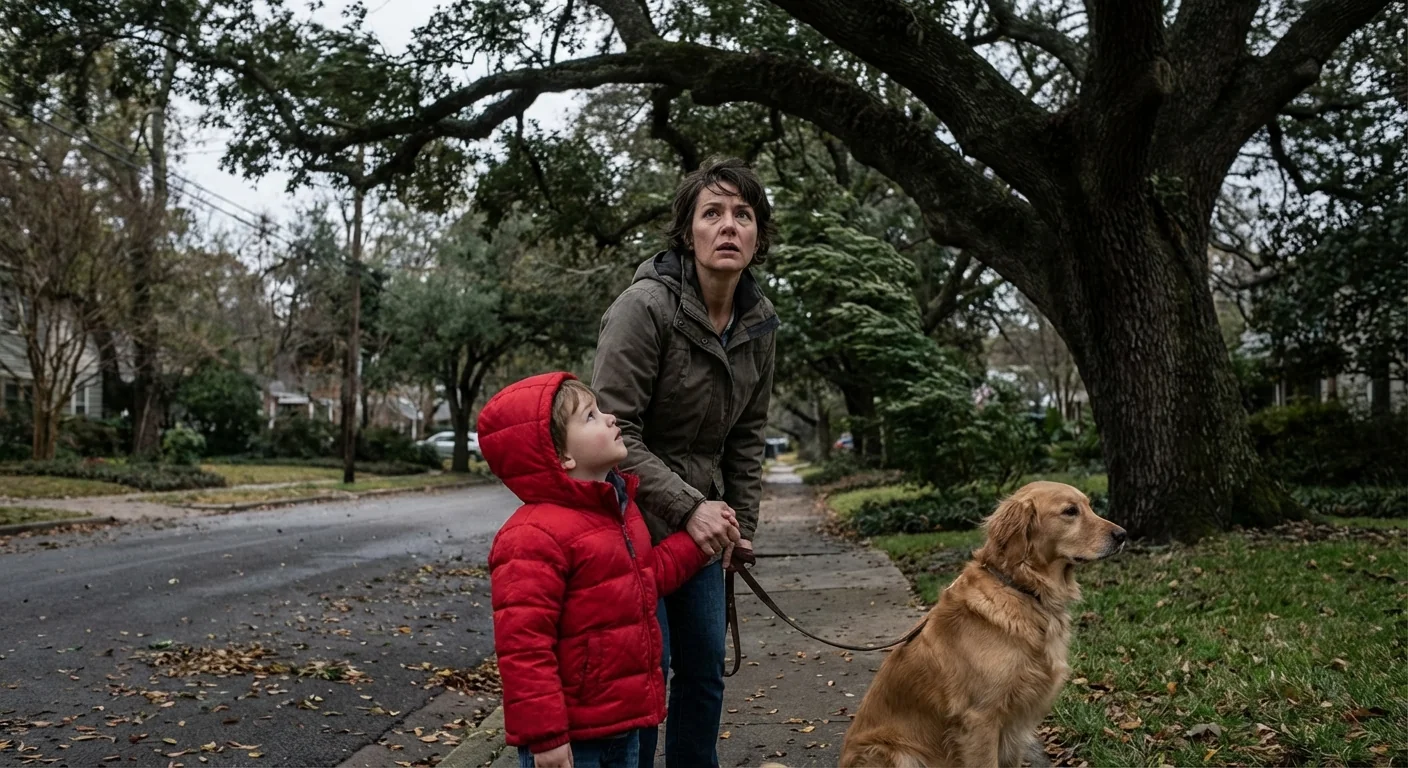
Falling limbs are the main concern today. They can damage cars, fences, and roofs. They can also take down power lines. If you hear cracking nearby, step clear and look up. The safest move is to get out from under the canopy and wait a moment before passing.
Most trees will not fail. Many will only carry a vertical scar that looks like a long zipper in the bark. Still, a cracked trunk or a hanging branch needs attention once temperatures ease. Urban trees are already stressed by tight soils and heat from pavement. A deep freeze after a mild fall can push them past their limit.
Here is how to lower your risk right now:
- Park away from large street trees and older yard trees.
- Avoid walking under limbs during gusts. Choose open routes.
- Listen for sharp pops or creaks. If you hear one, move clear.
- Keep kids and pets out from under trees until the cold breaks.
Caring for trees after the freeze
When the deep cold relents, do a slow walk around your home. Look for long vertical splits, fresh sap staining, and hanging or broken branches. Take photos. If a limb is hanging, do not pull it down. Gravity and hidden cracks can surprise you. Call a professional.
Hold off on heavy pruning until temperatures moderate. Clean cuts heal better in milder weather. Do not paint or seal a crack. Trees compartmentalize on their own. If the trunk has a long, open split, or if the tree leans, bring in a certified arborist to assess risk.
Sustainability starts with prevention. Choose diverse, site appropriate species. Prune correctly when trees are young. Mulch to protect roots, but keep mulch off the trunk. Water deeply in late fall before the ground freezes, especially after dry summers. Limit road salts near root zones. These steps build resilience before the next shock.
Schedule an arborist check after severe cold if you see splits, hanging limbs, or if a tree overhangs your home. Quick expert care can save a valued tree.
A final word. The pops you hear today are nature under pressure, not a movie scene. Respect the risk, especially from falling limbs. Then give your trees the care they need to recover. Stronger trees mean safer streets and cooler cities when summer heat returns. ⚠️