Power snapped off across Houston this morning as a fierce cold front pushed through Southeast Texas. Gusty winds, quick temperature drops, and falling limbs knocked lines and cut service in a fast, choppy wave. I am tracking tens of thousands of CenterPoint Energy customers without power, with outage counts jumping up and down within minutes. Entergy customers also lost power across parts of the region. This was a weather hit, and it landed hard on a grid that is still learning to live with more sudden swings.
What’s happening right now
By midmorning Monday, December 29, crews were rolling across the Houston area to fix scattered damage and restore service. Outages surged above 30,000 customers at times, dipped, then climbed again as wind bursts moved through neighborhood by neighborhood. This rapid rise and fall is a sign of lines slapping, limbs touching conductors, and protective equipment tripping to prevent bigger failures.
Wind gusts arrived ahead of the coldest air, then continued behind the front. Temperatures fell fast, which pushed heaters and heat pumps to kick on at once. That spike in demand can stress circuits during restoration and cause repeat trips. Entergy also reported thousands of outages statewide, a reminder that the front hit across utility borders, not just CenterPoint’s network.

How the weather knocked out power
High wind is one of the most common triggers for scattered outages in Houston. The city’s tree canopy is a gift in summer heat, but branches become projectiles in winter gusts. Today, wind pushed limbs into lines and loosened hardware. Where trees were trimmed well, lines fared better. Where growth was dense, sparks and shorts were more likely.
Then came the load surge. When power returns, many appliances turn on at once. Heaters, space warmers, and garage fridges all wake up together. That creates a short burst of very high demand. If a circuit is already weak from wind hits, it can trip again. Crews have to patrol, remove hazards, and bring areas back in careful stages.
This pattern of choppy failures during a quick front is not new. What is changing is the speed of these swings. Warmer Gulf air set against sharp cold blasts can create dramatic pressure changes. That fuels stronger gusts and messy line damage. Climate scientists point to a future with more weather whiplash, more heat stress in summer, and more sudden cold shots in winter. That mix is a year round test for a grid built for a steadier past.
Response and what you should do right now
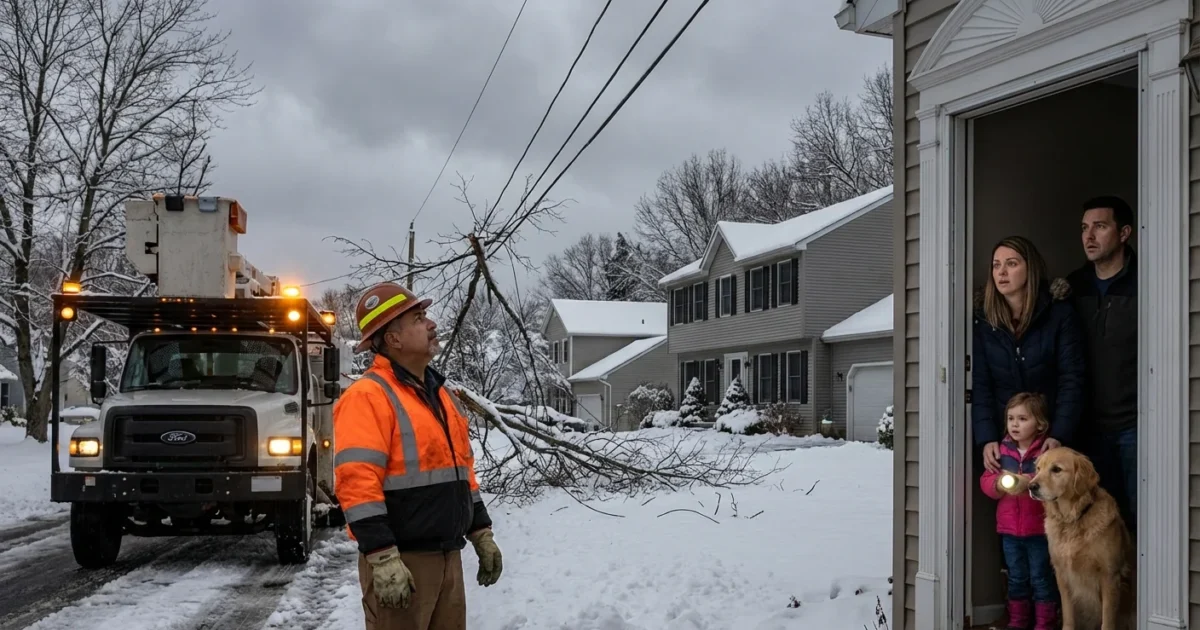
CenterPoint crews are isolating faults, reenergizing healthy sections, and moving bucket trucks into the hardest hit pockets. Restoration will come in waves as the wind eases and hazards clear. You can help speed the process and stay safe.
- Report your outage and sign up for alerts on the utility’s outage tools.
- Treat any downed line as live, keep at least 30 feet away, and call it in.
- Use four way stops at dark traffic signals, drive slowly near crews.
- Unplug sensitive electronics, leave one light on to know when power returns.
- Keep refrigerators closed. Most food stays safe for four hours if unopened.
Never run a generator indoors or in a garage. Keep it outside, 20 feet from doors and vents, and use a battery carbon monoxide alarm.
If you rely on medical devices, call your provider and consider moving to a powered location if restoration estimates run long. Community centers, libraries, and warming centers may open if needed. Check local updates for locations.

A grid built for heat, tested by wind
CenterPoint has invested in stronger poles, smarter switches, and some underground lines since recent storms. Those steps help. Automated devices can isolate faults in seconds, which is why you may see outages drop, then jump, as the system reroutes power around trouble spots. But today shows the limits of any single fix. Overhead lines will always be exposed to trees and wind. Undergrounding every mile is not realistic or affordable, especially in flood prone soils.
The most durable path is a layered approach. That means more targeted undergrounding on the worst wind corridors. It means aggressive, year round tree trimming, especially near older circuits. It means more automated switches to break long feeders into smaller pieces, so fewer customers go dark when something fails. It also means backup power for critical sites like fire stations, clinics, and water plants.
A charged phone, a small battery pack, a flashlight, and a paper list of contacts turn a short outage into a minor inconvenience.
What must change next
Houston needs more local energy to ride through brief hits like today. Neighborhood solar paired with batteries can keep lights, fridges, and medical devices running for hours without a truck roll. Microgrids for schools and shelters can hold stable when feeders trip. Demand response that gently lowers heater use for a few minutes can reduce those restart surges that trip circuits again.
Policy can push this forward. Approve targeted undergrounding where the wind and tree risk is highest. Fund vegetation management that prioritizes reliability and urban shade together. Set performance goals for restoration speed during fast moving cold fronts. Expand incentives for home batteries, community solar, and critical facility microgrids.
Today’s outages will fade as crews restore the last pockets. The lesson should not. Winter fronts, summer heat, tropical rains, all are sharpening. A tougher, smarter, and more local grid is the only way to keep Houston powered, no matter which way the wind blows.