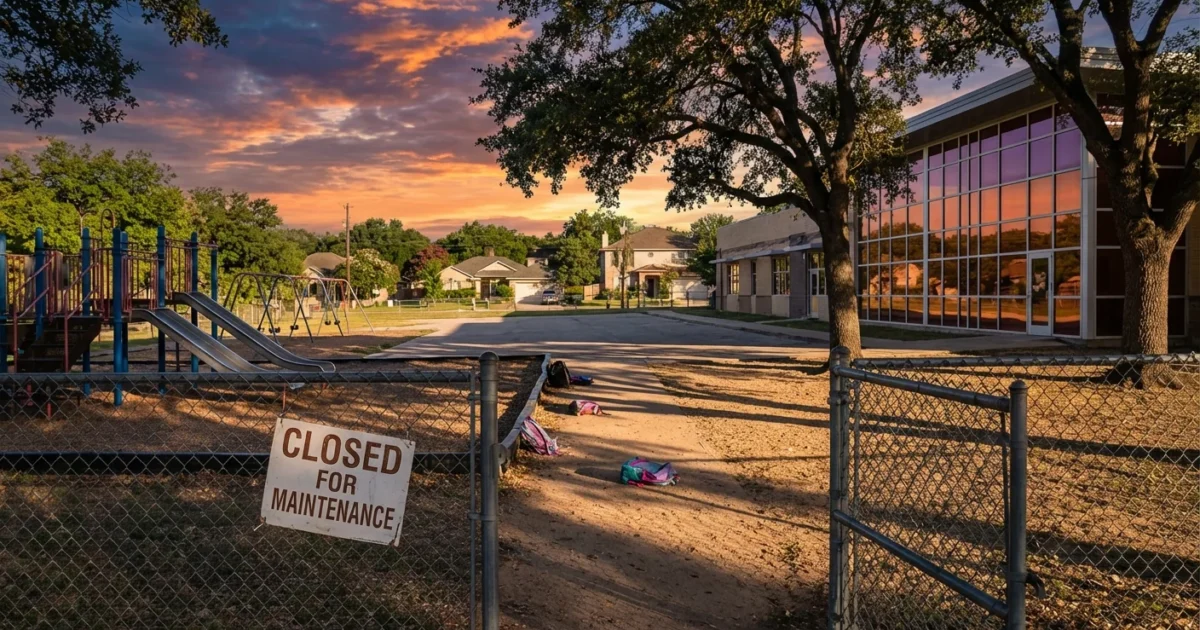
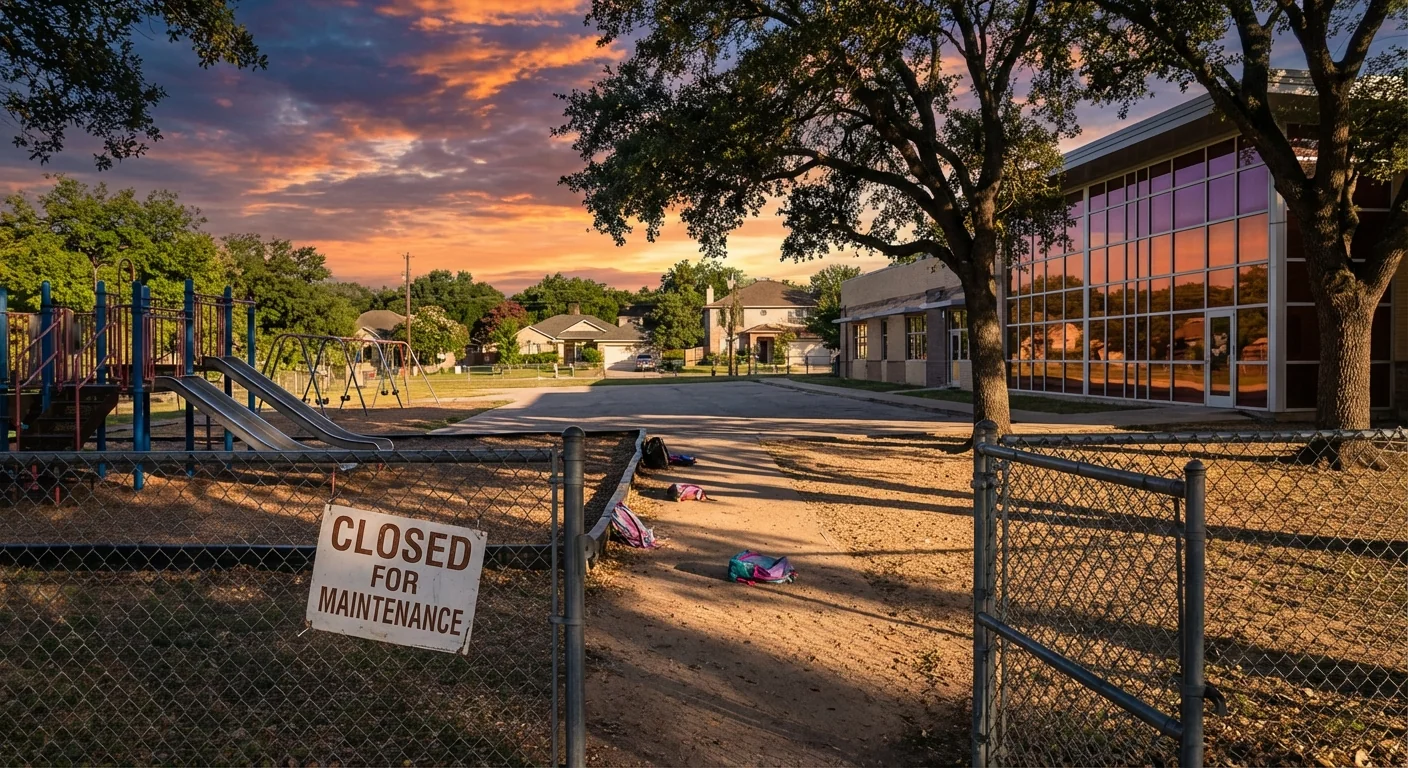
Austin ISD’s school closures just collided with the climate reality facing every neighborhood in this city. I have confirmed the district will close 10 campuses starting in the 2026–27 school year, even after more than 95 million dollars in 2022 bond funds flowed to those same sites. The move will shake daily life for thousands of students, and it will reshape how Austin manages heat, air, and stormwater on school grounds that double as community lifelines.
What happened and why the climate stakes are high
The board has approved a sweeping consolidation that affects about 3,800 students and removes more than 6,300 seats. District leaders project 21.5 million dollars in savings. Enrollment has fallen to a 30 year low, with fewer than 70,000 students in fall 2025. The budget is in the red by about 19.7 million dollars.
Those numbers are real. So is the climate pressure that hits schools first and hardest. Austin summers are hotter and longer. Buses bake. Playgrounds sear. Aging HVAC systems fail more often during extreme heat. Flooding rains still find low fields and cracked asphalt. When a district redraws its map, it also redraws heat and flood risk for kids, staff, and nearby streets.
Shutting buildings without a climate plan will push heat and traffic burdens onto fewer campuses, and it will waste recent efficiency gains.
The bond clash, by the numbers
Here is the flash point. More than 95 million dollars from the 2022 bond has been spent on campuses now slated to close. My review shows Oak Springs Elementary topped 48 million dollars. Martin Middle reached about 36.5 million. Barrington Elementary saw about 4.9 million, Widen Elementary about 2.8 million, and Bedichek Middle about 1.2 million.
Families see scaffolds, new roofs, new chillers, and wonder why the doors will soon lock. Trust is fragile. The district also adopted 24 state required turnaround plans to keep struggling campuses open. That makes the closure list feel even more confusing to many parents.
This is the heart of the issue. The district invested to stabilize facilities, including comfort systems that save energy and cut emissions. Then it moved to close many of them. The timing is hard to defend without a clear climate and community reuse strategy.
Getting consolidation right, for people and the planet
Closures are not just a budget story. They are a transport and air story. When students move farther from home, car trips rise. Morning idling grows. Ozone days get worse. Longer bus routes mean more heat exposure unless fleets are cooled and, over time, electrified.
We can do better. The receiving campuses must be ready for hotter years ahead. That means reliable HVAC, shade, water bottle stations, and safe routes that let more students walk or bike. It also means stormwater upgrades that keep new runoff out of nearby homes.
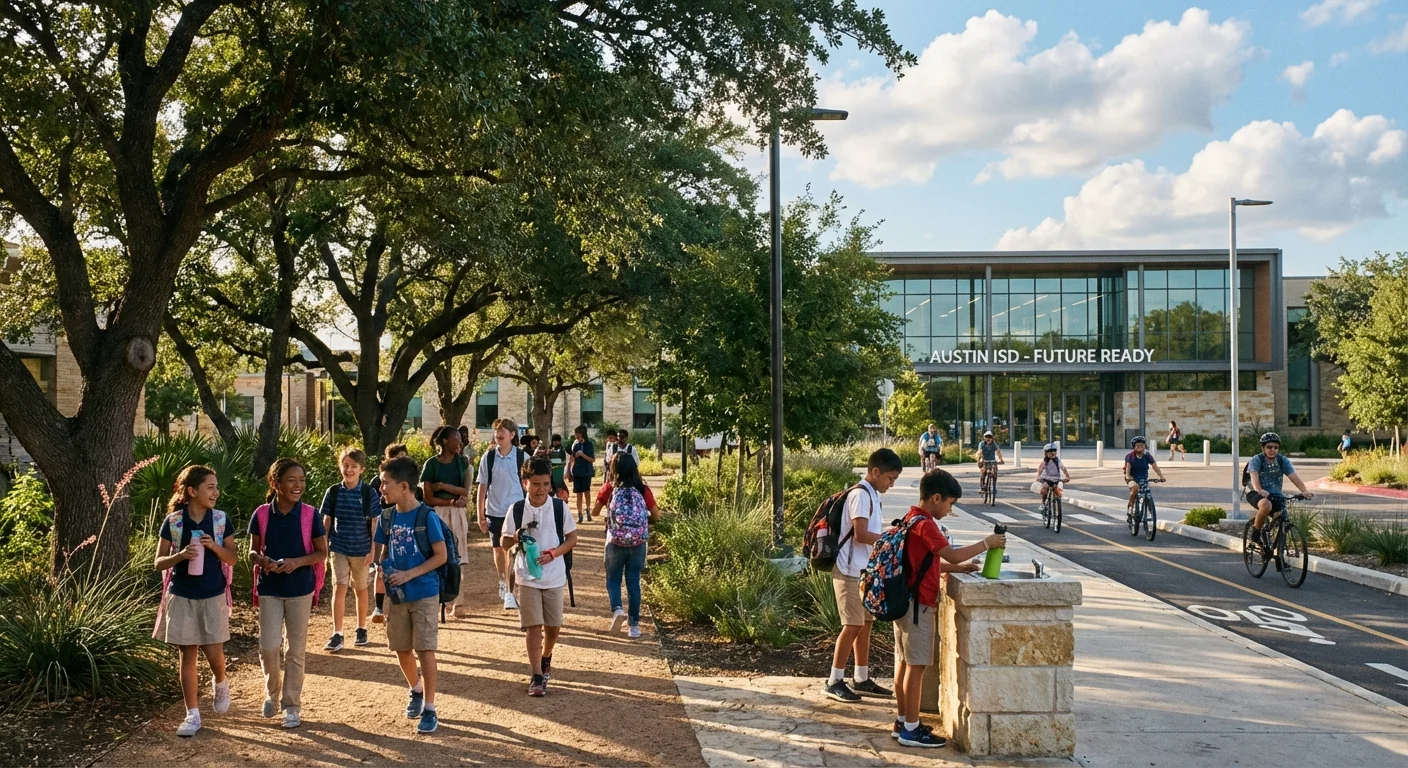
Immediate actions the district can take to make this transition cleaner and safer:
- Publish the new catchment maps with safe walking and biking paths and add crossing guards where needed
- Expand tree canopy and shade sails at receiving schools before the first day of class
- Accelerate HVAC tune ups, filtration upgrades, and heat pump conversions at receiving sites
- Shift the oldest routes to the newest, coolest buses, and pilot one electric bus corridor
What to do with shuttered sites
Empty buildings are a climate risk and a climate opportunity. If left idle, they become heat islands, attract blight, and waste embedded energy. With a plan, they can cool neighborhoods, store clean power, and soak up floodwater.
- Convert select gyms and cafeterias into resilience hubs with solar, batteries, and cooling space
- Replace unused asphalt with trees, rain gardens, and community gardens that lower heat and manage storms
- Lease space to early childhood care, adult learning, or health services that cut long trips and serve families close to home
Bedichek Middle, known from a famous film, and other campuses carry deep community ties. Keeping parts of these sites open as public assets will honor that history and cut emissions from long drives to far services.
Treat closed schools as climate infrastructure. Solar on the roof, shade on the ground, doors open during heat waves.
Transparency, equity, and a path forward
Equity must guide every step. Many of the affected campuses sit in areas with higher heat and higher asthma rates. Students who already walk under harsher sun will feel the longest commutes first. The district should show, campus by campus, how it will balance class size, cooling capacity, and outdoor shade so no child trades a nearby school for a hotter, more crowded one.
The board should also publish a clear accounting. List each bond dollar, the energy and health benefits it bought, and how those benefits will be preserved or moved. If a high efficiency chiller was installed, say where it will go. If a roof was strengthened, explain how that building will serve as a hub during extreme heat.
Families can accept hard choices when the plan is honest and the climate math adds up.
The bottom line
This is a breaking moment for Austin ISD. Ten closures begin in 2026–27. The district is chasing savings after years of enrollment decline, even as it carries a 19.7 million dollar deficit. But the climate does not wait. Every decision now must cut heat risk, trim tailpipe pollution, and protect water. Spend once, save twice. Keep students safe and neighborhoods cooler. That is how the district regains trust, and how Austin turns a painful consolidation into a cleaner, smarter school system 🌳.