A magnitude 4.9 earthquake struck Southern California today, centered near Indio Hills in the Coachella Valley. The shaking was sharp and widely felt, with cupboards rattling and windows buzzing from Palm Springs to Indio. Early checks show no significant damage. Aftershocks are already arriving, and more are likely through the day.
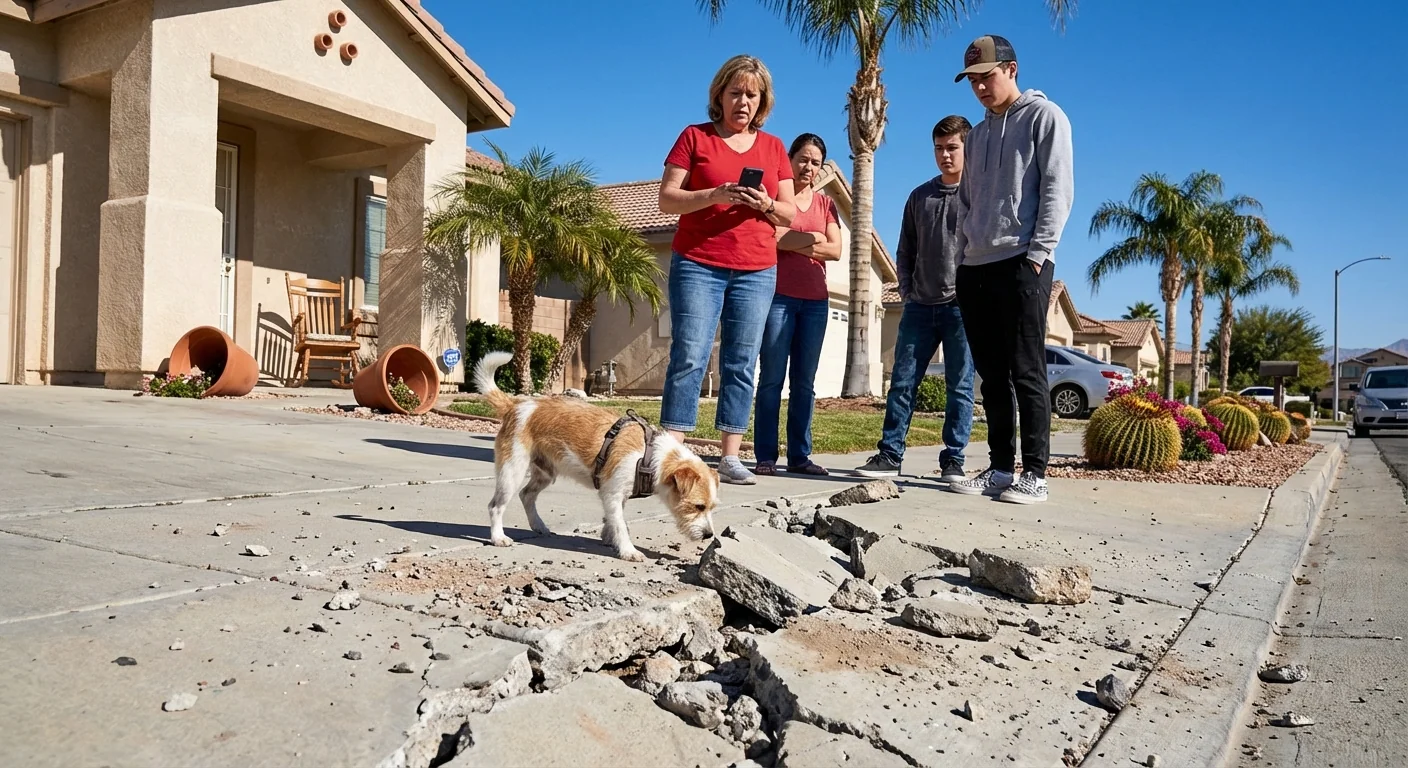
Where it hit and why it was felt so widely
This quake was shallow and close to the San Andreas fault system near Indio Hills. That area is a complex knot of fault strands. Energy there can move fast through hard desert rock, then amplify in softer valley soils. That is why a moderate quake can feel strong across a broad area, even with little damage.
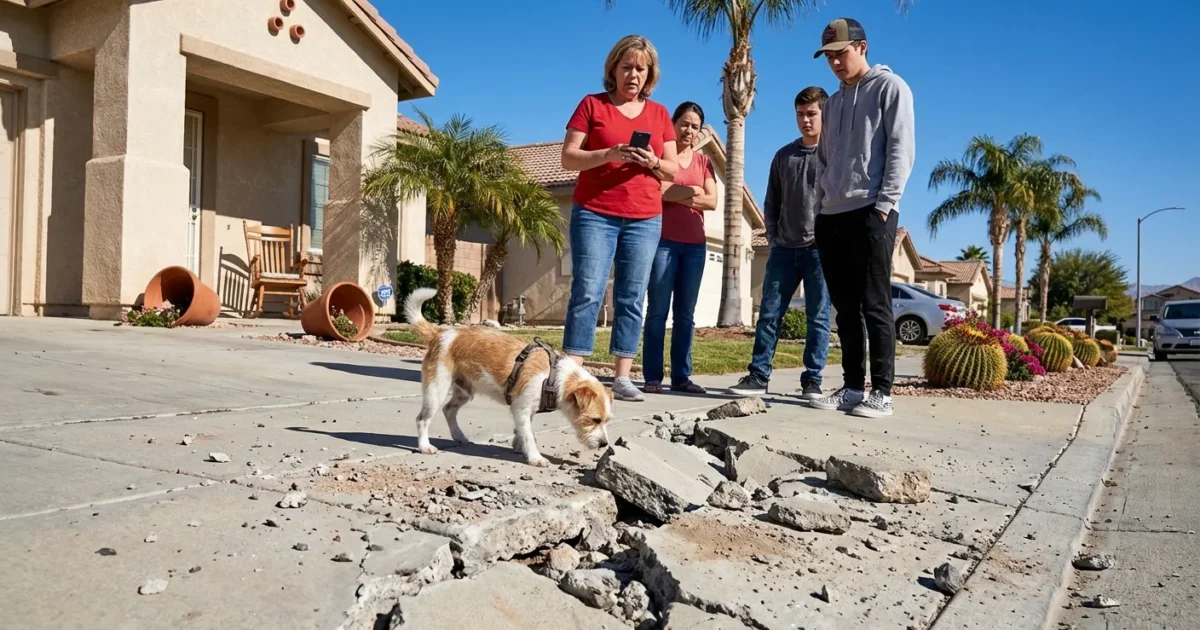
Coachella Valley communities sit on deep sediment basins. These basins can stretch shaking and make it feel heavier. People often describe it as rolling rather than a quick jolt. Today’s motion matched that pattern. Shelves rattled. Some items tipped. Most modern buildings performed as designed.
What a 4.9 means for safety and infrastructure
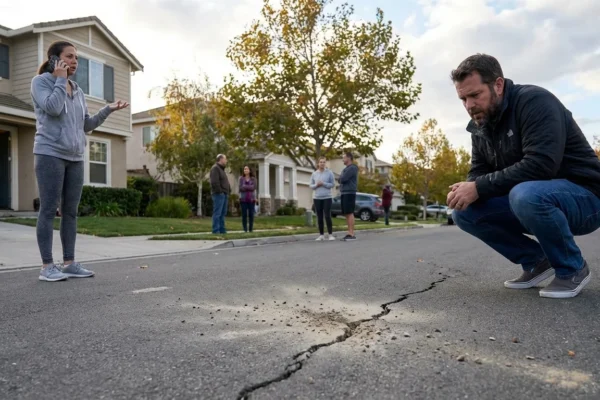
A magnitude 4.9 is considered moderate. It can crack plaster, drop light fixtures, and shake loose items. It rarely causes serious damage in modern, well built structures. The biggest risks are unsecured furniture, old masonry, and hidden utility issues like gas leaks.
Do a quick safety sweep after the shaking stops. You can do it in minutes:
- Check for the smell of gas. If you smell it, shut it off and get outside.
- Look for fallen power lines and avoid them.
- Inspect bookshelves, TVs, and water heaters. Re-secure if loose.
- Pick up broken glass and clear walkways.
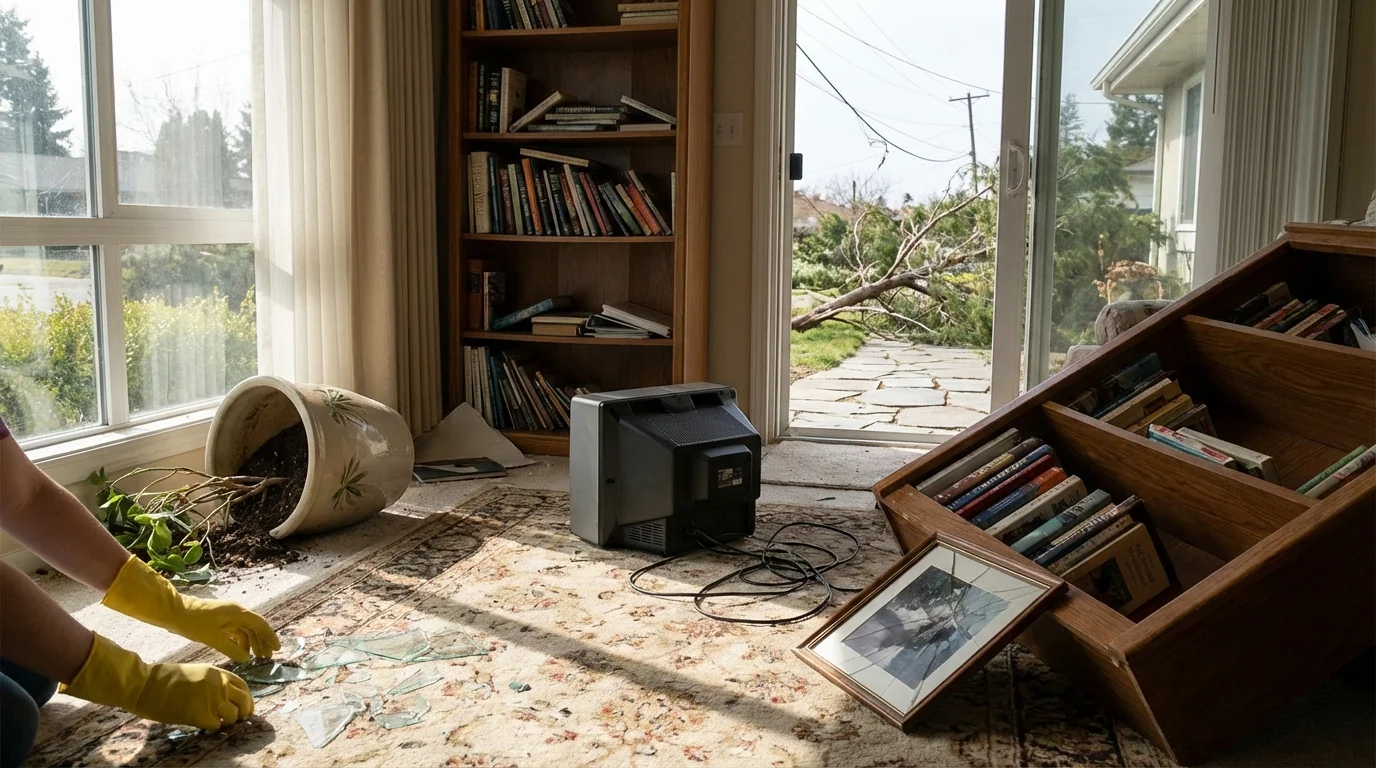
Aftershocks will follow, sometimes for days. Expect a few to feel sharp. Stay away from steep canyon walls and loose rock. Small rockfalls can occur in the surrounding desert hills, especially along trails and road cuts. ⚠️
Aftershock outlook
Aftershocks tend to be smaller than the main shock. Many arrive in the first 24 hours. The number then drops over time. A larger quake is less likely, but not impossible in the short term. Keep your shoes by the bed. Keep your phone charged. If another jolt hits, drop, cover, and hold on until it ends.
Quakes do not keep a schedule. They follow the stress in the crust. Today’s event relieved stress on one part of the fault system. It may transfer some to nearby strands. That is normal in this region.
The environment and climate context
Earthquakes are driven by plate motion, not climate change. Still, climate and quakes do meet on the ground. Fresh shaking can loosen slopes. If a storm hits later, wet soil can slide more easily. In desert valleys, strong afternoon winds can lift dust from small slides and damaged surfaces, which can stress people with asthma.
This is also a resilience story. A warming climate means longer heat waves and tighter power margins. A moderate quake on a hot day can strain the grid and water systems at the same time. The good news, Southern California has decades of seismic design in place. Strong building codes, solar plus battery systems, and water tank retrofits make neighborhoods sturdier.
Sustainability is not just about cutting carbon. It is about building for shocks. Securing heavy furniture means fewer injuries. Retrofitting older buildings keeps people in their homes. Microgrids keep clinics running when lines go down. These choices pay off on days like today.
Refresh your earthquake kit tonight. Water for three days, needed meds, a flashlight, sturdy shoes, copies of key documents, and a phone battery. A simple plan turns panic into action. ✅
What comes next
Crews are checking bridges, overpasses, and water lines. Transit and schools are doing quick inspections. Most residents will see life return to normal by evening. Still, stay alert for aftershocks and give first responders room to work. If you are hiking, avoid narrow canyons and loose slopes for a few days.
Today’s jolt is a clear reminder. The San Andreas is always in the background here. Prepared homes, strong codes, and smart, sustainable upgrades turn a scare into a drill. We will keep tracking aftershocks and any damage updates. Stay safe, stay ready, and check on your neighbors.