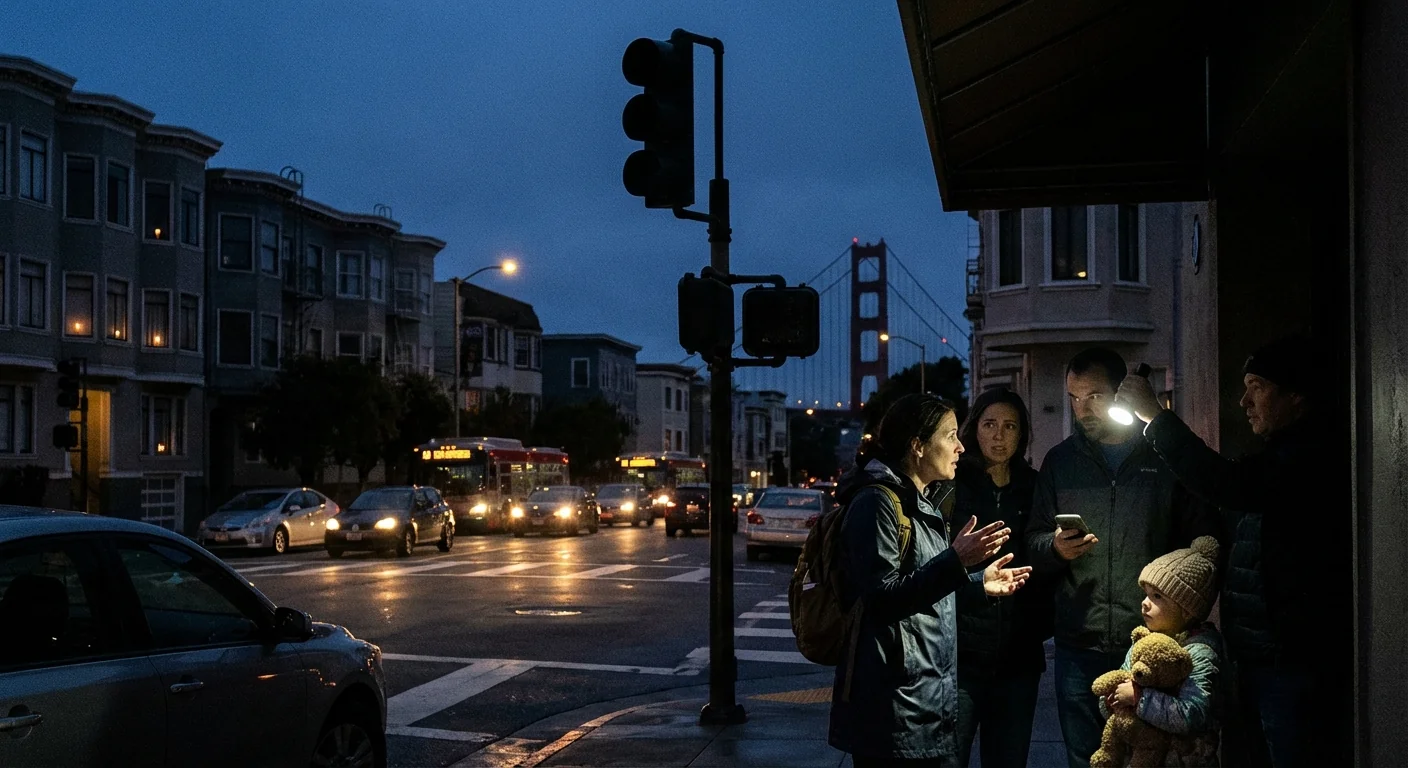
San Francisco went dark tonight. A massive outage cut power to much of the city, freezing traffic and storefronts. Self-driving cars stopped mid route, hazard lights blinking. Most lights are back on now, but thousands of customers are still without electricity as crews work through the night. I walked blocks that were silent, except for generators and sirens. The economic hit started the moment the grid failed.
What happened and where we are now
Early tallies reached as high as 130,000 customers without power citywide. Restoration has moved fast, yet roughly 42,000 accounts are still offline as of this writing. PG&E crews report steady progress and expect to wrap the hardest pockets overnight. The cause is still under review. Engineers are inspecting feeders and switching stations for faults, and replacing damaged equipment.
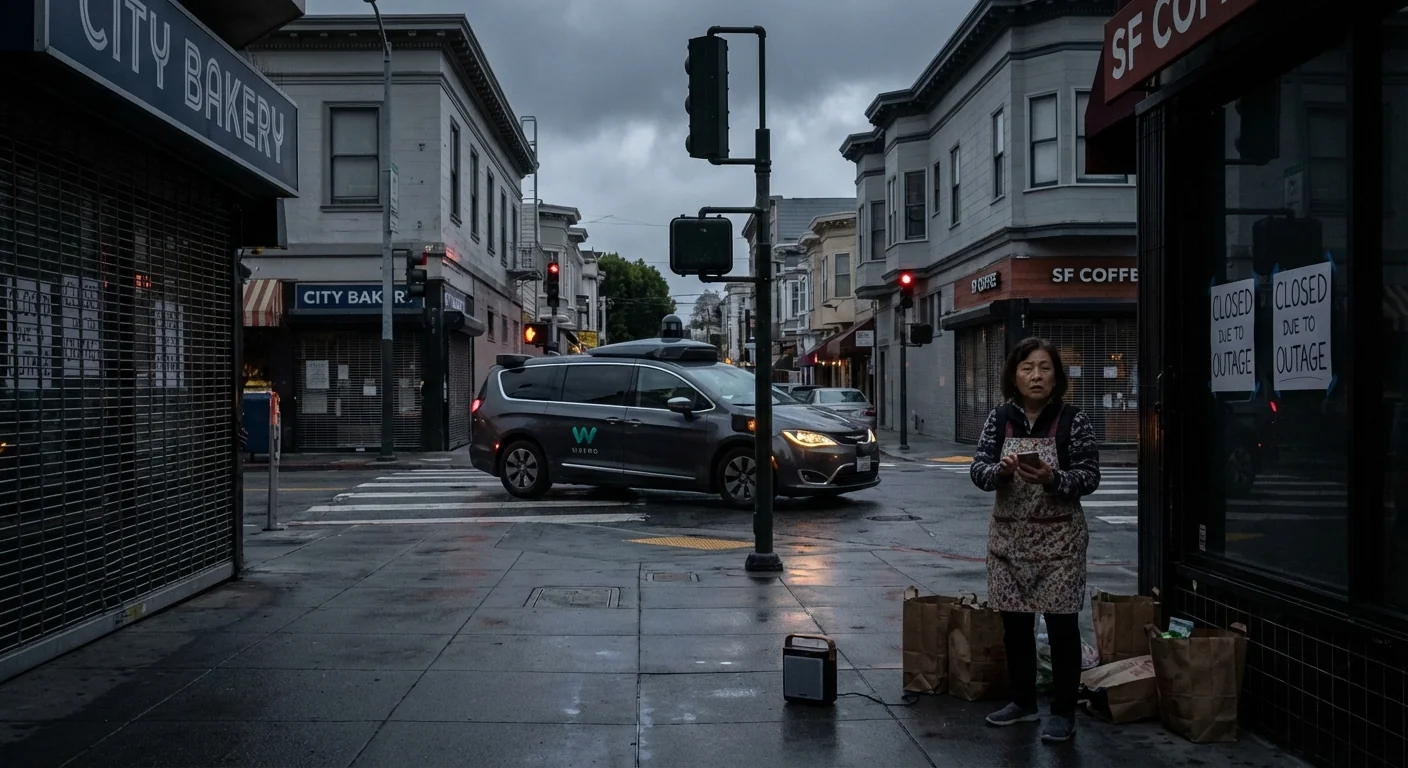
Waymo paused its autonomous service in affected zones. Some vehicles stopped in traffic as a safety measure, then were recovered when power returned to nearby nodes. The city saw slowdowns in several neighborhoods, with transit delays and small shops closing early. Card terminals failed, coolers warmed, and kitchens rushed to save product.
Immediate market take
Utility reliability is now a front page risk again. PG&E shares face a confidence test in the next session. Investors will look for clarity on the cause, the repair bill, and whether regulators see a systemic problem. One bad night does not change a rate case on its own. But it can shape tone, and tone moves multiples.
Credit markets will also watch. Any large outage invites questions on future capital spending. If PG&E accelerates upgrades, the financing mix matters. More equity can dilute. More debt can widen spreads. California regulators push hard on reliability and safety. They also allow cost recovery when the plan is credible. The message is simple, build a stronger grid and show it works.
Local business damage is real, if uneven. Restaurants, grocers, and pharmacies bear immediate losses. Ride hail volumes swing, and delivery apps stall. Office towers and data centers kept running on backup in most cases, but diesel costs add up. City sales tax for the day will dip. The larger cost is confidence when outages repeat.
Winners and losers in the outage trade
Backup power is a clear near term winner. Generators, batteries, and microgrids step into daylight when the grid blinks. Developers with on site storage and rooftop solar will push faster. Property owners will ask for resilience plans before they sign leases.
- Utilities, PCG, for outage scrutiny and capex pressure
- Backup power, GNRC and CMI, on demand for generators
- Battery storage, ENS, FLNC, TSLA energy, on grid scale projects
- Grid software and sensors, TRMB, APTV, on outage detection and control
Hedge California utility exposure with a barbell. Own selective resilience plays, and pair with utilities that have visible recovery plans.
Autonomous vehicles meet real world risk
The outage was a live stress test for driverless fleets. When traffic lights go dark and networks stall, safe systems stop. That is good for safety, but bad for streets. A handful of stalled AVs can choke a narrow lane. City permits now have fresh data to study. Any path to wider adoption needs resilient maps, better fallbacks, and faster remote recovery.
For investors in Alphabet, the parent behind Waymo, the read through is not existential. It is about time and cost. Each urban step needs more local infrastructure, more coordination with utilities, and more redundancy. That pushes commercialization later and raises the bar for returns. Partnerships with cities and transit may ease the path, but margins will be thinner early on.
City resilience and the fiscal picture
Outages carry a price for the city budget. Overtime for first responders, traffic control, and emergency shelters adds up. Lost sales tax from closed stores will barely dent the annual budget, but repeat events change planning. Expect City Hall to press for microgrids at hospitals, shelters, and transit hubs. Expect new backup standards in building permits and large venue leases.
For municipal bond holders, the near term credit impact is limited. Longer term, more resilience projects means more bonds, tied to critical facilities. That can be positive if projects are targeted and execution is strong. The test will be delivery, on time and on budget, with measurable uptime gains.
What I am watching next
I am tracking three things. First, the root cause. If it is a single equipment failure, the market moves on. If it exposes a pattern, the risk discount grows. Second, the restoration timeline. If all customers are back by morning, reputational damage fades. If pockets linger into tomorrow night, pressure builds. Third, the regulatory response. A fast, firm plan for grid upgrades will steady investors.
Reliability is now a core input for every electrification thesis. Price targets that ignore downtime risk are too high.
Conclusion
Tonight’s blackout is a wake up call for a city that runs on code and coffee. The grid is the first layer of the economy. When it fails, everything else stumbles. Investors should not panic, but they should adjust. Own resilience. Demand proof from utilities. And price real world risk into the shiny future of autonomous mobility. The lights are coming back on, but the lessons need to stay bright.