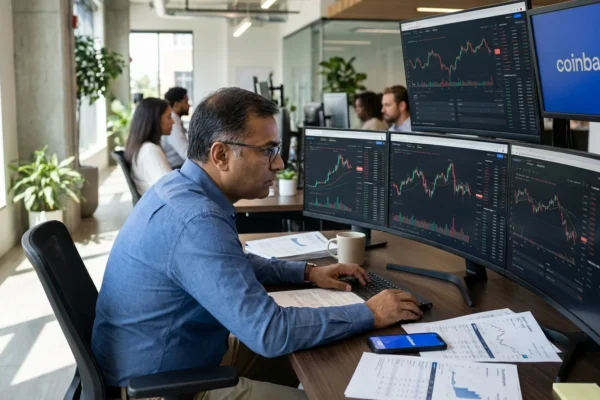
Breaking: Polymarket, the crypto prediction market where traders buy yes or no shares on real events, is pulling in serious money today. Liquidity is deepening around elections, inflation prints, and sports finals. Prices now move like real markets, tick by tick, on news and rumors. The rush is clear. The fight over rules and investor safety is next, and it will be fierce.
What Polymarket Is and Why It Matters
Polymarket lets users trade contracts on real outcomes. A share priced at 63 cents implies a 63 percent chance of “Yes.” If the event happens, it pays 1 dollar. If not, it goes to zero. It is simple, fast, and addictive.
Under the hood, trading runs on crypto rails. Traders post stablecoins, and smart contracts clear the market. Settlement relies on preset rules and third party resolution. Prices are public in real time. Anyone can see where the odds sit, and how they react to headlines.
This is not a sideshow. It is a new way to price risk that old markets ignore. That includes the path of policy, court rulings, and even the timing of data releases. When the crowd has cash on the line, the odds can change the story itself.

Money Is Moving In
Capital is arriving from retail traders and sharp, quantitative desks. Market makers are tightening spreads in the largest markets. Hedgers are testing the waters. Corporate treasurers and funds are watching the signal. They want a cleaner read on event risk.
Forecasts now point to prediction markets crossing toward 1 trillion dollars in trading volume by the end of the decade. That growth curve would put real pressure on legacy venues. It would also pull in more professional liquidity and more complex strategies. Expect faster price discovery around big events, and more violent whipsaws when rumors hit.
The Regulatory Collision Course
Polymarket and similar crypto venues operate with lighter oversight in many regions. Some block U.S. users to avoid trouble. Others seek full licenses and rulebooks. The gap is stark. On one side, open crypto platforms that move fast. On the other, regulated exchanges that list event contracts with strict limits and surveillance.
That split sets up a clear risk for investors. Rule sets differ on who can trade, what can list, and how outcomes get resolved. It also raises questions about market manipulation, coordinated misinformation, and conflicts of interest. If false narratives can move prices, the odds can be gamed. That risk grows as money grows.

Jurisdiction matters. Know where you are allowed to trade, how the platform is supervised, and what rights you have in a dispute.
How This Market Works
Most contracts trade through automated liquidity pools. Prices shift as order flow hits the pool. Liquidity providers earn fees for standing in the middle. They also wear the risk when the crowd gets it wrong. In a hot market, spreads shrink and volume surges. In a quiet market, depth vanishes and slippage spikes.
Resolution is the wild card. Questions must be clear, sources must be fixed, and outcomes must be final. If wording is vague, traders face delay and haircuts. Good governance is worth money in this space. It protects both price integrity and trust.
Investor Playbook and Risks
Treat event contracts like options with a binary payoff. Size positions with care. Expect gaps on news. Build discipline around entries and exits.
Key checks before you trade:
- Liquidity, depth, and past volume in the market
- The resolution source and exact question wording
- Fee structure and withdrawal processes
- Your legal access and tax treatment
Focus on edge and risk control. Avoid low liquidity tail bets. Harvest small edges in liquid markets, and cap losses fast.
The Economic Stakes
If these markets scale, they will change how we measure expectations. Prices on rate cuts, court outcomes, or policy votes could guide real decisions. Companies may hedge regulatory risk. Funds may use odds to stress test portfolios. Media and polls will compete with live prices in shaping narratives.
There is also impact on capital costs. If markets price a higher risk of policy shock, sensitive sectors will pay more for funding. You will see it in credit spreads and equity multiples. The feedback loop is powerful. Odds inform behavior, behavior moves odds. That loop is bullish for liquidity, but it can amplify noise.
What Comes Next
This is finance, not a parlor game. Polymarket sits at the center of a fast build out, with money, talent, and attention pouring in. The next phase will be defined by regulation, product design, and data quality. Platforms that nail clear questions, clean settlement, and fair access will win.
For investors, the edge is real, but so are the risks. Price the rules into your trades. Respect liquidity. Read the fine print. The market is speaking in plain odds now. The smartest money will listen, but will not chase every move. The race to legitimize prediction markets has started, and it is moving at crypto speed. 🔥