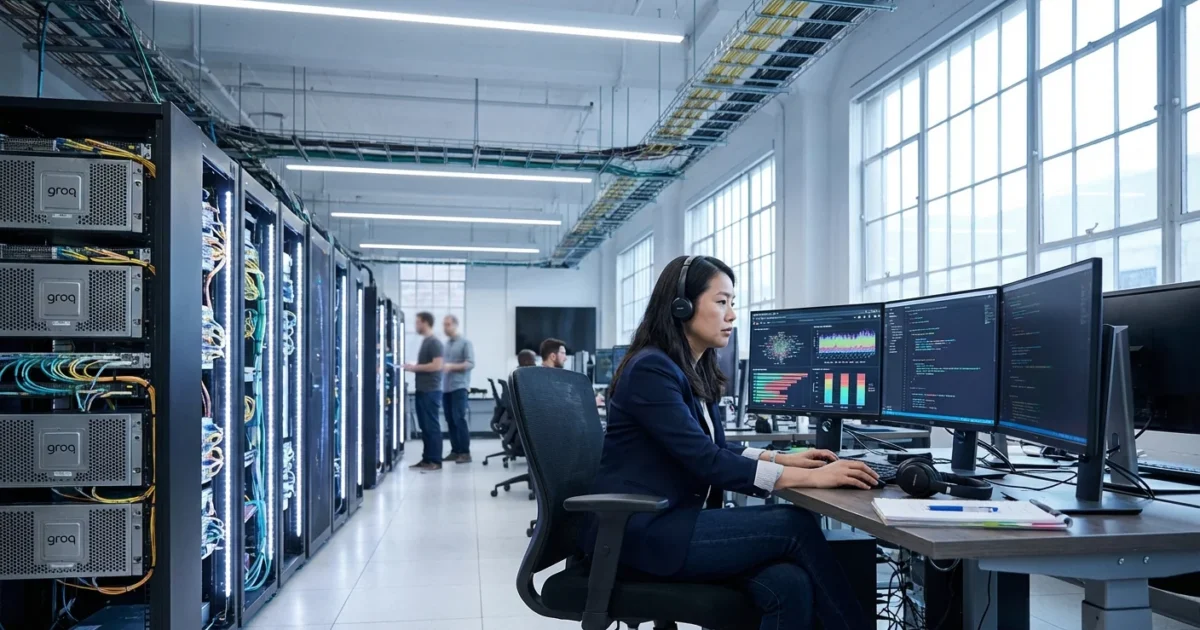
A seismic move is hitting the AI chip world today. I have learned Nvidia is finalizing a major deal with Groq, the fast-rising inference chip startup. The package centers on Groq’s software and hardware technology for running AI answers at high speed and low cost. Final structure is still being set. A broad license is in play. A full acquisition, at a price discussed near 20 billion dollars, is also on the table.
What’s happening and why it matters
This is about inference, not training. Training builds the model. Inference powers the answers you get every second. Groq is built for that. Its chips and compiler push very low latency with tight power use. That is the bottleneck for AI right now, not just compute. It is the bill for every query.
Nvidia already owns training. It also sells inference at massive scale. A Groq deal would tighten Nvidia’s grip on the most valuable part of the AI stack, the part tied to daily usage and real revenue. If Nvidia locks in Groq’s speed and efficiency, the cost per answer could fall fast, and volume could explode. That is a loop Wall Street understands.
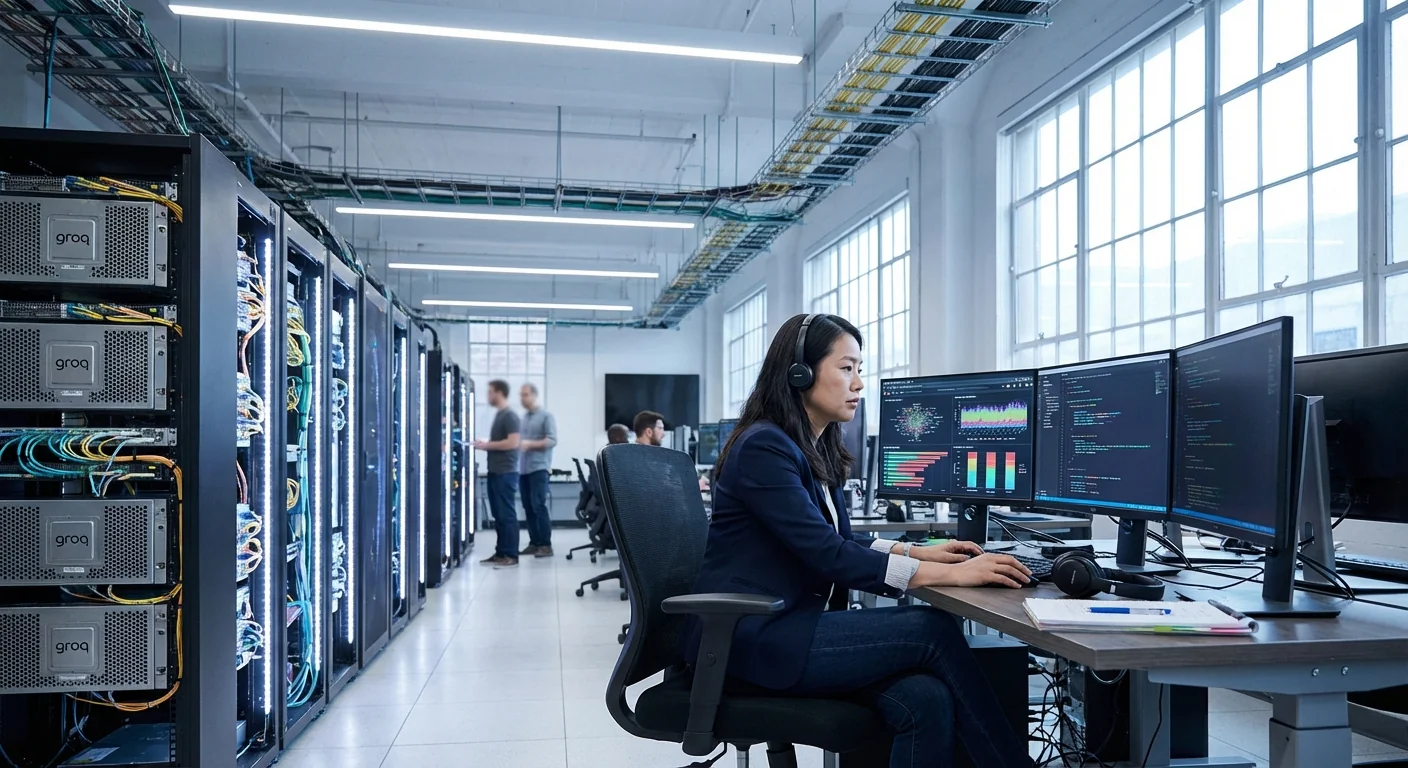
Two paths, one direction
Talks point to two outcomes. A licensing deal would let Nvidia fold Groq’s ideas into existing products. That means closer links between CUDA, Nvidia software, and Groq-style compilation and memory plans. A full acquisition would go further. It would bring Groq’s team, roadmap, and IP under one roof, and it would do it now.
Either way, Nvidia is buying time. It speeds delivery of cheaper inference. It also slows rivals who target the same win. That includes other startups and the big chip rivals who have chased Nvidia for years.
The commercial goal is clear. Cut inference cost, lower latency, and push more AI into real apps that people use daily.
Market impact and competitive map
If the deal lands as a license, customers could see faster upgrades inside Nvidia’s current lineup. Expect tighter software that squeezes more tokens per second from each watt. If it closes as an acquisition, expect a stronger push. Nvidia could ship hybrid products that blend its GPUs with Groq-style acceleration. That could reset the value curve in inference.
This puts pressure on AMD and Intel. AMD has built strong momentum in data center GPUs. Intel is leaning on Gaudi for AI. Both pitch cost per performance gains. A stronger Nvidia in inference makes that pitch harder. Startups that sell dedicated inference chips will feel the pinch too. Buyers may pause, wait, and see what Nvidia bundles next.
Supply chains matter here. If Nvidia absorbs Groq’s plans, foundry demand at TSMC would rise. Advanced packaging stays tight. HBM memory stays hot. That supports pricing power for HBM suppliers and substrate vendors. Network makers that feed AI clusters, like switch and optical firms, stand to benefit as inference nodes scale out.

What investors should do now
Volatility is likely across AI hardware names. Traders will handicap two scenarios and adjust positions as details land. Watch the hyperscalers. Their early feedback will guide the street on deployment pace and budgets.
- Key signposts to watch:
- Form 8-K or merger filing, if acquisition proceeds
- Guidance changes from Nvidia on inference revenue mix
- Customer adoption updates from cloud providers
- Foundry and HBM capacity commentary in supplier calls
Focus on second order winners. Memory, packaging, and networking often capture upside early when compute ramps.
For portfolio positioning, think in layers. Core Nvidia exposure still tracks the AI cycle, and this deal would deepen the moat in inference. Consider selective adds in memory and advanced packaging. Look at data center power and cooling, since lower latency at scale demands more reliable power. Keep a barbell in software that monetizes cheaper inference. If cost per answer drops, usage can expand, and downstream platforms can gain.
Regulatory lens
A 20 billion dollar acquisition would invite close review. US, EU, and UK authorities have probed large chip deals before. The focus here would be on whether Nvidia is foreclosing rivals in inference. A pure license could face less friction, though scope matters. Exclusive terms or long lockups could still raise questions.
Expect a timeline that stretches if it is a full buyout. Expect fewer delays if it is a license. Either path brings scrutiny, but the hurdles are not the same.
Deal structure will drive timing and risk. Do not trade this like a binary. Build in scenario ranges and patience. ⚠️
The bottom line
Nvidia is moving to secure Groq’s inference edge. The deal, license or acquisition, aims to make AI answers faster and cheaper at massive scale. That helps Nvidia extend its lead from training into the everyday use of AI. It pressures direct rivals, shakes startup plans, and tightens critical supply chains.
For markets, the message is simple. Inference is the next profit pool. Today’s move is about owning it.