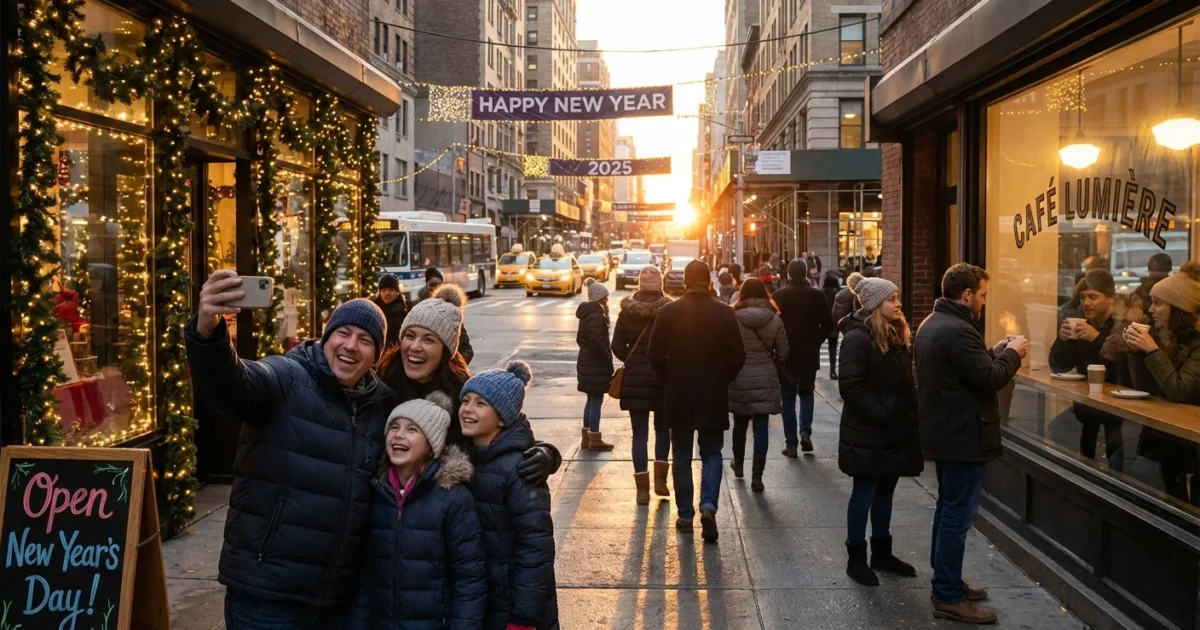
Markets, banks, and deliveries will not run like a normal Thursday on New Year’s Day 2026. Here is what is open, what is not, and how it will move money, trading, and retail cash flow as the year turns.
Stock and bond markets
U.S. equity markets are closed on Thursday, January 1, 2026. The NYSE and Nasdaq will not open. Trading runs on normal hours on New Year’s Eve, Wednesday, December 31. Expect lighter volume as desks wind down into the holiday. That often brings wider spreads, quick moves, and odd ticks in thin names.
The U.S. bond market closes on New Year’s Day as well. Many desks plan an early finish on New Year’s Eve, often around mid afternoon. That lowers liquidity in Treasurys and credit into the close, which can amplify small price moves.
Crypto trades around the clock. Liquidity often thins during U.S. holidays, which can increase slippage. If you must trade, use limits and watch funding rates.
NYSE and Nasdaq are closed Thursday. Last chance to adjust equity positions is during regular hours on Wednesday.
Banks, payments, and settlement
Bank branches are shut on New Year’s Day. ATMs and mobile apps work, but staff are not on site. The Federal Reserve’s payment rails are closed. That means ACH and wire transfers will not settle on Thursday. Bills set to pull on January 1 will post next business day. Card payments authorize as usual, but final posting can lag.
For investors, the cash clock matters. Mutual fund trade orders placed after the market close on December 31 will get the next net asset value on Friday, January 2. Brokerage cash sweeps run, but money market settlement follows the holiday calendar. Margin interest accrues through the break.
Do not count on same day wires or ACH on Thursday. Move cash by Wednesday cutoffs if you need it available Friday.
USPS post offices are closed, with no regular mail delivery. That delays check deposits mailed in late this week. UPS and FedEx run limited or modified services. Time sensitive shipments should be verified with the carrier.

Retail, travel, and services
Many national retailers and grocers open with reduced hours on January 1. Some warehouse clubs choose to close. Gas stations and convenience stores stay open, often on holiday schedules. Many pharmacies open, but staffing is lighter. Call ahead for prescription pickups.
Public transit shifts to Sunday or holiday timetables. Fewer trains and buses means longer waits. City services, including parking enforcement, often relax. Meter rules vary by city, so check local notices.
This matters for cash registers. New Year’s Day is a soft sales day for most categories, but essential goods still move. Grocers lean on prepared foods, beverages, and party resets. Home improvement and electronics tend to be quiet. Fitness and wellness see early traffic as resolutions begin.
What is open at a glance
- U.S. stock and bond markets, closed Thursday
- Bank branches, closed Thursday, online and ATMs available
- USPS, closed, UPS and FedEx on modified service
- Major retailers and grocers, open on reduced hours in many locations
- Public transit, Sunday or holiday schedules
Market impact and investment playbook
The timing sets up a clean handoff into 2026 trading. Portfolio rebalancing and tax moves finish by the bell on December 31. Then the market takes a full day off. The first trading day of the year often brings fresh flows from pensions, 401(k)s, and asset allocators. That can lift liquidity at the Friday open and sharpen price discovery.
Volatility can pop around this turn. Thin books into the December 31 close can exaggerate late prints. The January 2 open then resets sentiment with full depth. Keep an eye on sectors that saw heavy year end tax loss selling. Those names can catch quick relief bids on the first sessions of January.
Credit markets will restart with a flood of new issuance in early January. Corporates like to hit windows when investors are flush with coupons and inflows. Expect syndicate calendars to build next week, which can tug on Treasury yields as supply hits.
Energy and travel spending often dip on the holiday itself, then rebound over the weekend. That supports short term demand for gasoline and jet fuel, although weather can sway the data. Retailers will focus on returns processing and gift card redemption, a key cash driver in early January.
If you are placing orders around the break, use limit orders, not market orders. Confirm broker and bank cutoffs, and review settlement dates before moving cash.
Bottom line
Thursday is not business as usual. Markets are shut. Banks and mail pause. Retail shifts to holiday mode. Plan trades by Wednesday’s close, line up cash needs ahead of payment rail downtime, and expect a brisk restart on Friday as 2026 trading officially begins. The calendar favors disciplined orders, tight risk, and a watchful eye on the opening tape.