PG&E outage knocks out power for thousands in San Leandro, raising fresh questions for investors
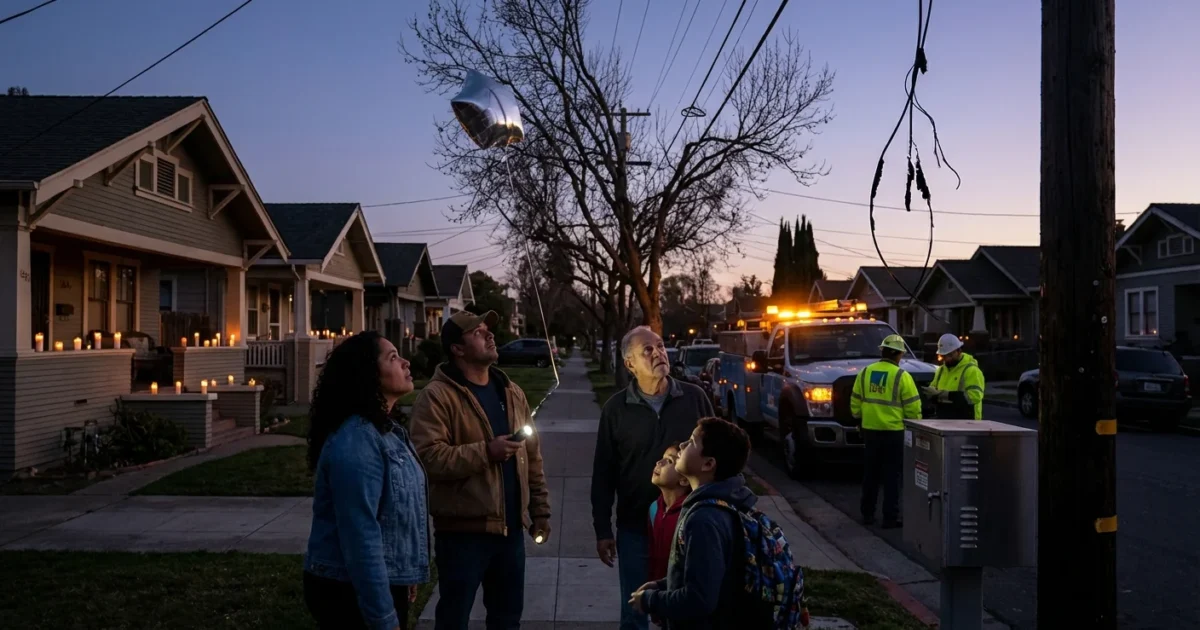
A preventable spark turned into a Saturday night blackout in the East Bay. Just after 5:20 p.m., power snapped off across large parts of San Leandro. At the peak, more than 5,300 PG&E customers lost service. The cause was simple and frustrating, metallic party balloons hit live equipment, shorting transformers and burning wires. Crews worked through the night. By 7:27 p.m., about 1,900 customers had service back. Full restoration was targeted for around 4:00 a.m. today.
What happened, and why it matters for money
This was not a storm, and not a wildfire safety shutoff. It was a balloon. The silver coating on Mylar balloons conducts electricity. When it touches a line or a transformer, it creates a short. That leads to flashes, damaged gear, and a wide outage footprint. PG&E has seen this before, dozens of times a year. The frequency is not a surprise inside the utility, which tracks third party contacts as a top cause of avoidable outages.
The immediate impact hit homes, restaurants, and small factories. It was a cold evening, so heaters and hot water were out when people needed them. For retailers on a Saturday, the outage cut sales during prime hours. For the utility, every blown transformer means more repair costs and claims risk. It also adds to reliability pressure during a sensitive rate cycle.
Preventable outages now shape the investment case for PG&E. Reliability, not just wildfire safety, is moving to the front of the story.
Market view, and the balance sheet angle
PG&E enters the week facing new questions on grid reliability and cost control. The company is already in the middle of a heavy build cycle. Management plans roughly 73 billion dollars of spending through 2030 to harden the system and meet rising load from data centers and electrification. That plan includes nearly 700 miles of undergrounding, more covered conductor, and smarter switching.
That spending is designed to cut risk and improve service. Yet outages like this add noise. They inflate operating costs, they pressure service metrics, and they invite scrutiny from regulators. California tracks how long and how often customers lose power. Too many events can lead to penalties, and can affect how much of future spending goes into rates.
The utility’s safety push also has side effects. Fast trip settings on parts of the distribution grid cut wildfire ignition risk, but they increase unplanned shutoffs when lines sense trouble. Nearly one million customers experienced those sensitive trips last year. Add balloon events on top of that, and customer patience wears thin.
For the stock, the near term effect is tone and narrative. Expect analysts to ask about reliability levers, third party contact mitigation, and claims exposure. For the bonds, the bigger variable is regulatory. If regulators reward reliability gains and accept cost recovery, borrowing costs stay anchored. If not, spreads can widen.
The local hit, and the wider economy
San Leandro businesses describe a rough night. Restaurants tossed prep, or handed out cold meals. Grocers moved high value perishables to backup coolers. Light manufacturing stopped mid run. Backup generators helped some sites, but many do not have them. Utility crews logged overtime. City services handled dark intersections and alarms. The total cost will add up across lost sales, spoiled goods, and damage.
Data center and biotech tenants across the Bay Area are watching. They rely on redundant power and back up systems, but a noisy grid changes behavior. It speeds demand for on site storage, diesel generators, and microgrids. That, in turn, shifts capital toward firms that sell batteries, transfer switches, and grid software. It also raises the value of demand response programs that can ease stress when circuits trip.
[IMAGE_2]
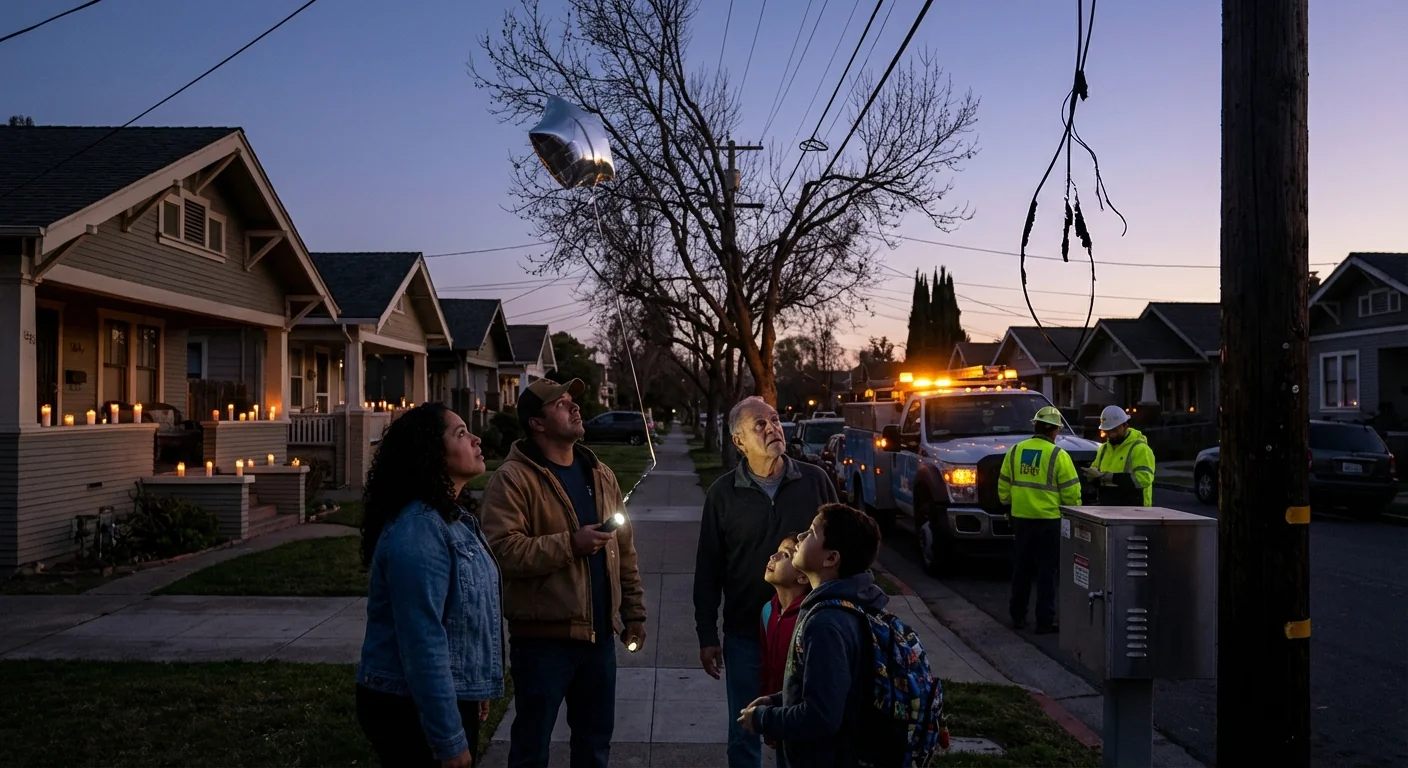
Businesses can cut outage risk. Anchor Mylar balloons with weights, never release them outdoors, and keep them away from power lines. A simple choice can prevent a city block from going dark. 💡
What investors should watch this week
- Management commentary on claims, repair costs, and reliability metrics
- Any update on third party contact prevention, including spacer cable and covered conductor
- Signals from regulators on service quality penalties and cost recovery
- Customer programs for backup power, storage, and microgrids
Do not ignore the policy lever. A tighter rule on metallic balloons, labeling, or retailer handling would reduce these outages at low cost.
Policy and prevention, from cost to execution
There are low cost fixes. Retailers can secure helium balloons with weights and sleeves. Cities can push awareness before holidays and graduations. Utilities can add guards and cover on lines that cross busy streets. Spacer cable and insulated lines reduce short circuits. Faster switching can isolate faults and keep outages smaller.
PG&E has the tools, and the capital plan, to do this work. But it must prove that spending lifts reliability while cutting fire risk. The company’s case in front of regulators improves when outages fall, even for events tied to third parties. Every prevented balloon strike protects equipment, keeps customers on, and strengthens the rate case.