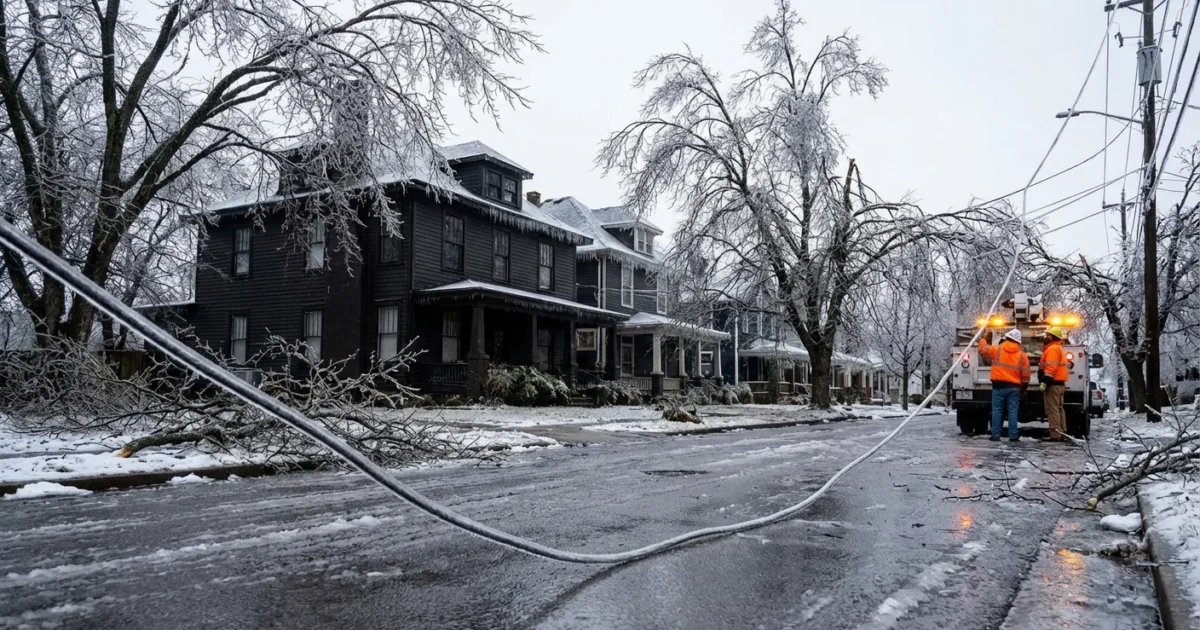
Ice snapped trees and power lines across Nashville this morning. Our live checks show nearly 70,000 NES customers in Davidson County are without power. Ice keeps building on lines. Slick roads slow every truck roll. Crews are working, but conditions remain hazardous.
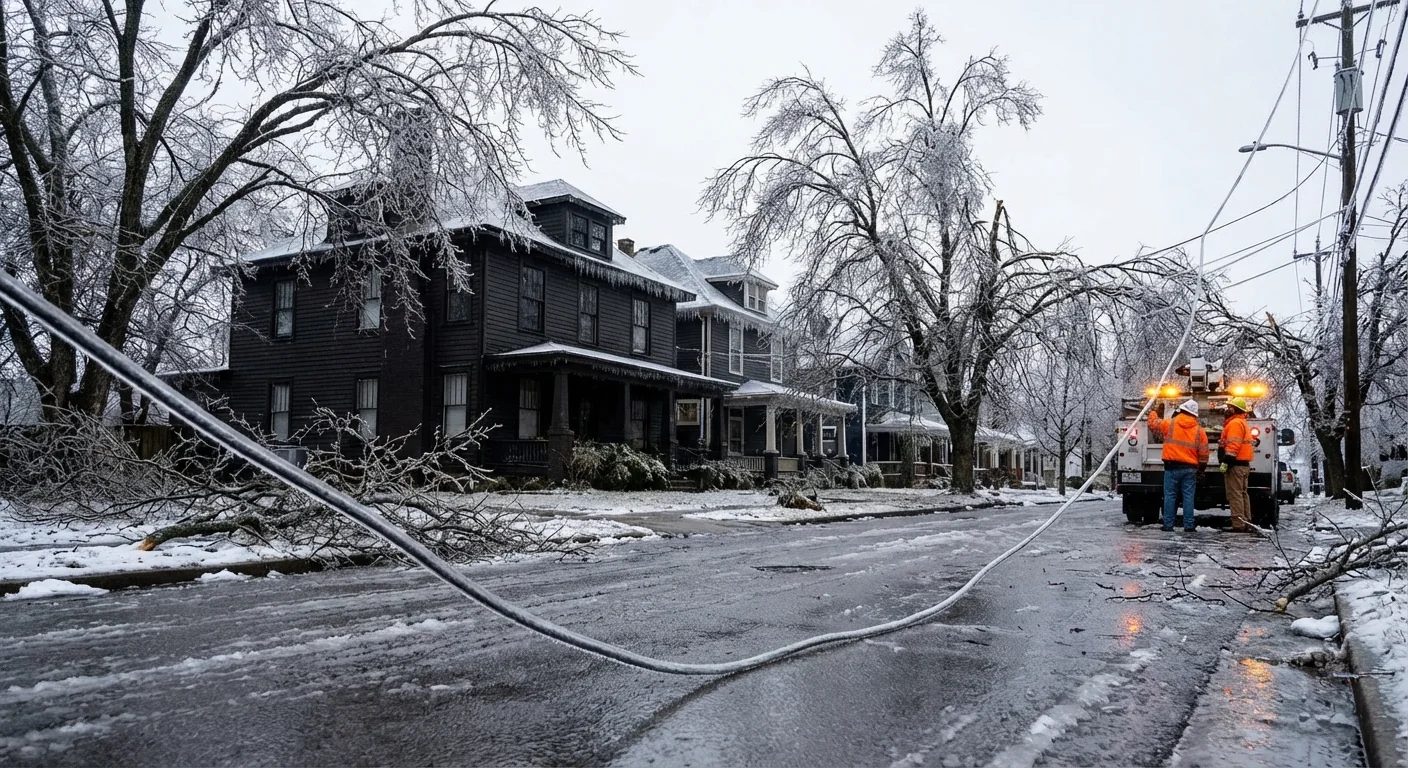
Why the grid buckled today
This is a distribution crisis, not a fuel shortage. Ice adds heavy weight to lines and tree limbs. Lines sag, crossarms crack, and breakers trip. A single fallen limb can knock out a whole circuit. Ongoing freezing rain keeps adding load, which makes repair work start, stop, and start again.
The Tennessee Valley Authority has generation available, but it moves power to the city at high voltage. NES must deliver that power on neighborhood lines. The weak link today is local poles and wires. Until circuits are inspected end to end, firm restoration times are hard to give.
Utilities restore power in blocks. Substations and feeders come first, then hospitals, water plants, and fire stations. Neighborhood taps and single-home outages come next.
Expect rolling updates, not fixed timelines. When ice stops accreting, restoration speed improves fast. If icing persists into the evening, pockets could last through the weekend.
Business and market fallout
Every hour dark costs money. Restaurants lose perishable inventory. Music venues and retail lose prime weekend sales. Hotels face refunds and relocation costs. Remote workers drain batteries and hotspots. If outages run through tonight, the direct hit to local sales will likely reach millions of dollars.
Natural gas demand is high as homes fight the cold. Traders will watch spot gas and power across the Southeast for price jumps and tight capacity. Pipeline flow limits in icy conditions can add volatility. If temperatures hold below freezing, power burn for heating stays elevated, which supports gas pricing. Diesel for line trucks and generators also sees a bump in draw.
Grid stress creates winners and losers on the market side:
- Generator makers, led by Generac and Cummins, often see a spike in orders and service calls.
- Utility contractors, like Quanta Services and MasTec, gain storm work, then backlog for hardening jobs.
- Insurers face claims for tree damage, burst pipes, and fender benders on ice. Watch Allstate, Progressive, and Travelers for loss updates.
- Grocery chains and home improvement stores can see a short surge in demand for essentials, then uneven traffic during outages.
Municipal bond investors should track NES and Metro Nashville disclosures. Storm overtime, materials, and mutual aid costs lift expenses. Public power systems recover many of these costs through power cost adjustments over time. Liquidity and days cash on hand matter now. A long outage could delay some customer payments, though history shows bills catch up as service returns.
How restoration moves from grid to street
NES crews start at the source. They re-energize substations, then feeder lines that serve thousands at a time. Next, they fix damaged lateral lines into neighborhoods. Finally, they clear individual service drops. This top down sequence restores the most people fastest.
Today, access is the choke point. Bucket trucks need safe footing. Ice on sidewalks and yards slows every repair. Chainsaw work to clear fallen limbs adds time. Mutual aid crews from neighboring systems are being staged, but road conditions limit travel.
Do not expect precise ETAs in the first hours of an ice event. Field assessments take time. Once conditions stabilize, NES can publish more accurate estimates. If you see a truck leave without fixing your block, that often means they are isolating a fault upstream to bring back a larger group first.
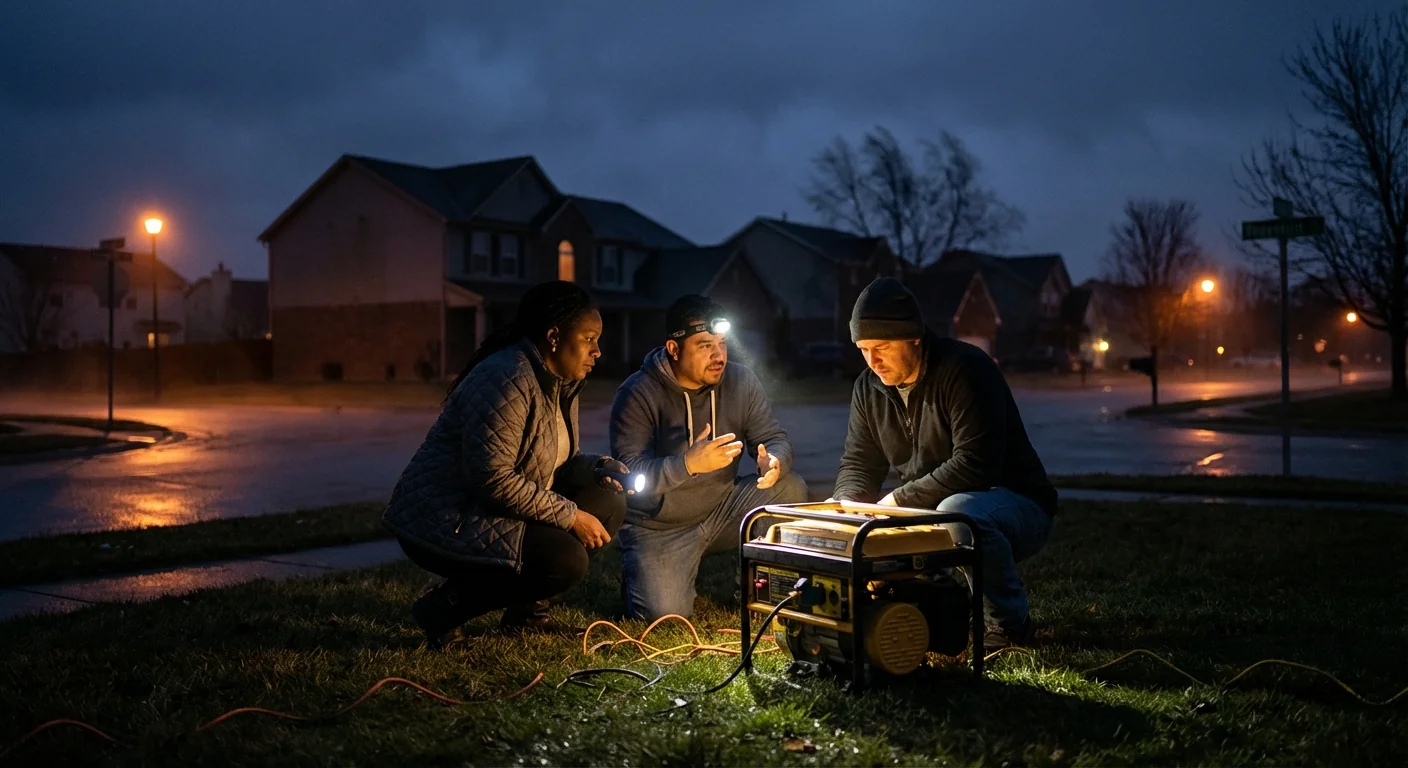
If you run a generator, keep it outside, at least 20 feet from doors and windows. Never backfeed a home through a wall outlet. Carbon monoxide is deadly.
What to do now, and where to get updates
You can help speed restoration by reporting the outage and hazards. NES uses those inputs to triage work and verify circuits.
- Report outages and downed lines through the NES outage map or by phone.
- Keep phones charged, conserve heat, and close interior doors.
- Unplug sensitive electronics, then plug in after power returns.
- Check on neighbors, especially seniors and those with medical needs.
For businesses, log losses in real time. Photograph spoiled goods, and save invoices for repairs and rentals. This makes claims smoother with insurers and, if applicable, disaster aid.
Businesses, document every cost, from dry ice to diesel and overtime. Detailed records speed reimbursements and reduce disputes.
Investment takeaways
This storm is a stress test for grid resilience in Middle Tennessee. Expect a near term uptick in storm recovery spend, followed by a second wave of capital for tree trimming, pole replacements, and selective undergrounding. That supports utility contractors through mid year.
Insurers will flag weather losses, but event severity and duration drive the impact. A fast thaw trims claims. A deep freeze raises water damage risk. Generator demand should pop near term, then settle into higher service revenue as units need maintenance.
For bondholders, watch for updates on storm reserves, FEMA reimbursement potential, and any temporary liquidity draws. For equity investors, monitor contractor backlogs, equipment lead times, and commentary on grid hardening in the Southeast on upcoming calls.
Conclusion
Nashville’s outage map tells the story. Ice is beating wires faster than crews can win, for now. As the weather eases, restoration will accelerate, neighborhood by neighborhood. The human cost is front and center, but the financial threads run wide, from local shops to national insurers and grid contractors. We are tracking field progress and utility guidance, and we will update as restoration milestones are hit. Stay safe, stay warm, and report hazards immediately.