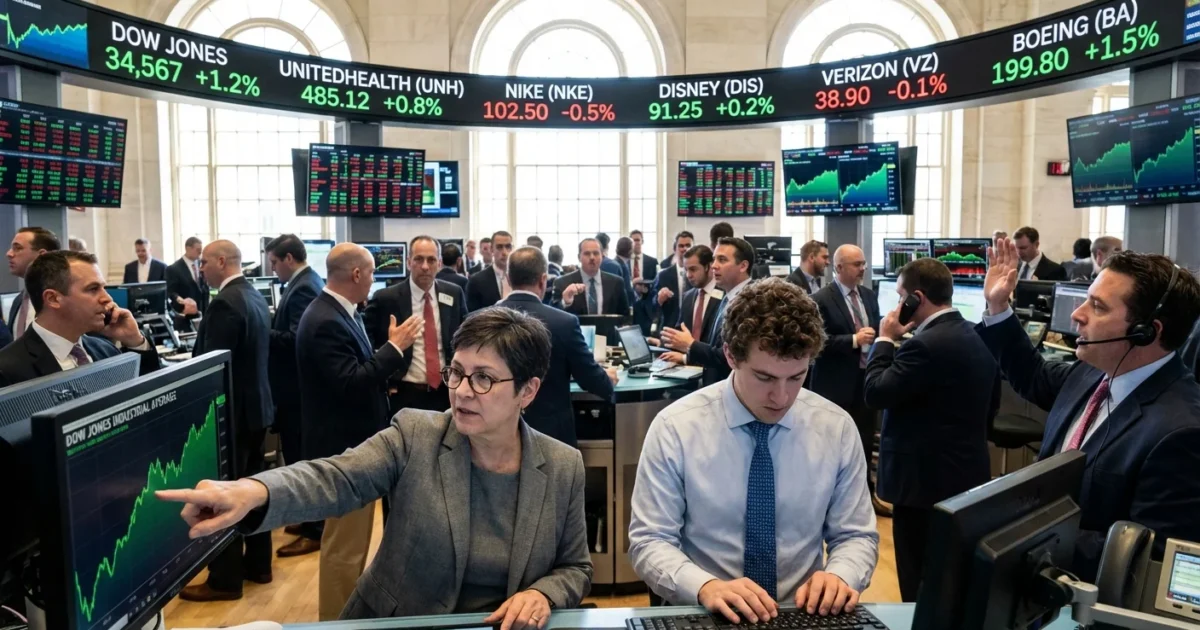
Stocks are splitting in two today. The Dow is holding the high ground near record territory, while tech leads the S&P 500 and Nasdaq lower. Investors are pivoting hard after a fresh Federal Reserve rate cut lit a rally, then an AI scare knocked growth stocks off balance. I am tracking a sharp rotation that is boosting the Dow’s blue chips and testing the most crowded tech trades.
What moved the Dow today
The spark came on December 10. The Fed cut rates by 25 basis points to a 3.50 percent to 3.75 percent target range. The Dow jumped about 497 points that day and powered to new highs this week. The Russell 2000 joined the move, a sign of broadening strength.
Two days later, tech took a hit. A weaker outlook from Broadcom revived worries about stretched AI valuations. The S&P 500 fell about 1 percent today. The Nasdaq lost roughly 1.5 percent. The Dow slipped less, buffered by a rush into value and defensive names.
UnitedHealth, Nike, Disney, Verizon, and Boeing drew fresh bids. Their gains offset tech weakness and kept the Dow in control. Rising 10 year Treasury yields near 4.19 percent added pressure on long duration growth stocks. That widened the gap between the Dow and tech heavy indexes.
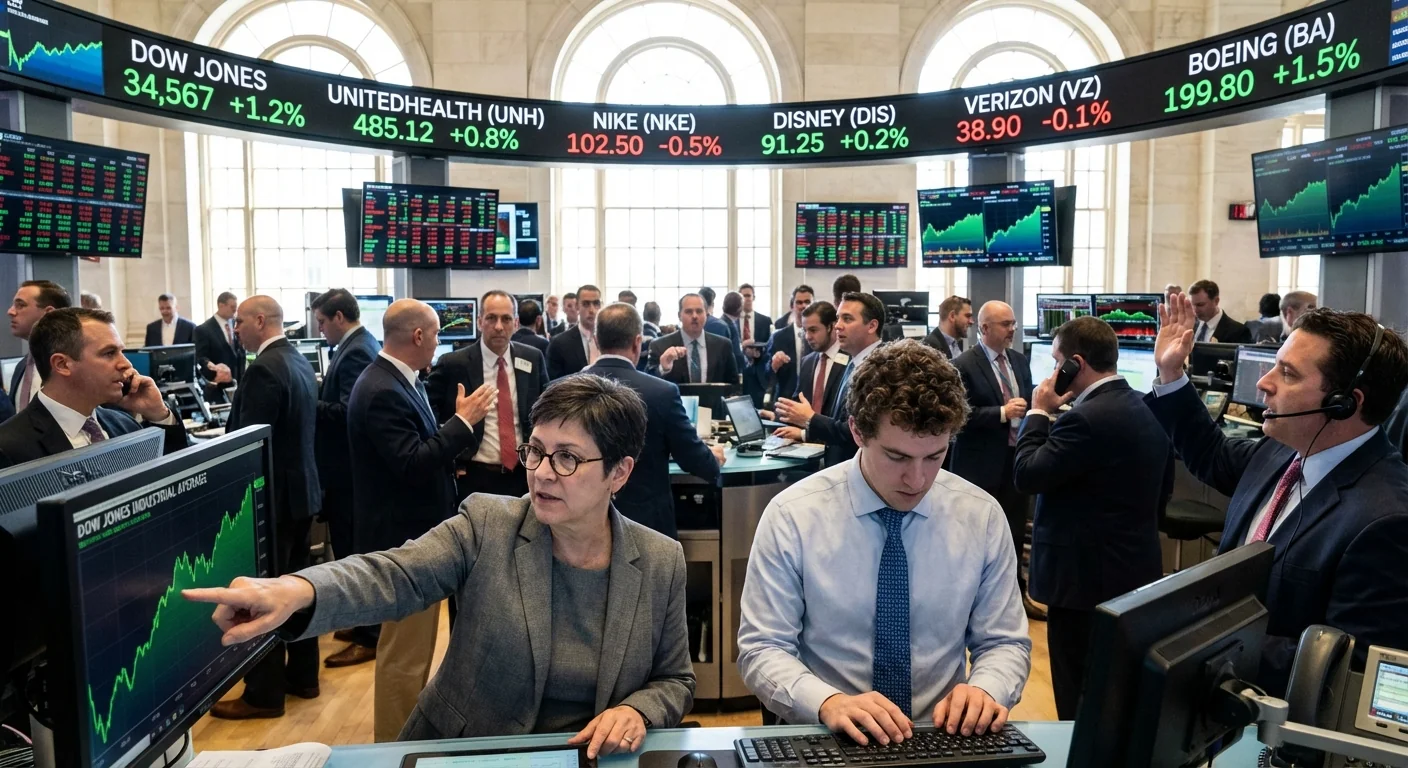
Why the rotation is so sharp
This is late cycle easing colliding with AI valuation fatigue. When the Fed cuts, stable cash flows and dividends look better. Their earnings are nearer term, so they are less sensitive to rate moves. That favors the Dow’s mix of health care, industrials, and consumer brands.
At the same time, the market is demanding proof of AI revenues and margins. Broadcom’s tone reset expectations. Higher yields raised discount rates, which hurts future heavy profit stories. The result is a pivot from momentum to balance sheet strength.
Consider a barbell. Hold quality value for stability, and keep a smaller sleeve in cash generative AI leaders you know well.
The economic read
The Fed’s cut eases financial conditions into year end. Mortgage and corporate borrowing costs should edge lower. That supports consumer spending and selective capital spending in 2026. The Dow’s leadership hints at confidence in profits outside mega cap tech.
At the same time, higher long rates are a check on exuberance. The bond market is not signaling a deep downturn. It is pricing a slower, still growing economy. That mix often pushes investors toward quality cyclicals, health care, and services, which live inside the Dow.
How to position into year end and early 2026
A clean playbook is taking shape as money rotates.
- Favor quality value, health care, and branded consumer names with pricing power
- Add select industrials and aerospace tied to backlogged demand
- Keep tech exposure focused on companies showing real AI cash flow today
- Use pullbacks to build positions, not to chase rallies at extremes
- Hold some short duration bonds for ballast and dry powder
AI leaders can snap back fast, but valuation resets can run in waves. Size positions with volatility in mind.