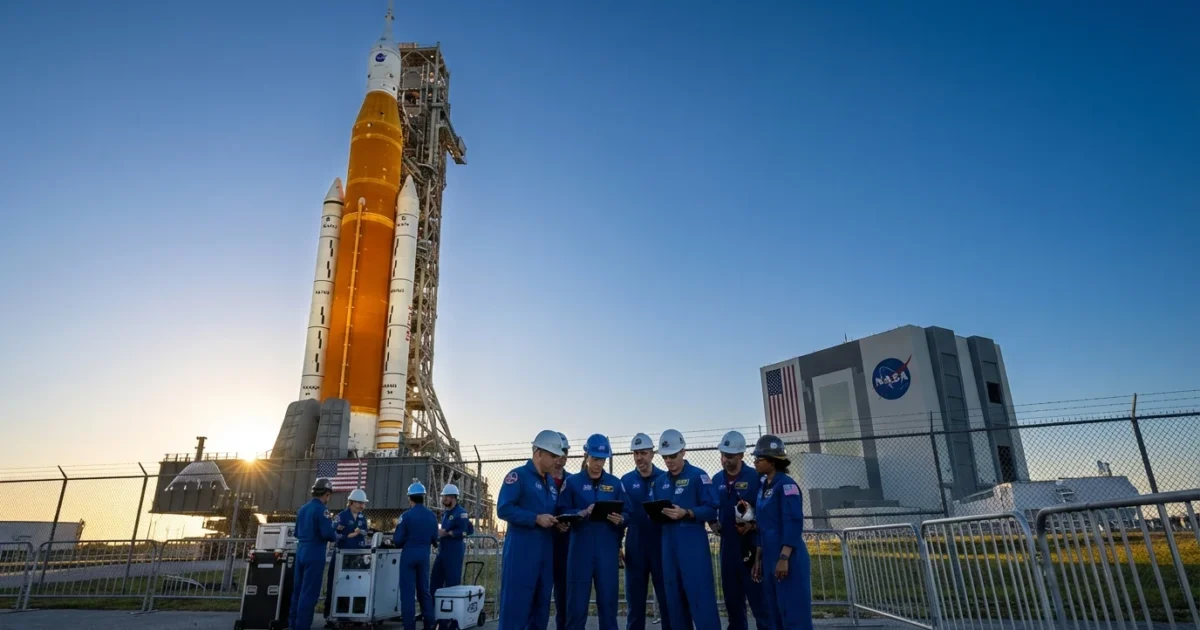
Artemis II hits the pad, and the clock on a crewed moon return just started. NASA moved the Space Launch System and Orion to Launch Pad 39B overnight, shifting the mission from assembly to launch operations. I watched the four mile crawl finish after nearly 12 hours at a steady walking pace. This move unlocks the final gate to a February launch attempt, the wet dress rehearsal. 🚀
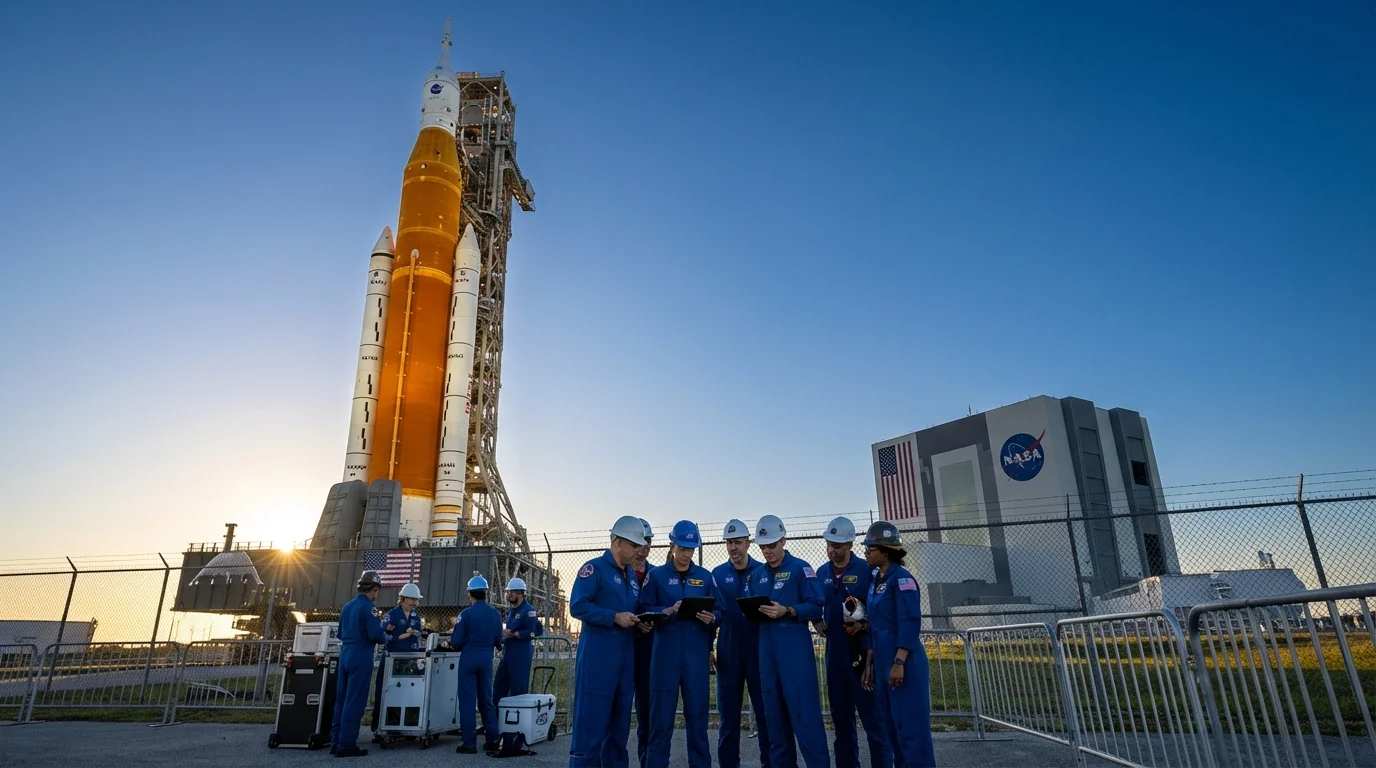
The move that starts the clock
The rocket is now in its launch home. Pad teams will run an integrated test series, then load more than 700,000 gallons of super cold propellants for a full countdown simulation. That is the wet dress rehearsal. It must prove the rocket can be fueled, counted down, and made safe if the clock stops. If the data clears, NASA will aim for a February 6 to 11 window. If not, March or April becomes more likely.
Artemis II carries Commander Reid Wiseman, Victor Glover, Christina Koch, and Jeremy Hansen of the Canadian Space Agency. The mission will loop around the Moon, then return to Earth after about ten days. It will be the first crewed flight beyond low Earth orbit since 1972. It is also the final big test before NASA tries to land a crew later in the campaign.
Market impact, from primes to the Space Coast
This rollout is not just a space milestone. It is a financial catalyst, near term and long term. SLS is a Boeing led core stage with engines from the Aerojet Rocketdyne business inside L3Harris. The twin solid boosters come from Northrop Grumman. Orion is led by Lockheed Martin. Jacobs runs key ground systems at Kennedy. The pad shift moves all of these programs into a phase where performance risk, and fee outcomes, get decided in real time.
Investors should also watch space heavy ETFs and broad aerospace funds. The Procure Space ETF and ARK’s space fund hold a mix of satellite, launch, and supply chain names. iShares U.S. Aerospace and Defense and the SPDR sector peer give exposure to the primes and tier two suppliers. A clean wet dress can spark momentum. A scrub or slip could stall it.
Tourism and services on Florida’s Space Coast also stand to gain. Launch weeks fill hotels, push ride shares and car rentals, and lift small business receipts. Local tax flows benefit, which matters for municipal balance sheets tied to growth near the Cape.
- Names to watch this week, Boeing, Lockheed Martin, Northrop Grumman, L3Harris, Jacobs
The test that must go right
The wet dress rehearsal is the line between hope and schedule. It is a live fire drill without ignition. Teams will fuel the core stage with liquid hydrogen and liquid oxygen, chill lines, and manage boil off. They will run down to seconds on the clock, then stand down and safe the vehicle.
- Prove stable, leak free propellant loading at pad temperatures
- Demonstrate clean countdown automation and team procedures
- Execute safe drain back, venting, and power down without damage
- Verify abort and safing logic for crew and ground, end to end
Artemis I taught hard lessons, including heat shield and pad conditioning concerns. NASA has burned those fixes into Artemis II. This is the moment to show they hold under real conditions.
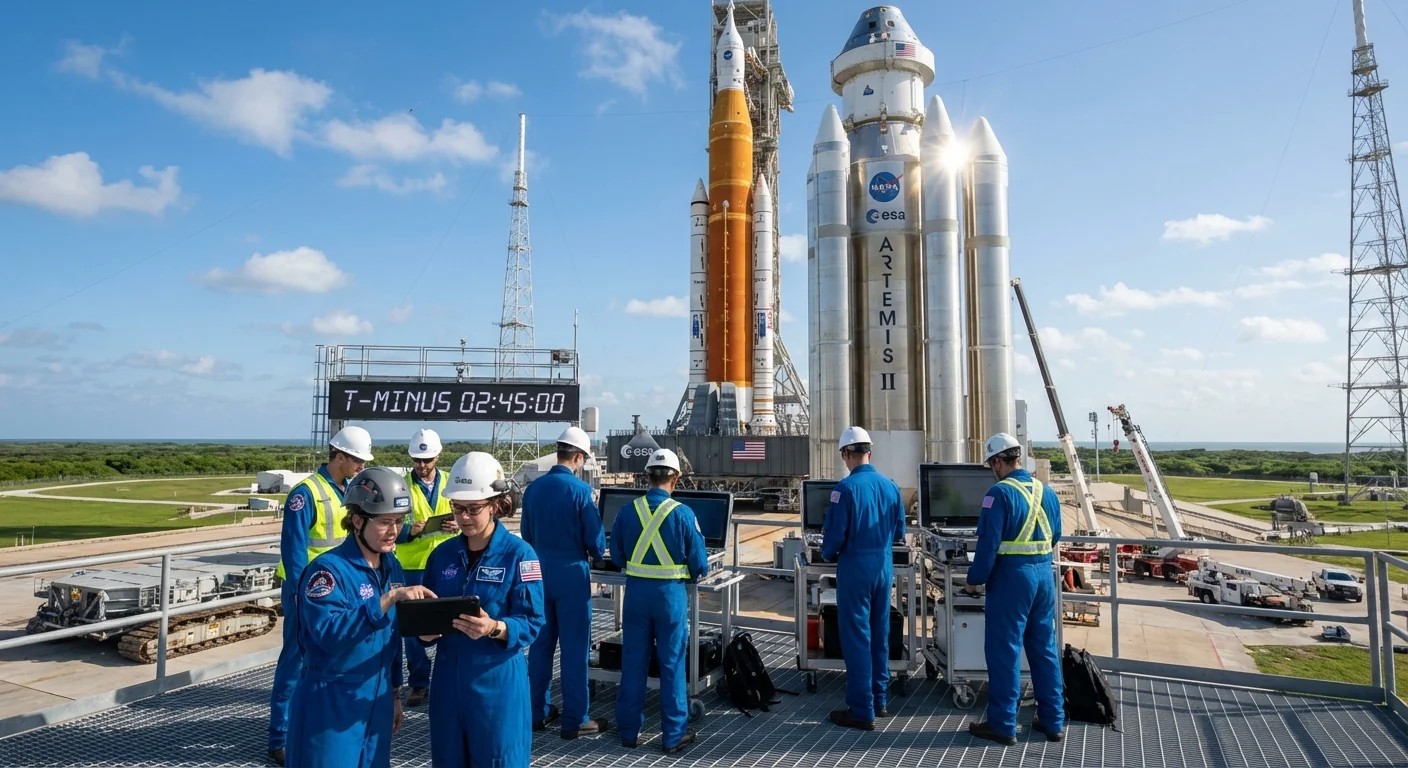
Schedule is binary here. A smooth wet dress keeps February in play. A scrub or major leak pushes the calendar, and costs.
Investment playbook, timing, risk, and cash flows
Most major Artemis contracts are cost plus, with award fees that depend on performance. Milestones at the pad and a successful wet dress support fee pools and smooth revenue recognition for the primes. Slips stretch overhead and can pressure margins for subcontractors that lack scale. Expect contractors to lean into flawless execution to protect fees in the back half of the fiscal year.
If the window in February holds, sentiment improves across space exposed funds. Suppliers of valves, avionics, thermal protection, and ground cryo gear could see orders firm for the next SLS build. If the window moves to spring, the market will price a longer cash cycle. That could shift short term flows from growth to defense staples within aerospace.
Budget context also matters. Artemis is a multiyear, multibillion program. The steadier the cadence, the easier it is for Congress and the Office of Management and Budget to keep funding stable. A slip adds heat to cost debates, which can cap valuations for names with heavy cost plus exposure.
Trade the milestones, not the headlines. Scale in before the wet dress, trim into strength on confirmation, and hedge for schedule slippage.
What it means for the moon economy
Artemis II is the hinge. A crewed lunar flyby on time strengthens the case for lander and habitat funding that touches SpaceX, Blue Origin, and a deep supplier base from Texas to Alabama to Florida. It pulls forward demand for propellant production, in space comms, and precision manufacturing. It also reduces program risk on the path NASA has pegged no later than April 2026 for this flight if February slips.
This is also workforce economics. A steady Artemis tempo keeps high skill jobs in place, supports apprenticeship pipelines, and anchors local investment in the Space Coast and beyond. That is durable value, not just a one day pop.
Conclusion, the rocket is on the pad, the market is on notice, and the next test will set the tone for space investing this quarter. If wet dress data is clean, February comes into focus, cash flows firm, and a new crewed era begins to look real on the screen and in the numbers.