Breaking: Artemis II Rolls to the Pad, Kicking Off a New Space Economy Moment 🚀
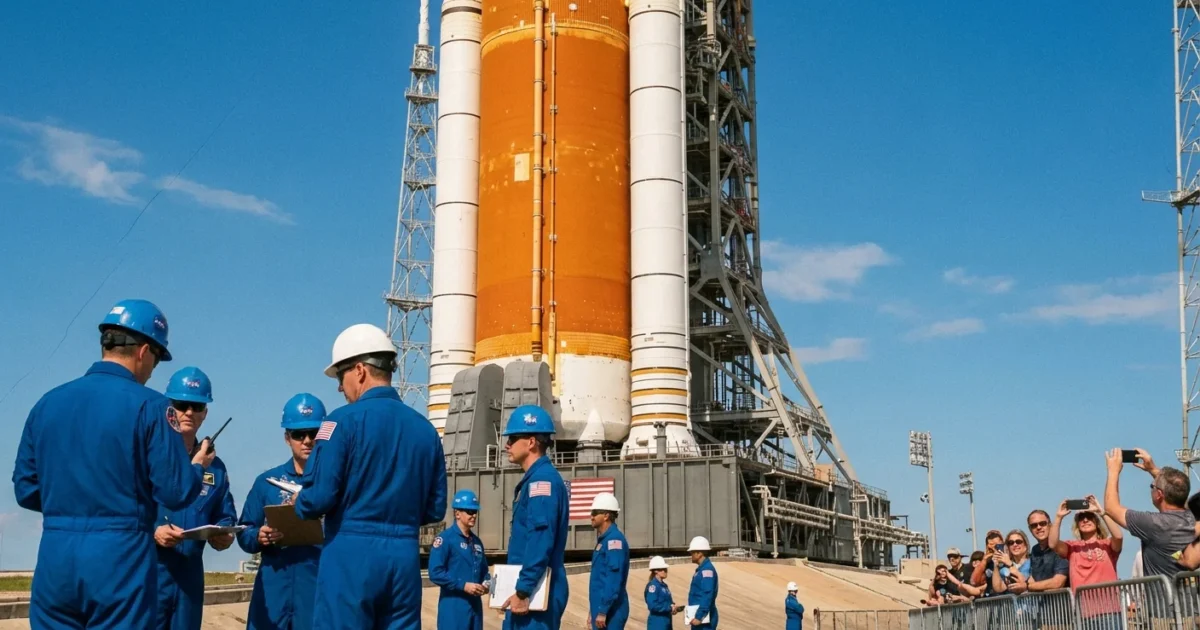
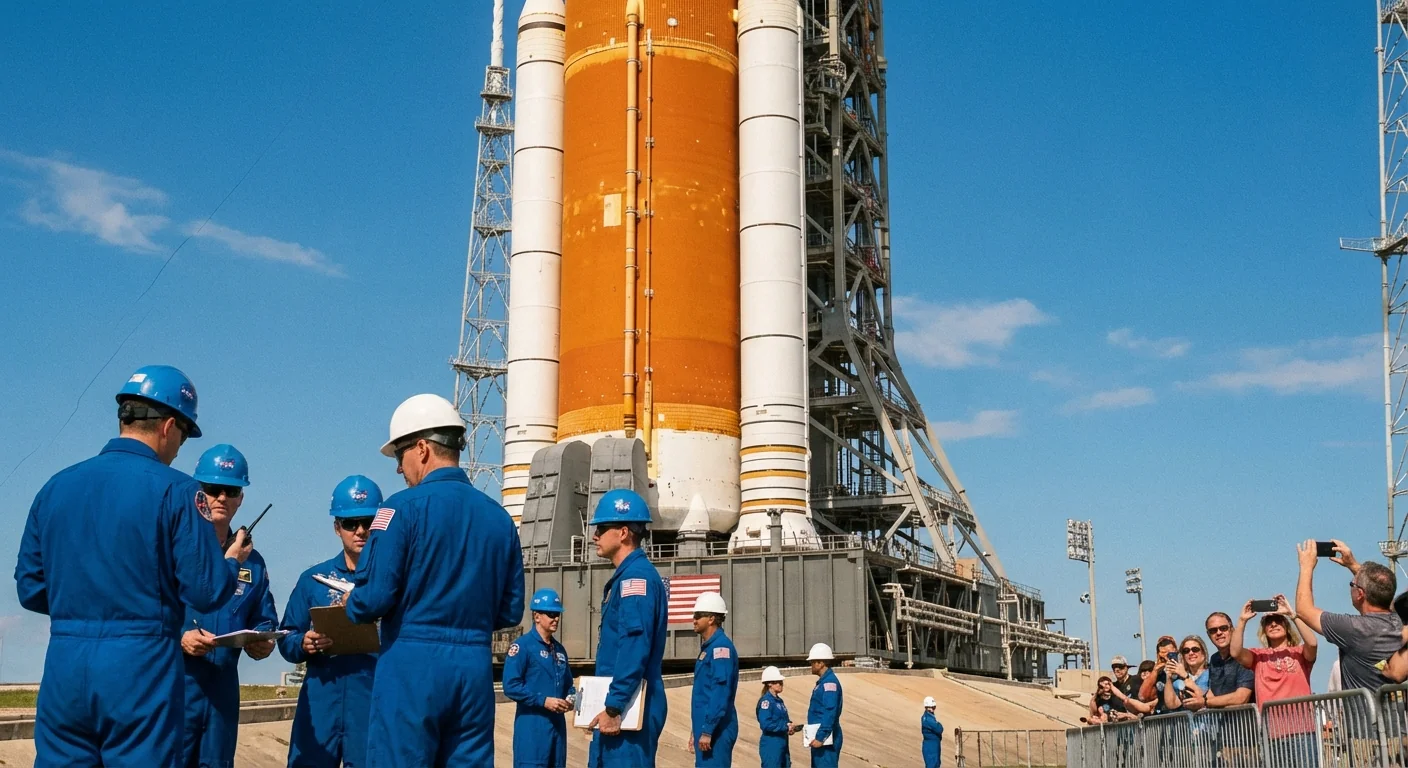
NASA’s next crewed trip to the Moon just moved from plan to pad. I watched the 11 million pound Space Launch System roll to Launch Complex 39B today. That single move flips the switch for final pad tests, crew checks, and fueling rehearsals. It also puts a price tag on a new phase of the space economy. Space and defense stocks just got a fresh catalyst.
What Today’s Rollout Really Means
Artemis II will not land on the Moon. It will fly a roughly 10 day loop around it, then splash down on Earth. That is on purpose. NASA wants to prove that Orion’s life support, navigation, communication, and heat shield work in deep space with humans on board. The path uses a free return trajectory, which brings the crew home even if the engine shuts down.
The crew is set. Commander Reid Wiseman, pilot Victor Glover, and mission specialist Christina Koch are all from NASA. Mission specialist Jeremy Hansen is from the Canadian Space Agency. This team will be the first woman, first person of color, and first Canadian to reach lunar distance. Those firsts help lock in political support, and budget stability.
Today’s rollout allows full stack testing at the pad. Techs will run propellant loading rehearsals. They will verify ground systems. They will check communications through the deep space network. Passing these tests de risks the first crewed lunar landing that follows with Artemis III.
Artemis II is the last big systems check before NASA tries to put people back on the lunar surface. It is designed to reduce risk, not to plant a flag.
The Money Angle, Who Gets Paid and When
The rollout starts a new sequence of milestone payments for prime contractors. Boeing leads the SLS core stage. Lockheed Martin builds Orion. Northrop Grumman supplies the solid rocket boosters. L3Harris owns Aerojet Rocketdyne, which provides the RS 25 main engines and the RL10 engine on the upper stage. These are largely cost plus or hybrid contracts, which pay for work and fee with less margin risk than fixed price deals.
Revenue recognition tends to follow milestones like pad readiness, wet dress rehearsals, and flight certification. A clean pad test series can pull revenue into the current quarter for some suppliers. A slip would push those dollars to later quarters. Watch management commentary on backlog conversion and segment margins.
Space adjacent ETFs also gather flows during clear hardware milestones. For retail investors, they offer diversified exposure to this multi year spend without single stock risk. For institutions, the cleaner trade is in prime contractors and select subsystem names. Balance sheets are solid, cash returns are steady, and Artemis adds a long tail of funded work.
Follow the test calendar, not the hype. Positive pad data can move contract revenue forward, which shows up in next quarter guides.
Names to Watch
- Boeing, SLS core stage and integration
- Lockheed Martin, Orion spacecraft and mission ops
- Northrop Grumman, solid boosters and avionics
- L3Harris, Aerojet engines, propulsion depth
- Space focused ETFs for diversified exposure
Why This Mission Shapes the Next One
Artemis III is the landing mission. It will rely on Artemis II data to certify human systems in deep space. That matters for partners tied to the landing. SpaceX holds the Human Landing System award. Axiom Space builds lunar suits under a NASA contract. Artemis II success lowers integration risk for both. It paves the way to unlock larger milestone payments in the next phase.
This mission also drives upgrades on the ground. Cryogenic fuel systems, launch pad resilience, and tracking networks get exercised. Those projects feed work across Florida and the Gulf Coast. That is real jobs, real orders, and capital spend that shows up in regional data.
Market Impact and Macro Read
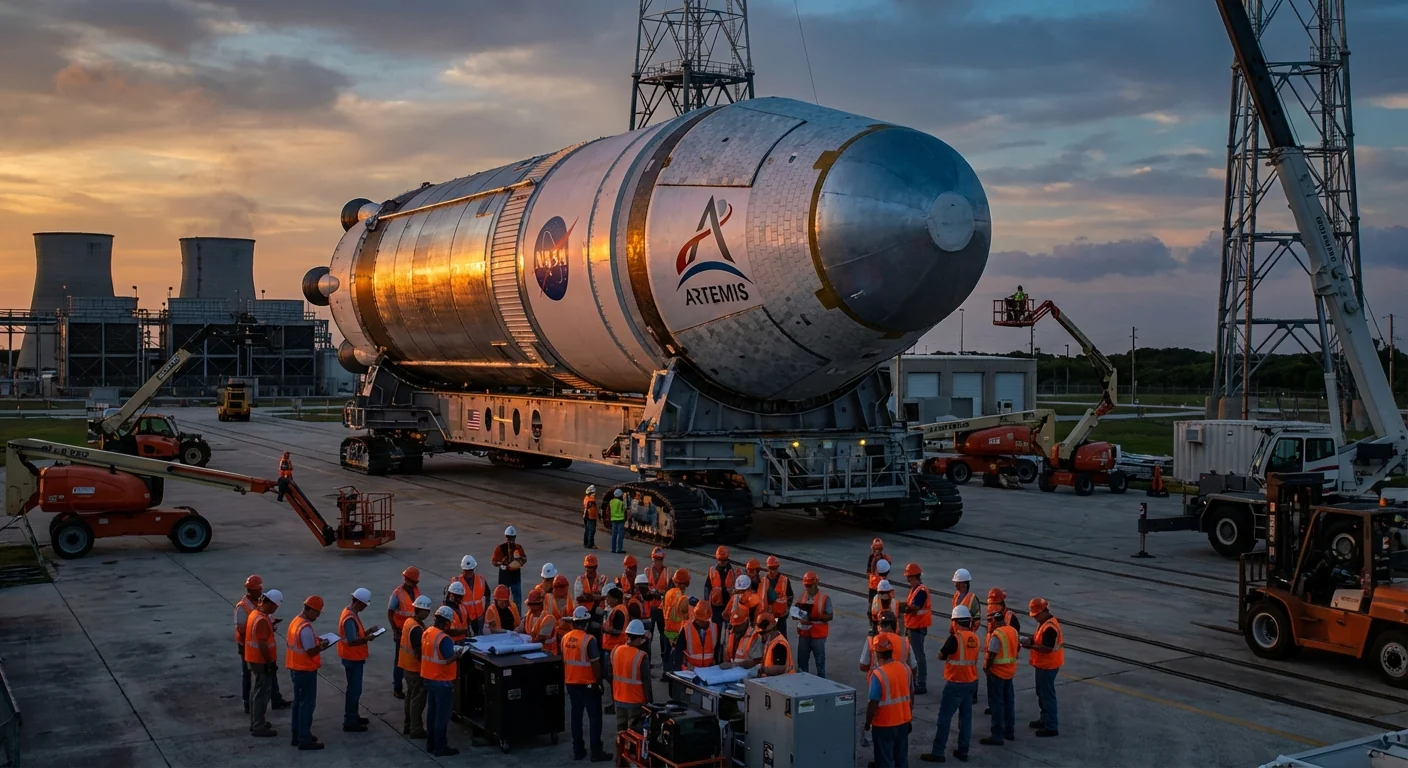
Artemis is a multi decade program. That means steadier funding lines compared to one off missions. The spending supports a national industrial base in propulsion, composites, electronics, and software. In a slow growth world, that baseline is valuable. It smooths earnings and keeps factories and skills in place.
The flip side is schedule risk. Large rockets are complex. One valve issue can delay a quarter. Budget politics can add noise. Yet the bipartisan support for the Moon program has held. International partners add stability. Canada and Europe have hardware and crew on the line. That reduces cancellation risk.
Delays shift revenue timing, not demand, for most Artemis primes. But fixed price suppliers down the chain can feel margin pressure if issues drag.
How to Trade the Pad Phase
Treat the next few weeks like a series of data points. Pad power up, fueling rehearsal, and countdown tests all matter. Clear checkouts support sentiment for Boeing and Lockheed. Strong engine data helps L3Harris. Booster performance headlines support Northrop. If NASA schedules a formal wet dress rehearsal, expect options activity to pick up in the group.
For longer term investors, focus on cash generation and buybacks. Artemis adds growth, but these are still defense cash machines. Use any schedule slip selloff to add. Make sure you size positions with the government calendar in mind. Continuing resolutions can slow invoice timing late in the year.
The Bottom Line
Artemis II just moved from paperwork to pad. This is the moment the market starts to price real progress toward a crewed lunar return. It will not land, and that is the point. It will prove the system that gets us there. For investors, the path is clear. Track the tests, watch the milestones, and lean into the primes and propulsion where the money meets the Moon.