
Amazon stock sinks as a $200 billion bet jolts Wall Street
Amazon just shook the market. Shares slid into the close, then fell another leg in after hours as the company paired a sales beat with a huge 2026 spending plan. The stock last traded near 222.69, down about 4.6 percent today. It swung wildly, touching 233.80 at the high and 198.50 at the low. After hours, I am tracking a further 7 to 10 percent drop as investors digest the scale of what comes next.
This is a classic growth versus cash flow moment. Amazon is leaning hard into the future. The bill for that future lands next year.

The quarter: sales strong, profit a hair light
Fourth quarter revenue came in at about 213.4 billion dollars, ahead of roughly 211.4 billion expected. Earnings per share were about 1.95, a shade below the 1.97 the Street wanted. The mix tells the story. Retail held up. Ads continued to scale. AWS, the cash engine, remained the key profit driver, though cost lines in compute and networking are starting to move up.
The headline is not the miss. It is the plan. Amazon wants to build, and it wants to build fast.
The 200 billion plan: bold, costly, and central to AI
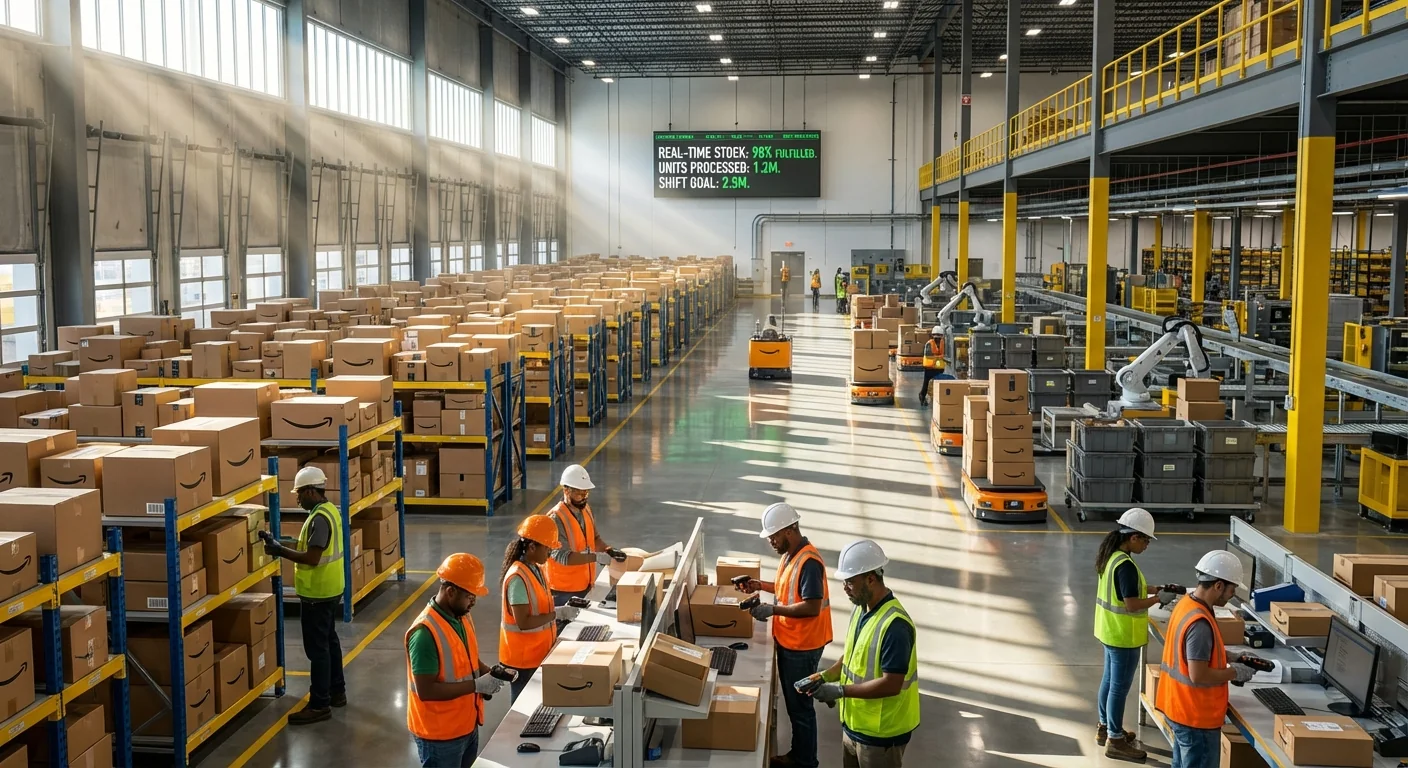
Management flagged roughly 200 billion dollars of capital spending for 2026. The focus is AI infrastructure, custom chips, warehouse robotics, and a low Earth orbit satellite network. That figure is far above what many had penciled in, which was closer to the 125 to 146 billion range. The gap is what cracked the stock.
Here is the tradeoff. Massive capex can deepen Amazon’s moat in cloud and logistics. It can also pressure free cash flow, margins, and buyback capacity in the near term. Big data centers and chip programs do not pay back right away. Satellites and robotics add even longer tails. The long game looks powerful. The next four to six quarters look tight.
I see the logic. AI workloads are exploding, and capacity is the choke point. Whoever builds reliable compute at scale, with energy and networking to match, will win share and pricing power. That is the prize Amazon is chasing. The question is timing. Investors want proof that dollars spent in 2026 lift AWS revenue and operating income in 2027 and 2028, not 2030.
Near term, expect lower free cash flow and more capex phasing questions. Volatility stays high until that path is clearer.
A rough tape makes the hit feel heavier
Today’s market backdrop did not help. The Dow fell 593 points. The Nasdaq and the S&P 500 posted a third straight day of losses. Risk appetite is thin. In that kind of tape, a surprise spend this large draws fast selling. I saw large blocks move right after the release. Liquidity was there, yet bids stepped back as guidance details trickled in.
This is also a shot across the bow in the mega cap capex race. Rivals have been boosting budgets for AI plants, chips, and networks. Amazon just pushed the bar higher. That raises the stakes for everyone, and it raises near term funding costs for the group.
What I am watching next
Amazon’s earnings call at 5 p.m. Eastern is the main event. Management needs to map dollars to outcomes, quarter by quarter. I want clarity on three things, in this order, because they will drive the stock from here:
- How 2026 capex is phased by quarter, and the mix across AI, chips, robotics, and satellites.
- The expected return profile, including AWS capacity adds, utilization targets, and pricing levers.
- Free cash flow guardrails, including buyback plans and any balance sheet changes.
- Margin cadence for AWS and North America retail as new assets come online.
If we get credible ROI math, the stock can find a floor. If we get platitudes, the cut to models will be deeper and faster.
Focus on free cash flow per share and AWS operating margin. Those two lines will tell you when the spending starts to pay off.
Investment take
This is not a thesis break. It is a reset on timing. The core drivers, AWS and ads, are intact. The new capex points to bigger ambition in AI and edge networks. Valuation may need to cool until the company proves it can fund growth without starving buybacks or compressing margins too far. Long horizon investors may scale in on stress. Traders should respect the range. Today’s low near 198 and the intraday high near 234 are the first lines to watch.
One more point. Energy, cooling, and networking costs are rising across the industry. That makes vertical integration in chips and data center design more valuable. Amazon is moving in that direction. If it executes, unit economics can improve faster than bears expect. If build costs run hot, margins will lag.
Conclusion: Amazon just placed a 200 billion dollar chip on the table. The company wants to own the next wave of cloud and AI. The market is asking for a clear path to payback. Tonight’s call will set the tone. The long term prize is real, yet the near term bill is large. Investors now have to choose which one matters more.