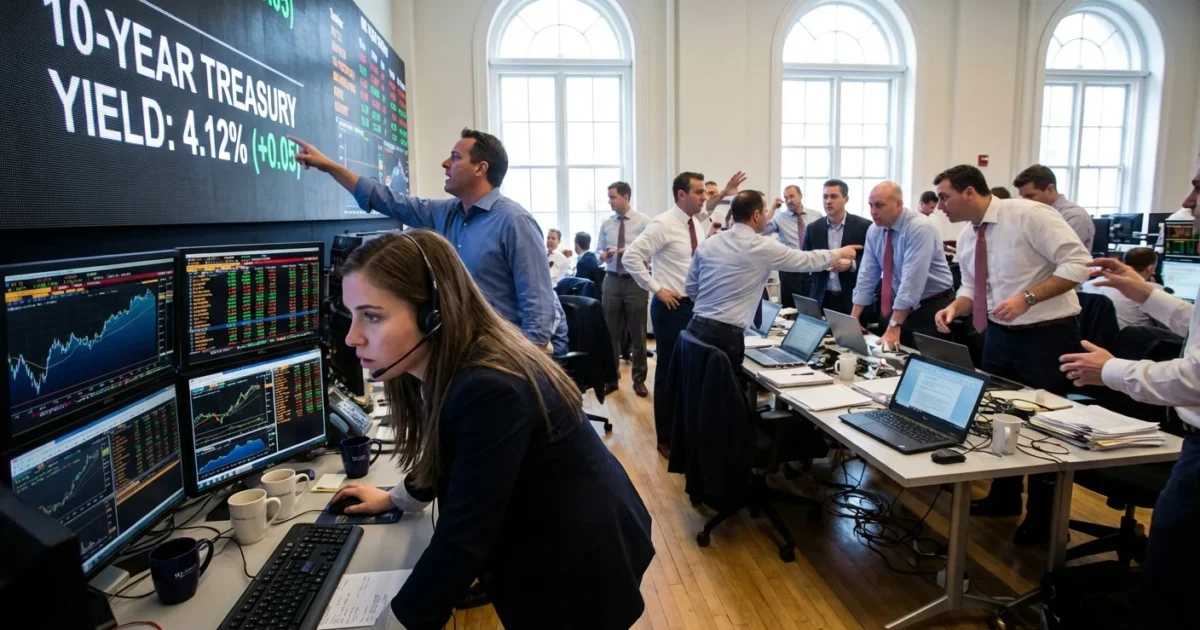
The 10 year Treasury yield just pushed back into the mid 4 percent range, and it did it fast. I am seeing prints between 4.15 percent and 4.18 percent, after an early dip toward 4.09 percent. Markets are bracing for the Federal Reserve next week, and the bond market is flashing a clear message. A rate cut may be coming, but long term money still wants a premium.
What moved the 10 year today
Traders are pricing in a strong chance of a Fed cut at the December 9 to 10 meeting. The market implies about an 87 percent probability of a 25 basis point move. That is usually a recipe for lower yields. Not today.
The 10 year is trading up, with sharp intraday swings. Buyers and sellers are fighting over what matters more, the next fed funds move, or the forces that drive long term rates. Right now, longer bonds are telling us the second force still rules.
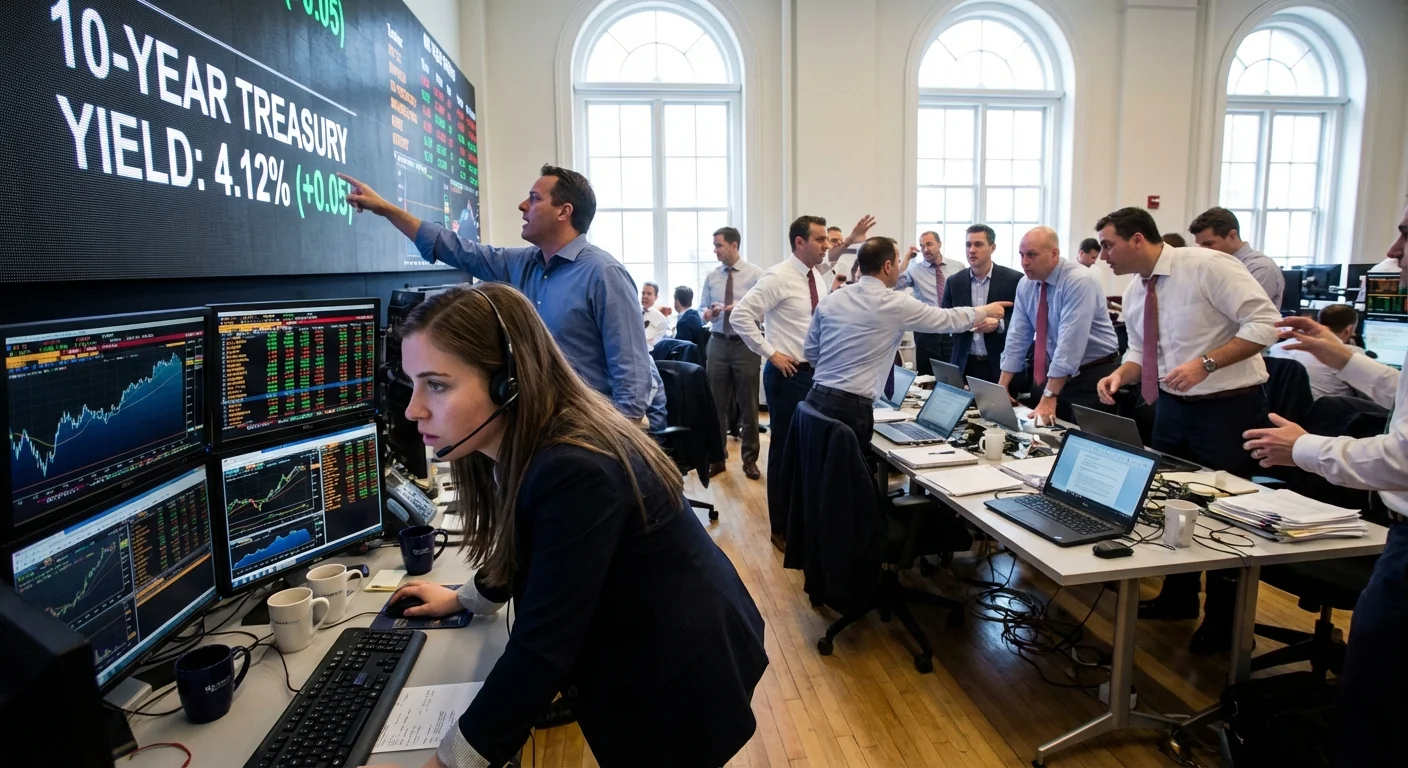
Why yields stay high even with a cut coming
This is not just about the policy rate. Two deeper drivers are keeping the 10 year stubbornly high.
First, the term premium is back. Investors want extra yield to hold duration, given uncertain inflation, heavy Treasury supply, and policy risk. That premium dropped near zero in recent years. It has rebuilt, which holds long yields up, even as the Fed eases.
Second, balance sheet policy matters more than usual. The Fed is still running down assets, which drains duration support from the market. Any hint of shifting runoff, or adding Treasury bills, would change the mix of supply. Until that is clear, investors demand more yield to absorb new issuance.
Inflation expectations also play a role. Headline data have cooled, but core measures are sticky. Wage growth is steady. The market sees inflation near target over time, but not all the way there yet. That keeps real yields firm.
Fiscal math is the final piece. Deficits are large, and issuance is heavy. The buyer base has changed, with the Fed stepping back and price sensitive investors stepping in. That transition lifts the risk premium.
Long rates price more than the next Fed move. They reflect inflation views, balance sheet settings, and the cost of absorbing heavy supply.
What this means for borrowing and markets
The 10 year anchors money across the economy. When it stays high, financing stays tight. Mortgage rates track it with a spread. Corporate debt costs track it too. Auto loans and many consumer rates do as well. A quarter point Fed cut may not flow through if the 10 year does not budge.
Equities feel it through valuation. Higher long yields raise discount rates, which press on growth stocks. Credit feels it through funding costs, which can slow buybacks and deals.
Here is how to think about it today:
- Homeowners, rate relief is likely modest unless the 10 year drops further.
- Corporate treasurers, lock in only if spreads are favorable, or stagger maturities.
- Equity investors, watch the curve and real yields for your risk appetite.
- Savers, money market yields may slip, but longer CDs could hold up.

Positioning into the Fed meeting
Volatility is elevated into the decision. The path for long yields will hinge on three things, the policy statement, the balance sheet guidance, and the tone in the press conference.
If the Fed cuts but keeps runoff steady, the 10 year may hold near 4.1 percent to 4.3 percent. If the Fed hints at balance sheet tweaks, such as more bills and less longer dated runoff, the 10 year could slip. If the Fed signals patience on inflation, the curve may steepen, with long yields sticky.
For portfolios, duration risk is still tricky. A barbell of short bills and selective intermediate notes can balance income and flexibility. Credit selection matters, since spreads have little room for error.
Use small, staged buys to add duration. Keep dry powder for post meeting swings, and mind your hedges.
Do not rely on a single cut to drive long yields lower. Position size and leverage should reflect headline risk.
Conclusion
The 10 year is sending a firm message, even with a Fed cut in sight. Policy relief helps, but long rates still price risk, inflation, and supply. Until those ease, borrowing costs will stay sticky, and markets will trade on every hint the Fed gives next week.