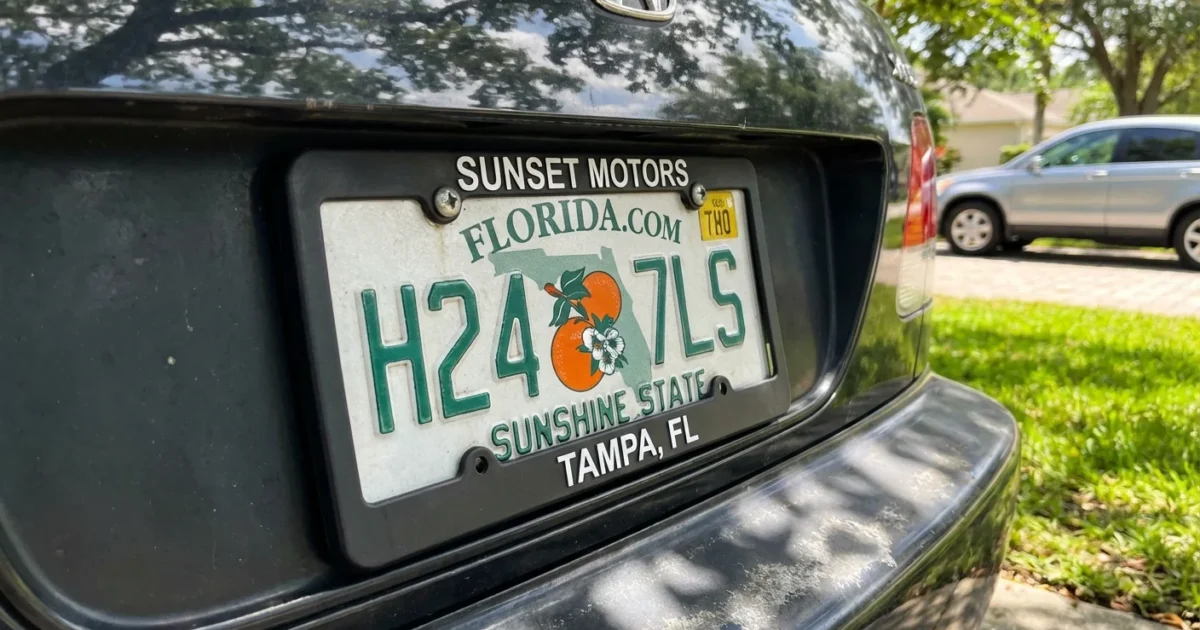
Florida just turned most license plate frames into a crime. Not a ticket, a crime. If any part of your plate is covered, tinted, or overlapped, you now face misdemeanor charges. We confirmed the change with the statute update tied to HB 253, which took effect October 1, 2025. Enforcement is already active, and officers are telling drivers to strip the frames today.
Breaking: What Changed, And Why It Matters
Florida’s updated statute makes any obstruction of a license plate a second degree misdemeanor. That includes letters and numbers, the word Florida, the registration decal, and even the outer border of the plate. The penalty can reach 60 days in jail and a 500 dollar fine.
It goes further. Simply possessing a device meant to obscure a plate is also a second degree misdemeanor. Manufacturing, selling, or distributing such devices is a first degree misdemeanor. If someone uses an obscuring device while committing a crime, that can jump to a third degree felony.
Before this change, most plate coverings were a civil traffic issue. A fine, a warning, and a plate swap. Now it is a criminal matter, which can carry arrests, court dates, and probation risks.
Dealers, this includes your branded frames. Drivers, this includes clear covers, tinted shields, and novelty borders. If it touches or hides any part of the plate, it is trouble.
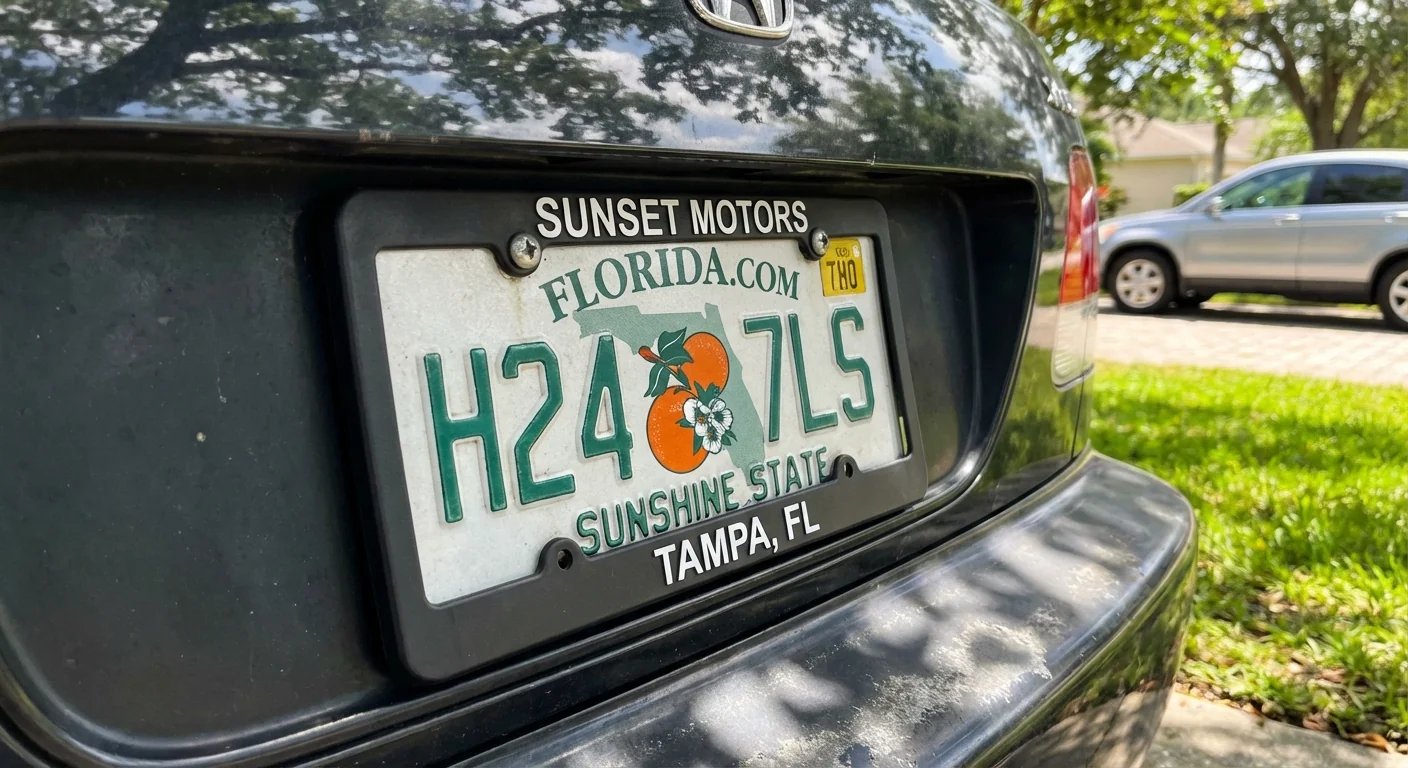
Check your plate today. If anything overlaps the letters, the word Florida, the decal, or the border, remove it now.
What The Law Bans, In Plain English
The statute targets anything that blocks legibility, in daylight or at night. Officers are trained to look for reflections, tints, and edges that hide characters or the printed border. They are also checking sprays and flip devices that trick cameras.
- Obstructing the plate is a second degree misdemeanor.
- Possessing an obscuring device is a second degree misdemeanor.
- Making or selling such devices is a first degree misdemeanor.
- Using one during a crime can be charged as a third degree felony.
If your plate has a protective cover, that is likely illegal. If your frame clips the top edge where the state name sits, that is illegal. If a novelty border nips the corners near the decal, that is illegal.
How To Check Your Car In 4 Steps
You do not need a lawyer to make a quick call on this. Walk to your car, and do this:
- Stand six feet back. Can you read every character, the word Florida, and the full printed border without squinting?
- Look at the upper right corner. Is the registration decal fully visible, edges included?
- Check the plate under low light. Any tint or clear cover that reflects light is a problem.
- If any part is close, remove the frame or cover. Tight tolerances invite stops.
On probation or a conditional license? A misdemeanor arrest can trigger a violation, even before a conviction. Do not risk a technical hit over a four dollar frame.
Why Automakers And Dealers Care
This rule lands hard on retail habits. Dealer-branded frames have been standard on new and used cars for years. Many of those frames cut into the top border, which now invites criminal exposure for both the owner and the business that placed it.
Modern car design adds another wrinkle. EVs like the Tesla Model 3 and Hyundai Ioniq 6 chase low drag. Owners often add thin plate frames to protect paint and airflow. Some install clear covers to keep grime off cameras and sensors near the nose. Those covers may now be illegal if they tint, reflect, or overlap the border.
Trucks and SUVs also see problems. The Ford F 150 Lightning and Rivian R1T use front parking sensors close to the plate bracket. Owners sometimes shift the plate or add contoured frames to avoid sensor chatter. Any frame that clips the plate edge could now be a chargeable obstruction.
We are already seeing stores pull tinted and clear covers from shelves. Wholesale buyers are asking for compliance letters from suppliers. Auction lanes are removing frames during intake to protect dealers on title transfer.
- Who should act now: dealers, auction houses, online sellers, detail shops, fleet managers.
What Drivers Are Seeing On The Road
Drivers tell us stops are happening for minor overlaps that used to earn warnings. A decorative frame that shaded the top border led to a roadside removal and a stern talk. A clear shield that bent light at night drew a citation. In several metro areas, officers are focusing on education first, but the tickets are real.
We rode along in traffic this week and counted a high mix of dealer frames that would not pass the six foot check. Most owners had no idea. They thought a clear cover was fine. It is not.

If a store sells you a plate cover today, ask for a written statement that it is legal in Florida. If they hesitate, walk away.
The Bottom Line
This is a clear line in the sand. If anything touches or hides your Florida plate, it turns a small style choice into a criminal risk. Take the frame off. Toss the cover. Dealers, audit your stock and reprint those plate surrounds. The fix takes five minutes, and it can save you a citation, a court date, and a whole lot of headache. 🚗